

Rock type
Chert (and flint)
Also called Flint, Hornstone
Chert (and flint)chert (sedimentary silica rock)All regions2 photos
Description
Chert is a hard, fine-grained sedimentary rock made of microscopic quartz, and it is the most widely used chipped-stone material in places like Ohio. It forms mainly as nodules or beds in limestone and dolomite, where silica replaced the carbonate. Flint is the same stone: geologists save the word for a purer chert from places like the English chalk, but in America flint and chert are used as synonyms. Colour runs from white and gray through black, brown, green and red. It breaks with the shell-like conchoidal fracture that makes sharp edges, and heating often makes it waxier, darker or redder. Regional names such as Burlington, Fort Payne and Onondaga point to the formation it came from.
How to identify it
- Colour
- Gray, black and white are common; green, red, brown and other colours also occur (Maryland guide).
- Texture
- Microcrystalline or cryptocrystalline: the silica grains are too small to see. Finer-grained chert feels smooth and glassy, coarser chert sugary or gritty (Barry).
- Luster
- Dull or chalky through waxy to glassy; higher luster usually means finer grain (Barry).
- Inclusions
- Many cherts hold fossils such as crinoids, bryozoans, brachiopods and sponge spicules, plus dolomite crystals (see the named stone pages).
- Cortex
- Fresh nodules carry a softer chalky or limy primary cortex; cobbles long separated from their source develop a discoloured secondary skin (Bakken).
- Heat treatment
- Heating often makes chert waxier, darker or redder (Maryland guide). Modern knappers heat-treat flint for a smoother, waxy texture and brighter colours as iron oxidises, though how it works is not settled (Getz).
Geology
Most nodular chert forms when silica replaces limestone; bedded chert forms when carbonate beds are completely replaced, or when siliceous ooze (partly from sponge spicules) is altered. Where the silica comes from is not settled (Ohio Geological Survey). Chert occurs in thin beds or irregular nodules in sedimentary carbonate rocks such as limestone, and cobbles washed out of those formations lie along streams. In Ohio alone flint ranges through rocks from the Silurian Brassfield Limestone to the Pennsylvanian Cambridge limestone. True flint, in the narrow geological sense, is found in only a few places such as the English chalk.
Where it comes from
All regions
Quarries and outcrops
- Found throughout the United States wherever limestone and dolomite occur; see the named pages (for example Burlington, Onondaga, Fort Payne, Flint Ridge and Edwards cherts) for sources
Used by
- Flint was the most used rock type throughout Ohio prehistory, and flintknapping can be traced back further than any other technology (Getz)
Look-alikes
Stones that are easy to confuse with Chert (and flint).
- Jasper (iron-rich, opaque chert)
- Chalcedony and agate (translucent, fibrous quartz)
- Quartzite and silicified sandstone (break through sand grains and look sugary)
- Silicified wood and silcrete
Sources
- Getz, Garry L. 2016 (rev.). Flint: Ohio's Official Gemstone. Educational Leaflet No. 6. Ohio Department of Natural Resources, Division of Geological Survey.dam.assets.ohio.gov (opens in a new tab)
- Maryland Archaeological Conservation Laboratory. Chert. Diagnostic Artifacts in Maryland: Common Stone Types (Jefferson Patterson Park and Museum).apps.jefpat.maryland.gov (opens in a new tab)
- Delaware Department of Transportation. Archaeology glossary.deldot.gov (opens in a new tab)
- Bakken, Kent E. (written about 1995; PDF issued later). Chipped Stone Raw Materials. Chapter 6 in Stone Tools of Minnesota. Minnesota Office of the State Archaeologist, St. Paul.mn.gov (opens in a new tab)
- Barry, Steven Edward. 2004. Lithic Raw Materials and Chipped Stone Tools: A Comparison of Two Sites in the Moundville Chiefdom. M.A. thesis, University of Alabama, Tuscaloosa.rla.unc.edu (opens in a new tab)
Named stones of this kind
 Alibates agatized dolomiteagatized (silicified) dolomite: chert/chalcedony that replaced dolomiteTexas
- Allendale chert and Georgia Coastal Plain chertschert (silicified grainstone)South Carolina, Georgia
 Arkansas novaculitenovaculite (microcrystalline quartz rock, chert-like)Arkansas, Oklahoma
- Attica chertchert (Mississippian, Borden Group)Indiana
- Bangor chertchert (blue-gray to blue-green, translucent)Alabama, Tennessee, Georgia
- Bayport chertchert (nodular, Upper Mississippian)Michigan
- Boone chertchert in cherty limestoneArkansas, Missouri, Oklahoma
- Brush Creek chertchert (Pennsylvanian, in marine limestone)Ohio, West Virginia, Pennsylvania and more
- Brushy Basin chertchert from silicified volcanic ashUtah, Colorado
- Burlington chertchert (sedimentary; nodules and beds in limestone)Missouri, Illinois, Iowa
- Burro Mesa chertsilicified volcanic tuffTexas
- Camden chertchert (novaculitic; Devonian)Tennessee, Alabama
 Cedar Valley Group chertschert (Devonian, nodular; lag and gravel deposits)Minnesota, Iowa
- Cobden and Dongola chertsnodular chert (blue-gray, Mississippian)Illinois
- Day Creek chertchert in dolomiteOklahoma, Kansas
- Delmarva and Chesapeake coastal chert and pebble jasperchert, jasper and orthoquartzite (gravels and bedrock of the Coastal Plain)Delaware, Maryland, Virginia
 Dover chertchert (nodular, in limestone)Tennessee
- Edwards chertchert (nodular and tabular, in limestone; also reworked into gravels)Texas
 Flint Ridge flintflint/chert with chalcedony and jasper bandsOhio
- Florence chertnodular chert in limestoneKansas, Oklahoma
- Florida cherts: Suwannee, Ocala and Tampa Baychert (silicified limestone)Florida
 Fort Payne chertchert (nodular and bedded, in Lower Mississippian cherty limestone)Tennessee, Alabama, Georgia and more
 Franciscan chertradiolarian chert (deep-sea bedded chert)California
- Galena, Oneota and Shakopee chertschert (Ordovician, in dolostone and limestone)Minnesota, Iowa, Wisconsin and more
- Georgetown chertchert (ledge flint, nodules and flat cobbles)Texas
- Green River Formation tiger chertlake-bed chert (banded)Wyoming
- Greenbrier and Kanawha chertschert (nodular and shale-hosted)West Virginia, Virginia
- Gulf Coastal Plain gravel chertschert gravel (pebbles and cobbles)Alabama, Mississippi, Tennessee
 Gunflint silicairon-formation chert (Precambrian)Minnesota
- Harrodsburg, Allens Creek and Holland chertsfossiliferous chert (Mississippian and Pennsylvanian limestones)Kentucky, Indiana
- Helderberg chertschert (limestone-hosted, silicified limestone)New York, New Jersey, Pennsylvania and more
- Hozomeen chertradiolarian chert (metamorphosed oceanic chert)Washington
 Jefferson City-Cotter chert and Mozarkitechert (nodular and bedded, in Ordovician dolomite)Missouri, Arkansas, Oklahoma
 Keokuk chertchert (nodules and beds in Mississippian limestone)Iowa, Illinois, Missouri
 Knife River flintflint/chert (silicified lignite or peat origin); found as secondary gravel and lag piecesNorth Dakota
- Knox Group chertchert (from dolomite; Ridge and Valley)Tennessee, Georgia, Alabama
- Kremmling chertchert in Miocene basin sedimentsColorado
- Liston Creek chertchert (Silurian, nodular and bedded)Indiana
- Little Cattail Creek chertchert (with chalcedony and some jasper)Virginia
- Madison Formation chert (Montana chert)nodular chert and chalcedony in limestoneMontana
- Mill Creek cherttabular and nodular chert (tough, coarse grained)Illinois
- Monterey chertchert and siliceous shale (Miocene marine)California
- Munsungun Lake chertchert (thin beds in volcanic rock, with mudstone and wacke)Maine
- Narbona Pass chertchertNew Mexico, Arizona
 Newman Limestone and Boyle chertschert (Devonian dolomite and Mississippian limestone)Kentucky
- Normanskill chertchert (radiolarian chert in Ordovician shale)New York
- Norwood and Bois Blanc chertschert (Great Lakes Devonian cherts; unsourced)Michigan
 Onondaga chertchert (nodules and beds in Devonian limestone)New York, Pennsylvania
- Pedernal chertchert and chalcedony in a stratiform nonmarine bedNew Mexico
 Phosphoria Formation chertmarine chertWyoming, Montana, Idaho
- Pitkin chertchert in limestoneArkansas, Oklahoma
- Plateau cryptocrystalline silicateschert, chalcedony, jasper, opal and petrified wood (cryptocrystalline silicates)Washington, Oregon
- Plattsmouth and Winterset chertsnodular chert in limestone (Pennsylvanian)Kansas
- Rio Grande gravel chertgravel chert (cobbles from river and old gravel beds)Texas
- Santa Cruz Island chertchertCalifornia
- Spanish Diggings stoneschert and orthoquartzite from a quarry districtWyoming
- Swan River chertchert (mostly glacial cobbles)North Dakota, South Dakota, Minnesota
- Tosawihi chertopalite and chert (hydrothermally altered volcanic ash)Nevada
- Tuscumbia chertchert (nodular, in Paleozoic limestone)Mississippi, Alabama, Tennessee
 Upper Mercer flintflint/chert (black, beds in Pennsylvanian limestone and shale)Ohio
- Uvalde gravel chertgravel chert, chalcedony, quartzite and other silica cobblesTexas
- Van Horn quarry stonesagate (jasper), felsite and chert from named quarriesTexas
 Wyandotte chertnodular chert (blue-gray, in Mississippian limestone)Indiana, Kentucky
 Zaleski, Plum Run and Delaware chertschert/flint (three separate Ohio units)Ohio
Points made from this stone
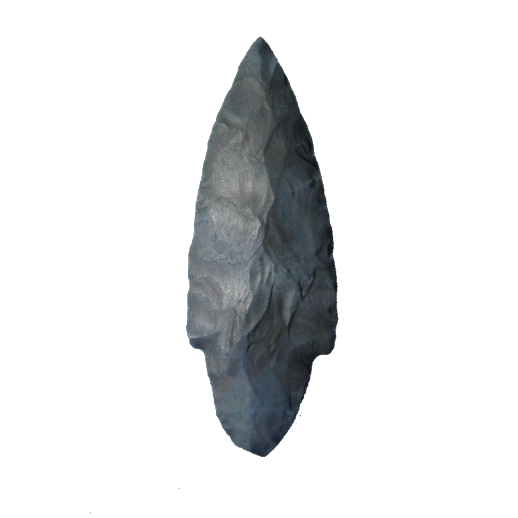 Adena StemmedEarly Woodland to Middle Woodland2,750–1,750 B.P. (800 B.C.–A.D. 200; Maryland JPPM); Maryland and Delaware radiocarbon dates mostly 2,445–1,960 B.P.; Ohio and Kentucky Adena dates 800 B.C.–A.D. 800 (Cambron and Hulse 1975)
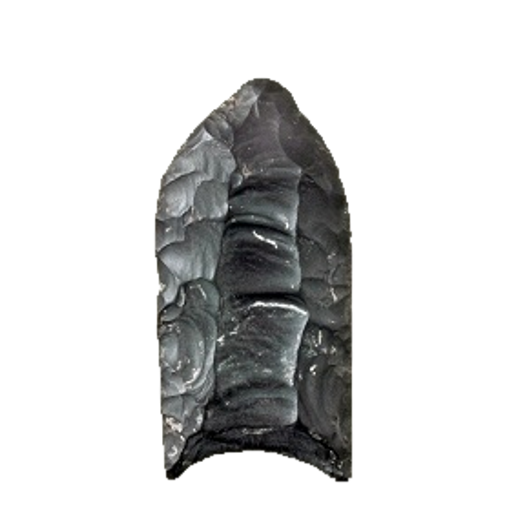 Clovis FlutedEarly Paleoindian13,050–12,750 cal B.P. (Waters et al. 2020)
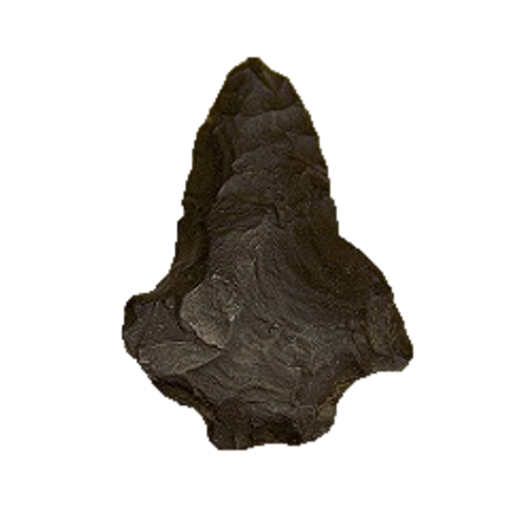 KanawhaEarly Archaic8,050 - 7,750 B.P. (6100-5800 B.C. radiocarbon, St. Albans)
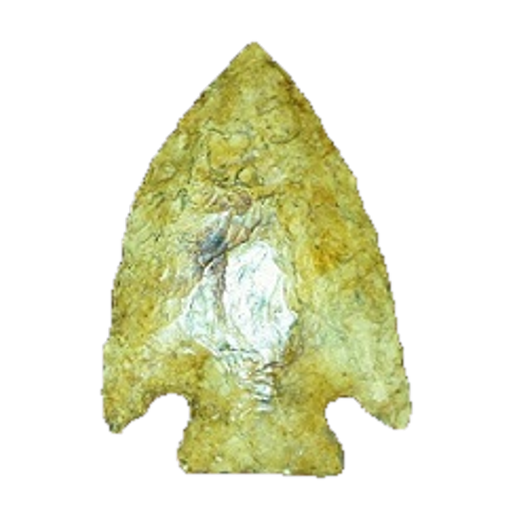 Kirk Corner NotchEarly Archaic9,500–8,900 B.P. (Justice 1987); 9,400–8,500 B.P. (Virginia DHR); 9,200–8,900 B.P. (Steponaitis 1980); three dates of 7,530–7,290 B.P. at Pig Point, Maryland, suggest it lasted later in the north (Maryland JPPM)
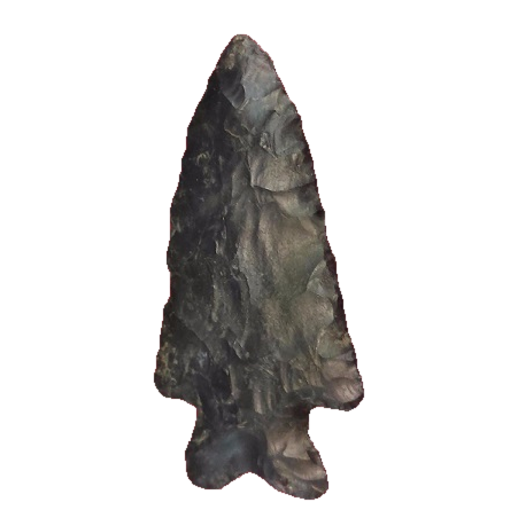 MacCorkleEarly Archaic8,850–8,750 B.P. at St. Albans (Broyles 1971); 9,000–8,500 B.P. (Justice 1987); dates of 9,420–9,300 B.P. (Bergman et al. 1998) (all as summarized by Maryland JPPM); 7000–6500 B.C. in Indiana (Indiana DNR)
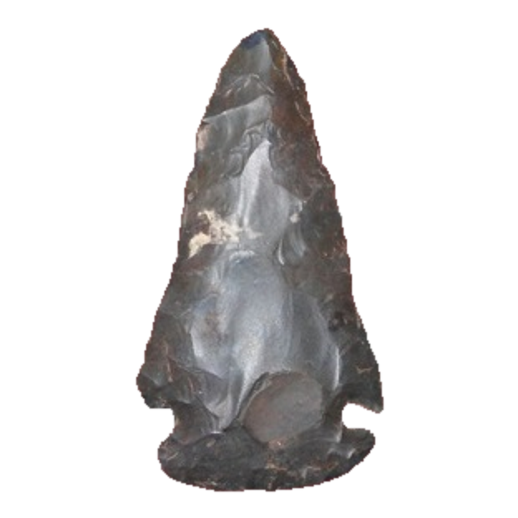 MeadowoodEarly WoodlandAbout 3,000–2,500 B.P. (Chartier 2011); radiocarbon dates from about 998 B.C. in New York to 520 B.C. at the Bruce Boyd site, Ontario (OAS London Chapter)
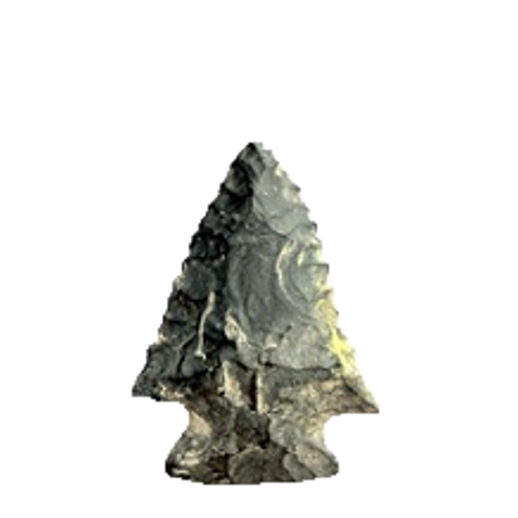 PalmerEarly Archaic10,000–9,000 B.P. (Maryland JPPM); 10,000–9,300 B.P. (Gardner 1989); 9,600–9,200 B.P. on the Nottoway River, Virginia (Egloff and McAvoy 1990)