
Named stone
Rio Grande gravel chert
Also called Gravel chert of the Lower Rio Grande Valley
A kind of chert (and flint)
Rio Grande gravel chertChert (and flint)Texas & SouthwestDescription
In the Lower Rio Grande Valley, nearly 70 percent of 976 chipped-stone tools from museum and private collections were made of gravel chert, the most common rock in the region. The cobbles occur in the bed of the Rio Grande and its tributaries, in the Frio and Lissie formations, and in the Goliad Gravels on hills in Zapata, Starr and Hidalgo counties. Typical colours are ordinary brownish-gray to gray to brown, usually without distinguishing features, though the gravels hold multicolored chert, volcanic pieces and some agate. The study found that people also used local alternatives, notably the fine-grained El Sauz chert, and that stone was not scarce. Cobbles redeposited from the Big Bend reach the middle Rio Grande.
How to identify it
- Colour
- Mostly brownish-gray to gray to brown with no distinguishing features; other colours in smaller amounts. Frio gravels contain multicolored chert.
- Texture
- The Texas Beyond History exhibit describes Rio Grande gravels as including coarse cherts that are often very colourful or mottled; Reger and others give no texture for gravel chert.
Geology
Gravel units of the western Lower Rio Grande Valley: unconsolidated Frio Formation gravels (multicolored chert, volcanic rock from the Trans-Pecos and Sierra Madre Oriental, some agate), caliche-cemented Goliad Gravels (Pliocene; mostly multicolored chert with some volcanic clasts and silicified wood), and the bed load of the Rio Grande.
Where it comes from
Texas & Southwest
States
Quarries and outcrops
- Zapata, Starr and Hidalgo counties, Texas (Frio and Goliad gravels)
- Terraces of the middle Rio Grande (material redeposited from the Big Bend)
- El Sauz chert quarry hills, Starr County (a separate local chert of the Catahoula Formation)
Used by
- Early to Late Archaic and Late Prehistoric: the study's figure of gravel chert artifacts includes Lerma (Early), Arenosa, Langtry and Marshall (Middle), Shumla (Late) and Caracara (Terminal Archaic) points
Look-alikes
Stones that are easy to confuse with Rio Grande gravel chert.
- El Sauz chert (fine-grained, waxy, usually light gray with red, purple smears, from altered volcanic ash; needs XRF to confirm)
- Black chert from the Sierra Madre Oriental (a different variety in the same study)
Sources
- Reger, Brandi, Juan L. Gonzalez, and Russell K. Skowronek. 2020. Lithic Raw Materials in the Lower Rio Grande Valley, South Texas and Northeast Mexico. Lithic Technology 45(3).utrgv.edu (opens in a new tab)
- Texas Beyond History (University of Texas at Austin, Texas Archeological Research Laboratory). Stone Tools of Texas: Rio Grande Gravels.texasbeyondhistory.net (opens in a new tab)
Points made from this stone
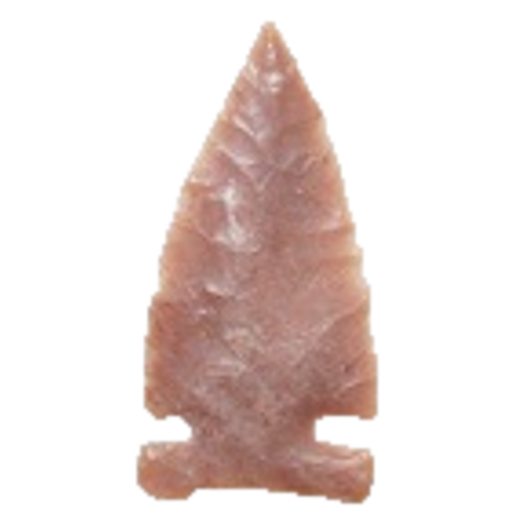 CaracaraLate Prehistoric600 - 400 B.P.
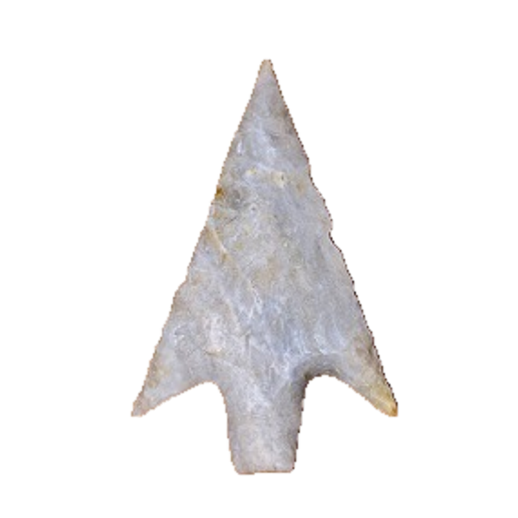 LangtryMiddle Archaic4,100 - 3,200 B.P. (Lower Pecos, Hinds Cave sequence)
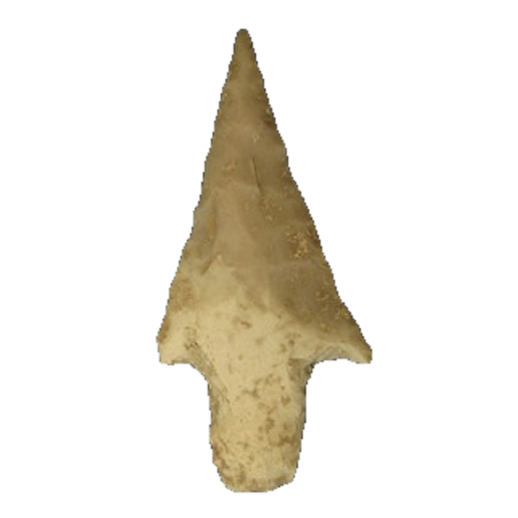 Langtry ArenosaMiddle Archaic4,500 - 3,000 B.P.
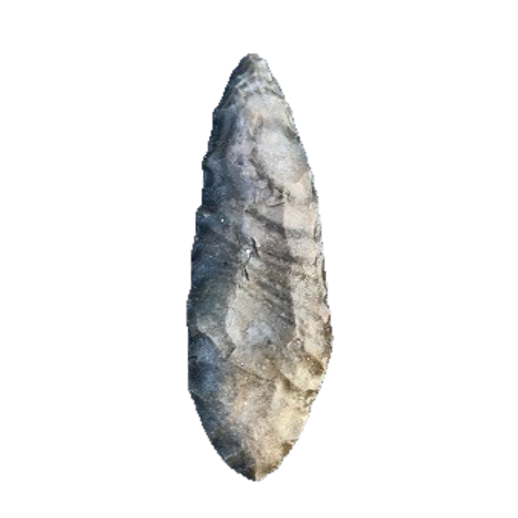 LermaLate Paleoindian to Middle ArchaicArchaic in Texas, from well before to somewhat after the time of Christ (Suhm and Krieger 1954); a possible Paleoindian age is debated (Texas Beyond History); transitional Paleoindian to Middle Archaic in north Alabama (Cambron and Hulse 1975)
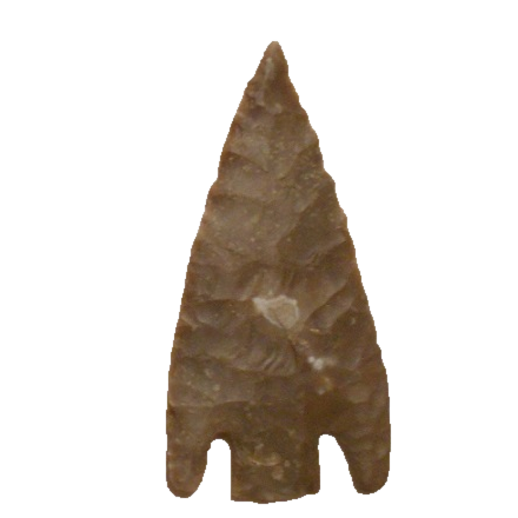 MarshallLate Archaic3,150–2,300 B.P. (Lower Pecos Cibola subperiod, Texas Beyond History)
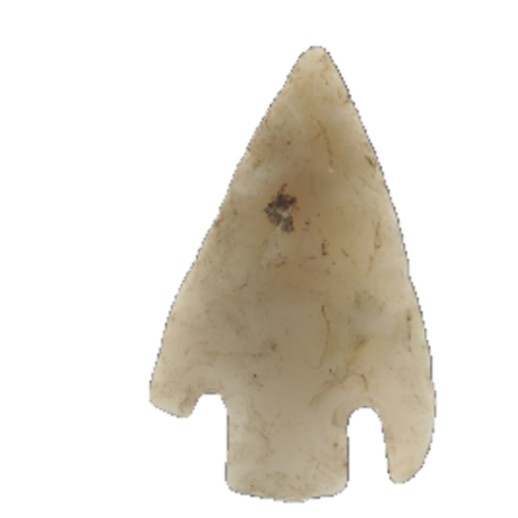 ShumlaLate Archaic3,150–2,300 B.P. (Cibola subperiod) and about 2,300 B.P. (Flanders subperiod) in the Lower Pecos (Texas Beyond History); 2,400–1,750 years ago in Bement's Flanders period (Hester et al. 1989)