

Named stone
Fort Payne chert
Also called Ft. Payne chert, Fort Payne flint, Pickwick chert (a Fort Payne locality variety), Florence County and Yellow Creek varieties
A kind of chert (and flint)
Fort Payne chertChert (and flint)SoutheastDescription
Fort Payne chert is the workhorse stone of the Tennessee Valley, taken from the Lower Mississippian Fort Payne Formation, which crops out across northern Alabama, southern Tennessee, northwest Georgia, northeast Mississippi, Kentucky and southern Illinois. It varies a great deal. Mississippi's geologists describe light tan, gray or white opaque stone with small glassy blotches, while the well-known blue-gray variety is dark bluish gray with light blue patches. Brown to dark gray-brown mottled stone is common in southern Illinois and the lower Cumberland and Tennessee valleys. Heating shifts it toward pink and red-brown. Archaeologists long confused it with Dover chert by eye, and spectroscopy showed that some famous Dover pieces are Fort Payne.
How to identify it
- Colour
- Light tan to brown, light gray or white and opaque in Mississippi (MDEQ); dark bluish gray with light blue irregular patches in the blue-gray variety; brown to dark grayish-brown mottled in southern Illinois (Parish and Butler); Florence County, Alabama stone is dark gray to black with light blue semi-translucent mottling (Barry); fossiliferous stone is light gray to blue-gray, white, tan, cream or brown.
- Texture
- Slightly grainy in Mississippi; medium to fine grain in southern Illinois; medium in the blue-gray variety with finer mottles (Barry); grain and flaking quality in fossiliferous stone follow the size of its fossils.
- Luster
- Low to medium in the gray areas and high in the blue mottles (blue-gray variety); small vitreous, slightly translucent blotches in Mississippi stone.
- Inclusions
- Small light gray vitreous mottles; fossils such as crinoids and brachiopods in the fossiliferous variety (Barry).
- Heat treatment
- Heating changes the colour to light pink or red-brown and makes the luster moderately vitreous (MDEQ). The blue-gray variety is little changed by heating; fossiliferous Fort Payne flakes fair to good mainly when heated (Barry).
Geology
Lower Mississippian Fort Payne Formation, a cherty limestone that outcrops sporadically across the middle South. Mississippi's survey notes that the base of the overlying Tuscumbia Formation is separated from it by chert beds that show along Pickwick Lake, and that chert in neighbouring limestones can look alike because silicification does not follow formation boundaries. In southern Illinois there are two small primary sources, near Elco in Alexander County and on the flanks of Hicks Dome in Hardin County, plus sources in Kentucky at Dry Branch and McCormick Creek. In northwest Georgia the Armuchee Ridge is underlain by the Fort Payne cherty limestone.
Where it comes from
Southeast, Midwest/Ohio Valley
Quarries and outcrops
- Pickwick Lake area, Tishomingo County, Mississippi (chert beds at the formation contact)
- Yellow Creek area, northeast Mississippi and northwest Alabama (fossiliferous variety)
- Florence County and the Wilson Dam area, northern Alabama (blue-gray varieties)
- Elco, Alexander County, and Hicks Dome, Hardin County, southern Illinois
- Dry Branch and McCormick Creek, Kentucky
- Armuchee Ridge, northwest Georgia
Used by
- Paleoindian: amateur archaeologists report Tennessee Valley Paleoindian assemblages are generally Fort Payne chert (Futato 1980)
- Middle Archaic: Tallahatta quartzite tools cached with blue-gray Fort Payne chert tools in the upper Tombigbee watershed (McGahey and others 1992)
Look-alikes
Stones that are easy to confuse with Fort Payne chert.
- Dover chert: visual sorting from Fort Payne is unreliable; a 2015 Parish and Durham test found it so, and spectroscopy reclassified many 'Dover' swords as Fort Payne
- Bangor chert: translucent, while Fort Payne is opaque (Barry); not foolproof
- Tuscumbia chert: the blue-gray variety can be mistaken for Bangor, and silicification crosses the Fort Payne-Tuscumbia contact (MDEQ)
Sources
- Mississippi Department of Environmental Quality, Office of Geology. Lithic Materials (web page; updated December 2023).mdeq.ms.gov (opens in a new tab)
- Barry, Steven Edward. 2004. Lithic Raw Materials and Chipped Stone Tools: A Comparison of Two Sites in the Moundville Chiefdom. M.A. thesis, Department of Anthropology, University of Alabama, Tuscaloosa.rla.unc.edu (opens in a new tab)
- Parish, Ryan M., and Brian M. Butler. 2015. The Use of Dover-Like Tool Stone by Pre-Mississippian Peoples in the Black Bottom of Southern Illinois. Illinois Archaeology 27:118-137.par.nsf.gov (opens in a new tab)
- Futato, Eugene M. 1980. An Overview of Wheeler Basin Prehistory. Journal of Alabama Archaeology 26(2):110-135.alabamaarchaeology.org (opens in a new tab)
- McGahey, Samuel, David T. Dockery III, and Stephen L. Ingram. 1992. Indian Artifacts of Tallahatta Quartzite from Tallahatta Creek Site 22-LD-645, East-Central Mississippi. Mississippi Geology 13(3).geology.deq.ms.gov (opens in a new tab)
- Wood, W. Dean, and William R. Bowen. 1995. Woodland Period Archaeology of Northern Georgia. University of Georgia Laboratory of Archaeology Series Report 33.archaeology.uga.edu (opens in a new tab)
Points made from this stone
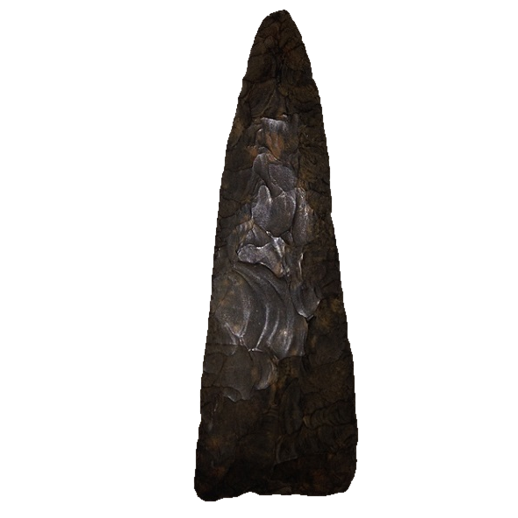 Benton BladeMiddle Archaic6,000 - 4,000 B.P.
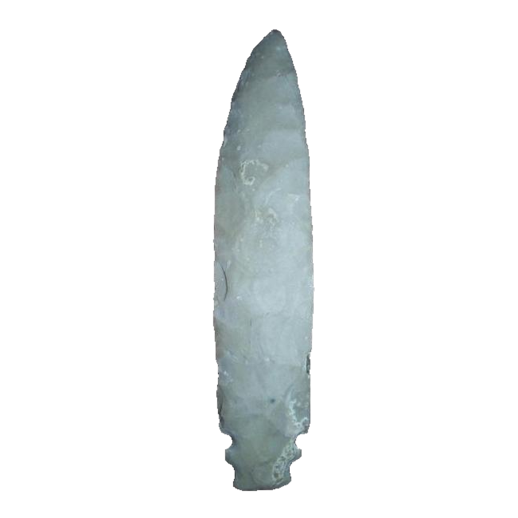 Benton Double NotchMiddle Archaic6,000 - 4,000 B.P.
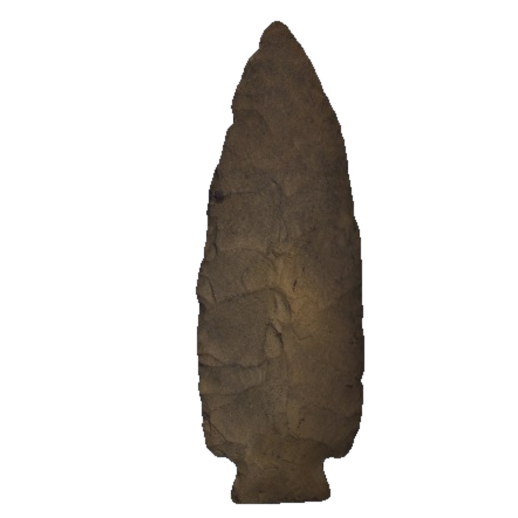 Benton StemmedMiddle Archaic6,000 - 4,000 B.P.
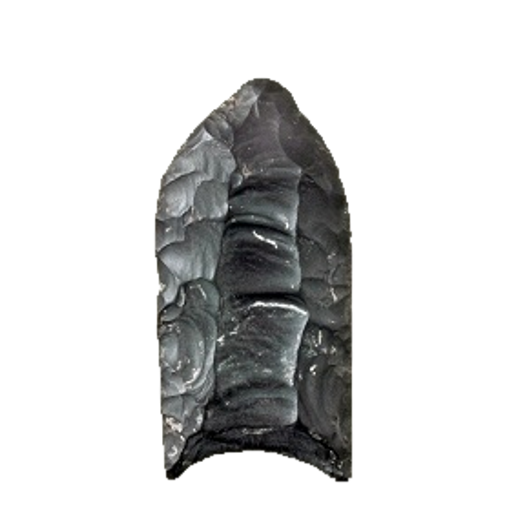 Clovis FlutedEarly Paleoindian13,050–12,750 cal B.P. (Waters et al. 2020)
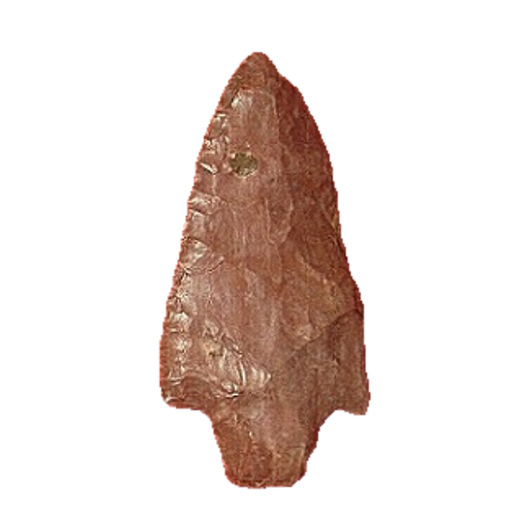 DentonMiddle Archaic6,000 - 5,000 B.P.
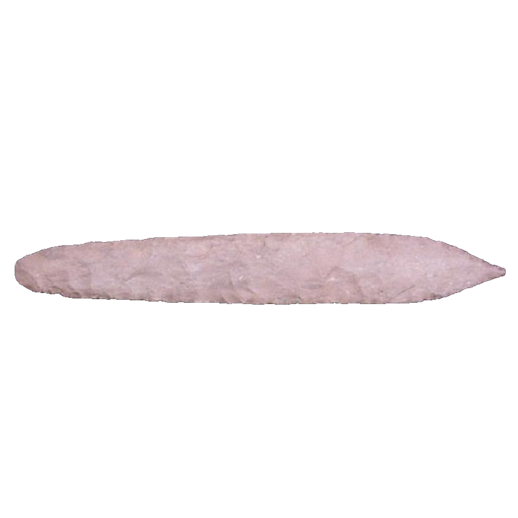 Duck River Ceremonial BladeMississippian1,100 - 600 B.P.
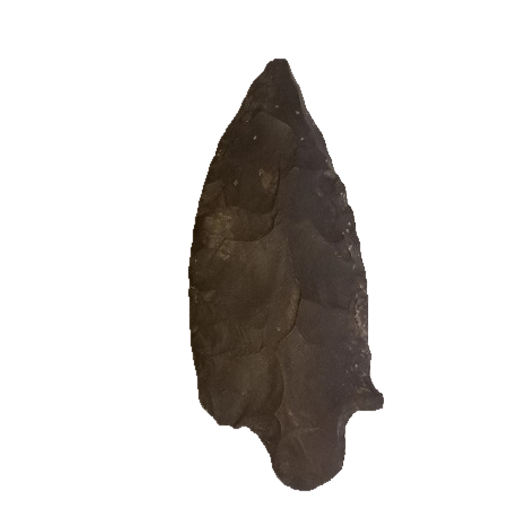 LedbetterLate Archaic to Early WoodlandAbout 5,000 - 2,000 B.P.
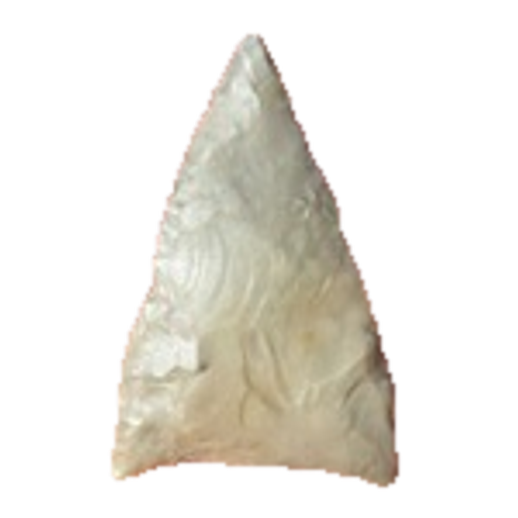 MadisonLate Woodland to Mississippian1,100–300 B.P. in the Upper Mississippi Valley (MVAC); about A.D. 1250–1600 in Maryland (Maryland JPPM); A.D. 1300–1800 for similar Late Mississippi triangles in Tennessee (Kneberg 1956, via Cambron and Hulse 1975)
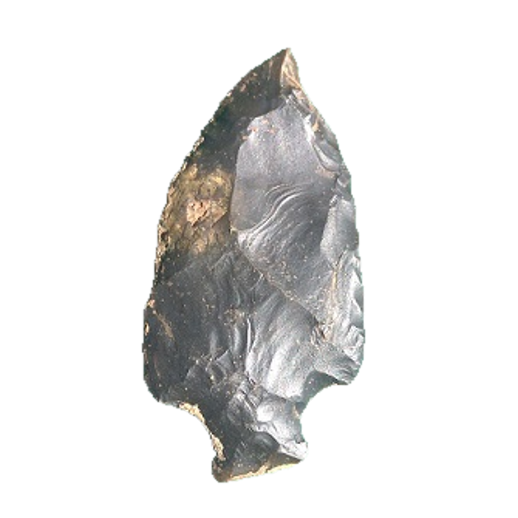 McIntireMiddle Archaic to Late ArchaicNot radiocarbon dated; placed in the Middle to Late Archaic from surface associations (Cambron and Hulse 1975).
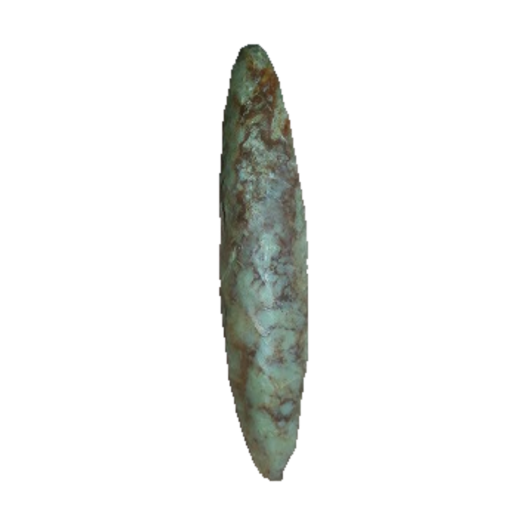 NodenaLate Mississippian550–350 B.P. (A.D. 1400–1600; Bell 1958, in Cambron and Hulse 1975)