

Named stone
Alibates agatized dolomite
Also called Alibates flint, Alibates chert
A kind of chert (and flint)
Alibates agatized dolomiteChert (and flint)Texas & Southwest2 photos
Description
Alibates is the banded, brightly coloured stone of the Texas Panhandle. It formed when silica replaced layers of Permian dolomite, leaving a hard rock with stripes and marbling in pale gray and white, pink, maroon, bright red, orange-gold and purple-blue. It occurs on mesas along a short stretch of the Canadian River breaks, where Alibates Flint Quarries National Monument protects the area's 700-plus quarries. People worked it for more than 13,000 years, from Clovis hunters to the Plains Village peoples, and tools made from it have been found across the Great Plains and Southwest, as far north as Montana and as far east as the Mississippi River. It is often confused with Tecovas jasper, another Panhandle stone.
How to identify it
- Colour
- Pale gray and white through pink, maroon, bright red, orange-gold and purple-blue, in stripes and marbled patterns (National Park Service).
- Texture
- Very hard and fine-grained because of microscopic quartz; in the field it shows as a colourful fine-grained stone inside coarser gray or white dolomite.
- Cortex
- Pieces come out of white to gray dolomite boulders, so a dolomite crust can remain on a piece.
Geology
The parent dolomite was laid down in a shallow sea in the late Permian, about 260 million years ago. Silica-rich water later replaced the dolomite with quartz, mineral by mineral. Geologists still disagree about where the silica came from: ash from a Yellowstone eruption about 675,000 years ago, the Ogallala Formation, or the same time as the dolomite. The stone occurs on top of mesas along a limited section of the Canadian River breaks.
Where it comes from
Texas & Southwest, Plains
States
Quarries and outcrops
- Alibates Flint Quarries National Monument, Canadian River breaks, Texas Panhandle (more than 700 quarries in the region)
Used by
- Clovis
- Plains Village peoples (A.D. 1150-1450), who traded it for Puebloan pottery, shells, pipestone and turquoise
- Ancestors of the Caddo, Pawnee and Wichita
Look-alikes
Stones that are easy to confuse with Alibates agatized dolomite.
- Tecovas jasper (Texas Beyond History warns it is often mistaken for Alibates; a 2011 Plains Anthropologist paper separated the two by neutron activation, not opened)
Sources
- National Park Service. Geology. Alibates Flint Quarries National Monument.nps.gov (opens in a new tab)
- National Park Service. Texas: Alibates Flint Quarries National Monument.nps.gov (opens in a new tab)
- Shaeffer, James B. 1958. The Alibates Flint Quarry, Texas. American Antiquity 24(2):189-191.doi.org (opens in a new tab)
- Texas Beyond History (University of Texas at Austin). Stone Tools exhibit: Tecovas chert.texasbeyondhistory.net (opens in a new tab)
Points made from this stone
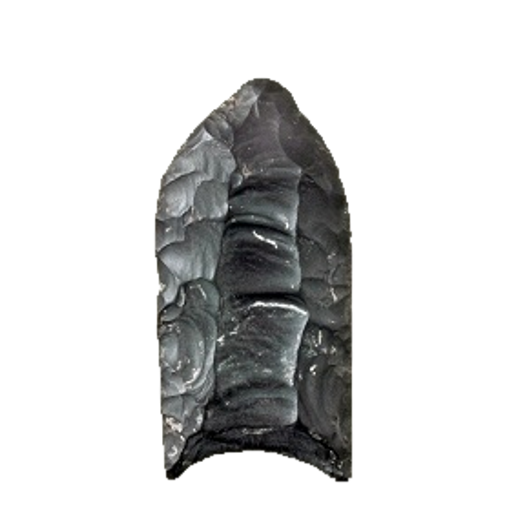 Clovis FlutedEarly Paleoindian13,050–12,750 cal B.P. (Waters et al. 2020)
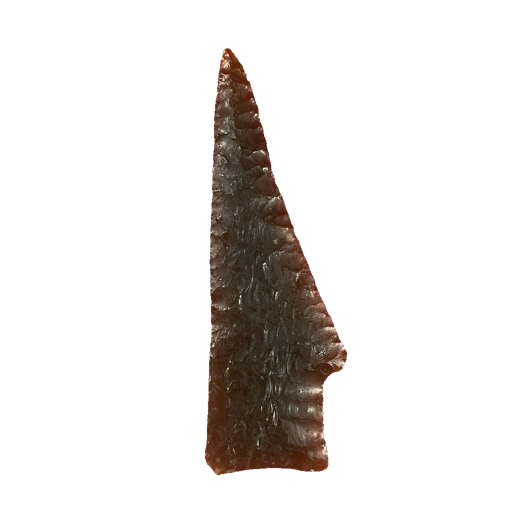 Cody KnifePaleoindian9,300–8,700 B.P. at the Horner type site (Frison and Todd 1987, as cited by Shortt 2000); Cody sites cluster near 9,000 B.P.
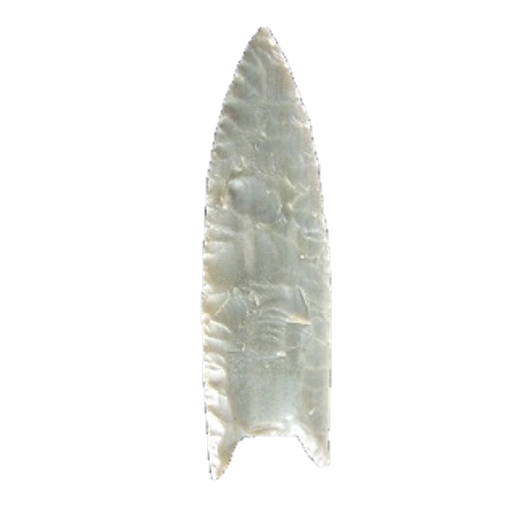 Folsom FlutedPaleoindian10,900–10,200 B.P. (Peck 2011); 11,000–10,500 B.P. in Saskatchewan (Saskatchewan Archaeological Society)
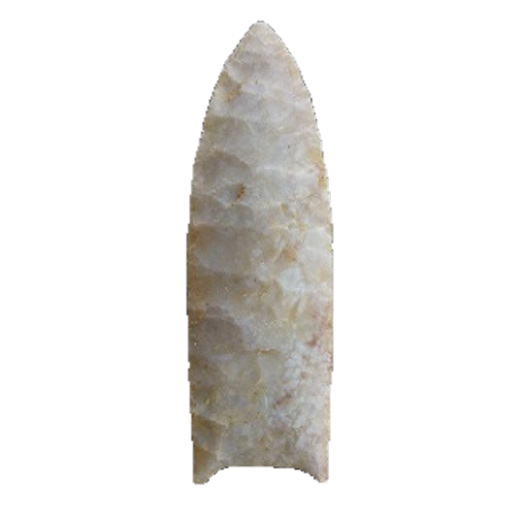 MidlandEarly Paleoindian12,900–12,250 cal B.P. (Texas Beyond History); 11,000–10,000 B.P. (Perino 1971)
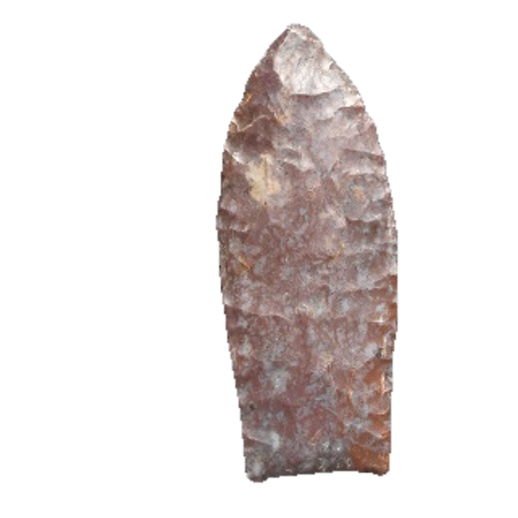 MilnesandLate PaleoAbout 10,000 B.P. (Plainview age; the type site itself has no radiocarbon date)
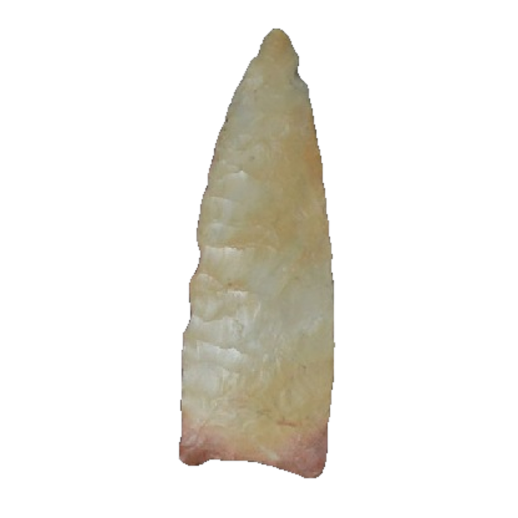 PlainviewLate PaleoindianAbout 12,100 - 11,300 years ago in calendar years (roughly 10,200 - 9,900 B.P. radiocarbon)
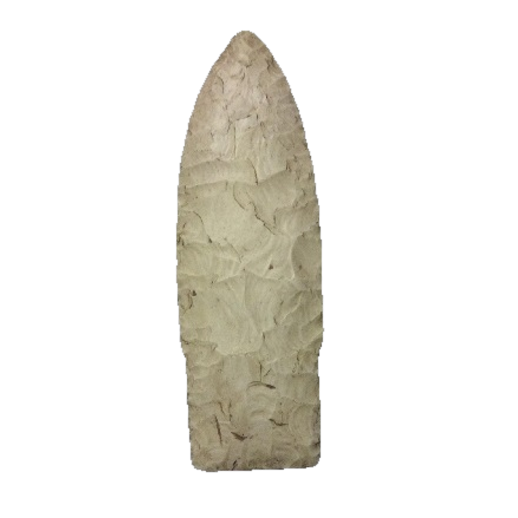 ScottsbluffLate Paleoindian9,900–8,000 B.P. (Cody complex; Knell and Muniz 2013)