

Named stone
Arkansas novaculite
Also called Ouachita novaculite, Ouachita Mountains novaculite
A kind of chert (and flint)
Arkansas novaculiteChert (and flint)Plains3 photos
Description
Novaculite is a hard, fine-grained silica rock, like chert or flint, made of very small quartz crystals. Its name comes from the Latin word for razor, and the same Arkansas stone has been quarried for whetstones since the early 1800s. It is often white or light gray, but pink, red, tan, dark gray and black occur, and thin edges are translucent. People in and near the Ouachita Mountains used it for points, knives, drills and scrapers from about 10,500 B.C. to A.D. 1700. Over 120 novaculite quarries are recorded in Arkansas, some of the largest archaeological sites in the state. Artifacts are known from Missouri, Oklahoma, Texas, Louisiana, Mississippi, Tennessee and Alabama. Heat treatment made it easier to flake.
How to identify it
- Colour
- Often white or light gray; also pink, red, tan, dark gray and black. Dark gray translucent stone was preferred at one Hot Spring County workshop (Arkansas Archeological Survey).
- Texture
- Hard, fine-grained, microcrystalline quartz; conchoidal fracture.
- Luster
- Distinctly translucent: light shows through thin edges.
- Heat treatment
- At the Jones Mill site, residents heat-treated the stone to make it easier to flake (Arkansas Archeological Survey).
Geology
The Arkansas Novaculite Formation: beds of massive novaculite mixed with chert and shale, laid down from silica that separated from seawater in the Devonian to Mississippian (about 318 to 416 million years ago), then folded and tilted by mountain building. It outcrops along the Benton-Broken Bow Uplift between Little Rock, Arkansas, and Broken Bow, Oklahoma. The Survey says novaculite is found only in the Ouachitas of Arkansas and Oklahoma and in southwest Texas.
Where it comes from
Plains, Ozarks
Quarries and outcrops
- Hot Spring County, Arkansas (quarries 3HS603 and 3HS659, workshop 3HS397, Jones Mill site)
- Garland and Montgomery counties, Arkansas, and McCurtain County, Oklahoma (sampled outcrops)
- Benton-Broken Bow Uplift, Little Rock to Broken Bow
Used by
- About 10,500 B.C. to A.D. 1700 (all periods): points for darts and arrows, knives, drills, scrapers
- Archaic: quarrying, bifaces made at river sites such as Jones Mill
- Later Caddo ancestors lived at Jones Mill
Look-alikes
Stones that are easy to confuse with Arkansas novaculite.
- Other Ouachita and Ozark cherts (a 2008 neutron-activation study found novaculite distinct from other Oklahoma and Texas cherts)
Sources
- Trubitt, Mary Beth. Arkansas Novaculite: Whetstones and More. Arkansas Archeological Survey flyer.archeology.uark.edu (opens in a new tab)
- Arkansas Archeological Survey. Arkansas Novaculite: A Virtual Comparative Collection. Novaculite Quarries: Hot Spring County.archeology.uark.edu (opens in a new tab)
Points made from this stone
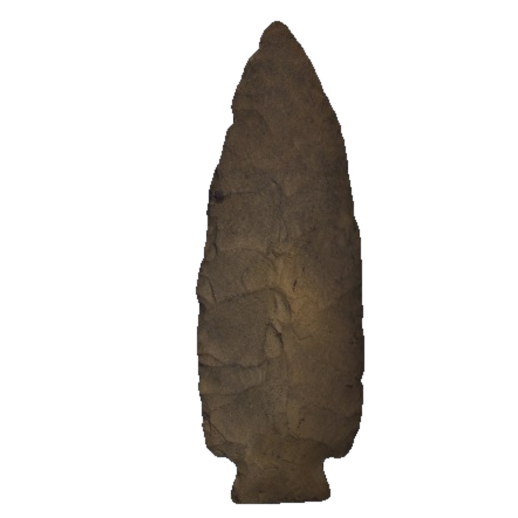 Benton StemmedMiddle Archaic6,000 - 4,000 B.P.
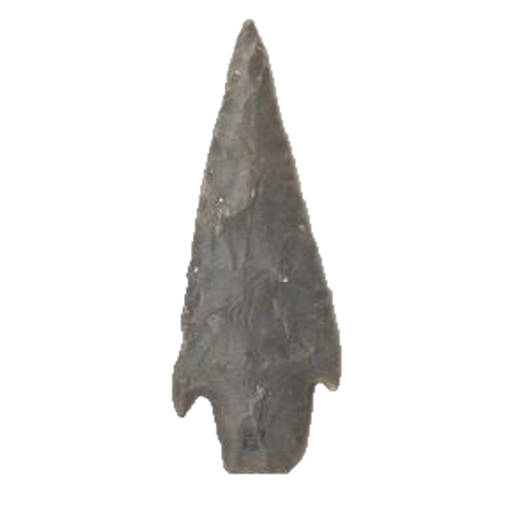 BulverdeLate ArchaicAbout 4,250 B.P. onward (from about 2300 B.C.; Johnson and Goode 1994); 4,950–950 B.P. (3000 B.C. to A.D. 1000; Suhm, Krieger and Jelks 1954, now out of date)
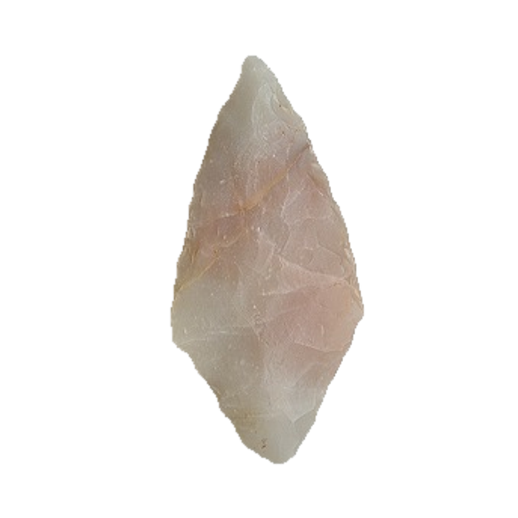 GaryLate Archaic to WoodlandAbout 3,950–950 B.P. (2000 B.C.–A.D. 1000) in Texas, possibly later in parts of the Caddo area (Suhm and Krieger 1954); about 2,600–1,050 B.P. (650 B.C.–A.D. 900) on Woodland Fourche Maline sites in Arkansas (Arkansas Archeological Survey)
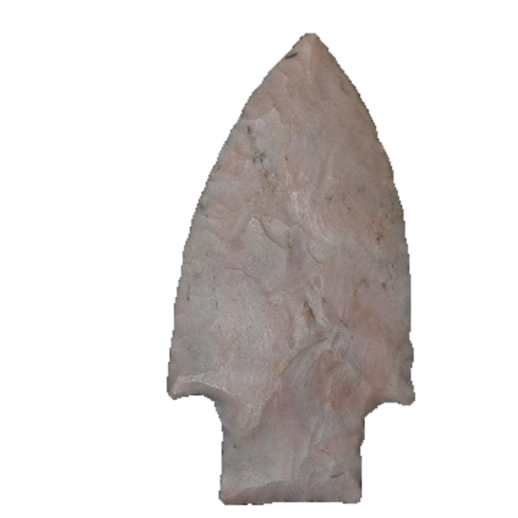 JohnsonMiddle ArchaicAbout 6,950–5,950 B.P. (5000–4000 B.C.; Jeter and Williams 1989); a Middle Archaic stratum with Johnson points at Jones Mill dated 7,950–6,250 cal B.P. (6000–4300 cal B.C.; Trubitt and Hanvey 2011)
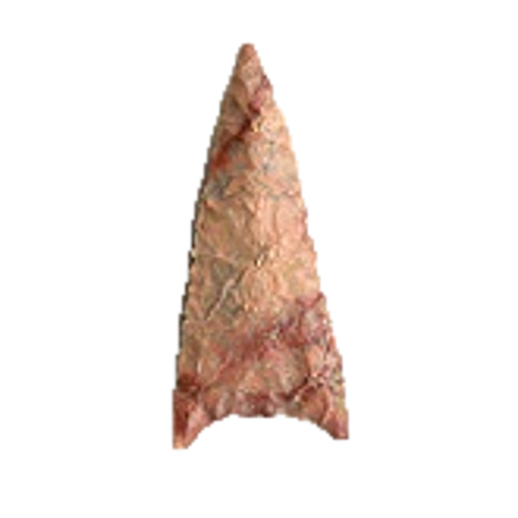 MaudLate Prehistoric to ProtohistoricAbout 450–300 B.P. (16th to early 17th century A.D.; Social Hill phase, Arkansas)
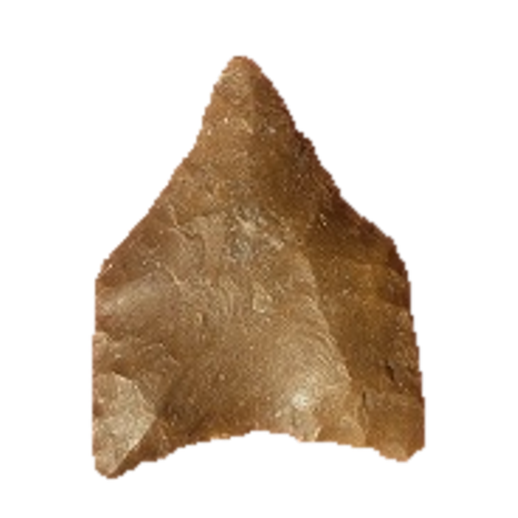 San PatriceTransitional Paleo to Early Archaic10,000 - 8,000 B.P.
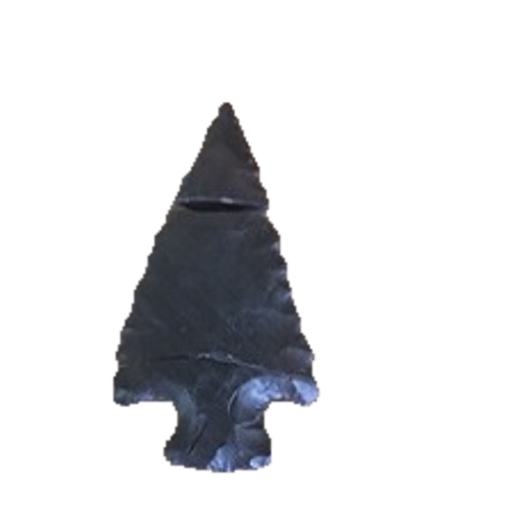 ScallornLate Prehistoric (Texas); Late Woodland to early Mississippian (Missouri)1,250–650 B.P. (Austin phase, A.D. 700–1300; Prewitt 1981; Ricklis 1996); Suhm and Krieger (1954) estimated A.D. 700–1500; southwest Missouri radiocarbon dates about A.D. 750–770 (Fuller)
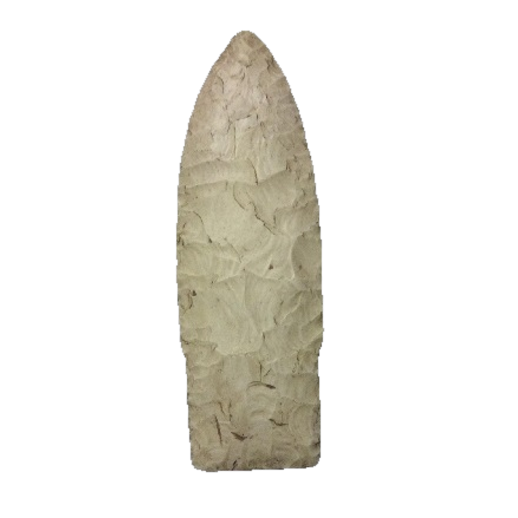 ScottsbluffLate Paleoindian9,900–8,000 B.P. (Cody complex; Knell and Muniz 2013)
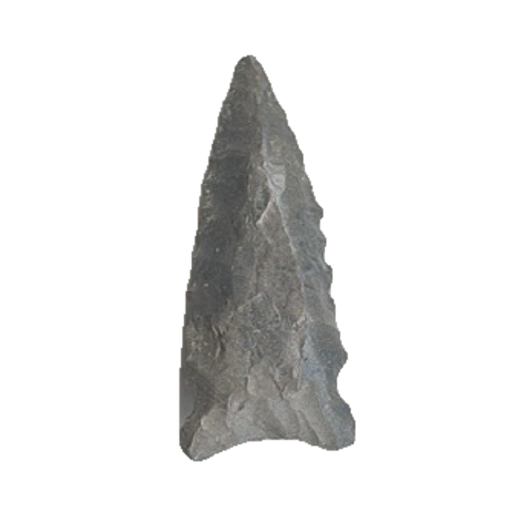 White RiverMiddle Archaic
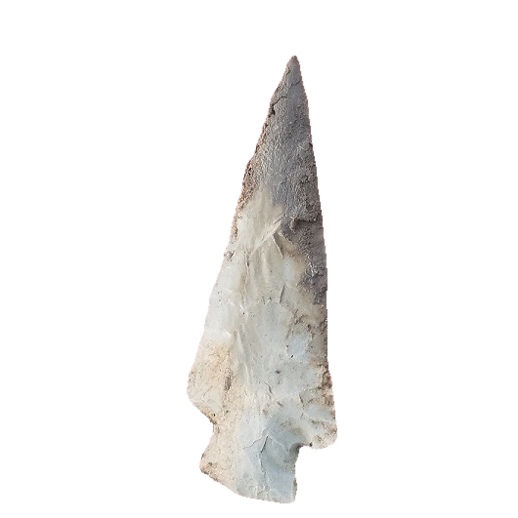 WilliamsLate Archaic4,200–3,500 B.P. in Missouri (Ray); 3,100–2,150 B.P. in central Texas (Lohse et al. 2013)