

Named stone
Knife River flint
Also called KRF
A kind of chert (and flint)
Knife River flintChert (and flint)Plains2 photos
Description
Knife River flint is the dark brown to jet black flint of west-central North Dakota. It is glassy to waxy, wears a cream-coloured rind, and flakes easily, which made it the most important stone to western North Dakota's Paleo-Indians and a prized material for more than 12,000 years. It has never been found in place in bedrock. The pieces lie in gravels and lag deposits, mostly along terraces of the Knife River and Spring Creek in Dunn, Mercer and Oliver counties, where prehistoric diggers left shallow pits that still show on aerial photographs. The Lynch Quarry site (693 acres) became a National Historic Landmark in 2011. Knife River flint was traded across the western United States and as far east as Ohio and Pennsylvania.
How to identify it
- Colour
- Jet black to dark chocolate brown to gray (North Dakota Geological Survey).
- Texture
- Glassy to waxy.
- Luster
- Glassy to waxy.
- Inclusions
- Faint layering and plant fragments are described for the HS Bed flint, thought to be the in-place equivalent; the Survey does not say whether they appear in Knife River pieces.
- Cortex
- A well-developed cream-coloured patina or rind.
- Heat treatment
- Heat treatment of the flint has been studied (Ahler 1983, Lithic Technology 12(1):1-8). The paper was not opened, so no effects are claimed here.
Geology
Probably from the Camels Butte Member of the Golden Valley Formation (Eocene), the same level as the 'HS Bed' flint; the flint itself occurs only in secondary deposits, from Eocene-age gravels to modern lag. Silica-rich groundwater meeting an organic-rich layer such as peat is the likely origin, which is why older papers call it silicified lignite or peat.
Where it comes from
Plains
States
Quarries and outcrops
- Knife River and Spring Creek terraces, Dunn, Mercer and Oliver counties
- Lynch Quarry (32DU526), Dunn County, 693 acres, National Historic Landmark 2011
- Crowley Flint Quarry (32ME201), Mercer County, managed by the State Historical Society of North Dakota
- Rock piles near Killdeer, Dunn County
Used by
- Paleoindian and later: Folsom and Cody-complex occupations are recorded at the quarries
- Middle and Late Plains Archaic: Oxbow and Pelican Lake points (Library texts)
- Late Prehistoric to Protohistoric: Plains Side Notch points at Fort Union Trading Post (Library text)
Look-alikes
Stones that are easy to confuse with Knife River flint.
- HS Bed flint (black to dark brown with a cream rind; the probable in-place equivalent)
- Tongue River silicified sediment / Taylor Bed silcrete (grainier, gray to tan)
- Rainy Butte chert (chocolate brown but made of fossil wood, with growth rings)
Sources
- Murphy, Ed. 2014. Knife River Flint and Other Siliceous Rocks in Western North Dakota. Geo News (January 2014), North Dakota Geological Survey, pp. 1-7.dmr.nd.gov (opens in a new tab)
- Gregg, Michael L., and Amy C. Bleier. 2021. The Knife River Study Unit. Historic Preservation in North Dakota (Archaeological Component), State Historical Society of North Dakota.history.nd.gov (opens in a new tab)
- Clayton, Lee, W. B. Bickley Jr., and W. J. Stone. 1970. Knife River Flint. Plains Anthropologist 15(50):290-298.doi.org (opens in a new tab)
- Ahler, Stanley A. 1983. Heat Treatment of Knife River Flint. Lithic Technology 12(1):1-8.doi.org (opens in a new tab)
Points made from this stone
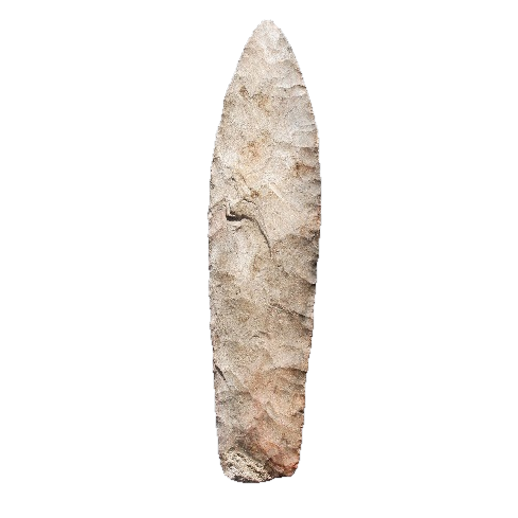 Agate BasinLate Paleoindian10,500–10,000 B.P.; charcoal from the Agate Basin level at Area II of the type site dated 10,430 ± 570 B.P. (MVAC)
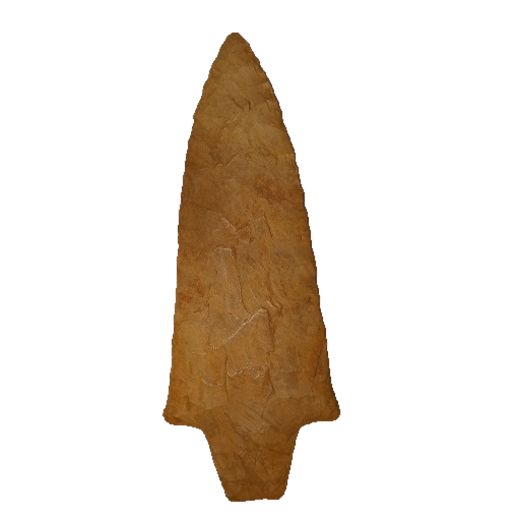 DicksonEarly Woodland to Middle Woodland2,500–1,800 B.P. (contracting-stemmed points, Upper Mississippi Valley; MVAC)
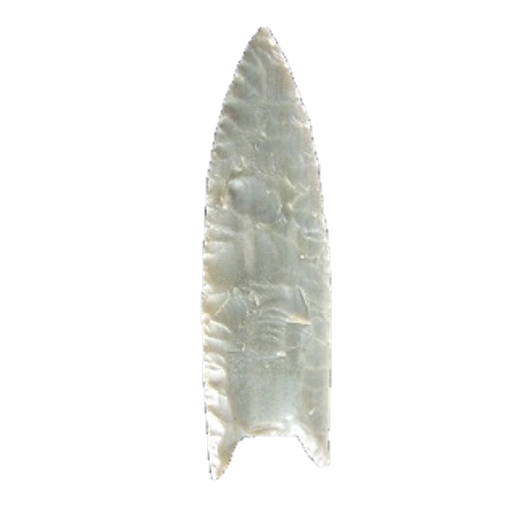 Folsom FlutedPaleoindian10,900–10,200 B.P. (Peck 2011); 11,000–10,500 B.P. in Saskatchewan (Saskatchewan Archaeological Society)
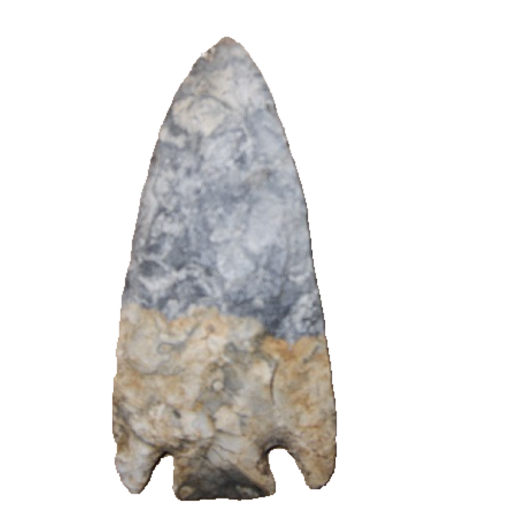 Pelican LakeLate Plains Archaic (Late Middle Prehistoric period)3,300–1,850 B.P. (Dyck; Saskatchewan Archaeological Society); classic barbed form about 3,600–2,800 B.P. (Peck 2011)
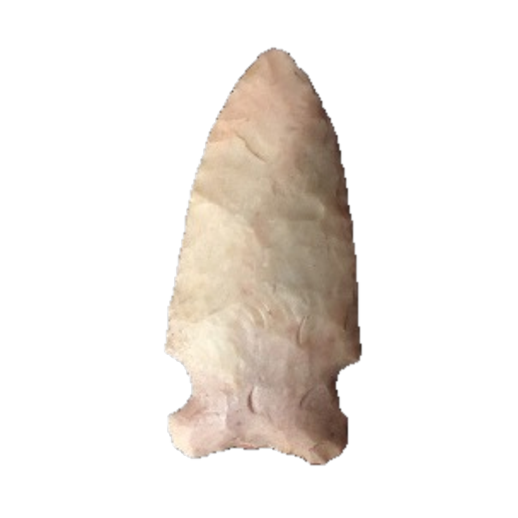 SimonsenEarly Archaic to Middle Archaic8,000 - 6,000 B.P.