

Named stone
Wyandotte chert
Also called Hopkinsville chert, Indiana hornstone, Harrison County chert, Fredonia Member chert
A kind of chert (and flint)
Wyandotte chertChert (and flint)Midwest/Ohio Valley2 photos
Description
Wyandotte chert is the classic blue-gray chert of the Ohio Valley, named for Wyandotte Cave in Harrison County, Indiana. It comes from the lower Fredonia Member of the Mississippian Ste. Genevieve Limestone, where fine-grained nodules and ball-shaped masses, 1 to 8 inches across, are packed into the limestone. Typical stone is medium blue-gray with a fine texture and shiny luster, sometimes with concentric banding inside the nodule. The same chert near Hopkinsville, Kentucky, is called Hopkinsville chert, and older names are Indiana hornstone and Harrison County chert. Wyandotte chert shows up far from home, for example in Michigan's Saginaw Valley late in the Late Archaic.
How to identify it
- Colour
- Medium blue-gray (Munsell 5B 5/1) (Luedtke, cited by Boulanger).
- Texture
- Fine textured; the nodules can show concentric banding.
- Luster
- Shiny.
Geology
The lower part (about 80 feet) of the Mississippian Ste. Genevieve Limestone is bedded limestone with abundant fine-grained nodular and ball-shaped chert masses 1 to 8 inches across. This chert-rich zone is the Fredonia Member, and chert is especially abundant in its upper part. Well-known exposures are in Harrison County, Indiana (Wyandotte Cave) and near Hopkinsville, Christian County, Kentucky. The Illinois survey describes the Ste. Genevieve as light gray limestone with common chert that is generally gray and locally black, cropping out from Alton south and east across southern Illinois into eastern Missouri, southwestern Indiana and western Kentucky.
Where it comes from
Midwest/Ohio Valley
Quarries and outcrops
- Wyandotte Cave area, Harrison County, Indiana
- Hopkinsville, Christian County, Kentucky
Used by
- Late Archaic, late: Wyandotte chert from southern Indiana becomes common in Saginaw Valley, Michigan, assemblages (Castle Museum)
- Blue-gray Midwestern cherts, among them Wyandotte, travelled long distances in the Paleoindian, a part of the Late Archaic, and the Middle Woodland (Butler and others)
- Found at (not a source): Fredonia Member outcrops across southern Illinois (Ste. Genevieve Limestone, same unit)
Look-alikes
Stones that are easy to confuse with Wyandotte chert.
- Cobden-Dongola chert and Kentucky Blue chert, the other Midwestern blue-gray cherts: colour ranges overlap (Butler and others)
- Holland, Harrodsburg and Upper Mercer cherts, which Boulanger treated as visual candidates for the same artifacts
- Tankersley found Wyandotte mineralogically distinct from its look-alikes (cited by Boulanger)
Sources
- Boulanger, Matthew T. 2022. Neutron Activation Analysis and X-ray Fluorescence of Chert Artifacts from Mielke #1 (33SH26), Shelby County, Ohio. Supplementary Text S1, Midcontinental Journal of Archaeology.midwestarchaeology.org (opens in a new tab)
- Illinois State Geological Survey. Ste. Genevieve Limestone. Online Handbook of Illinois Stratigraphy (ILSTRAT; after Willman and others 1975, Illinois State Geological Survey Bulletin 95).ilstratwiki.web.illinois.edu (opens in a new tab)
- Butler, Shane K., Madeleine G. Evans, and Richard A. Cahill. 2016. Quantitative methods of chert source identification as a tool for archaeological interpretation. Abstracts with Programs, Geological Society of America 48, Paper No. 16-1. doi:10.1130/abs/2016NC-275195.experts.illinois.edu (opens in a new tab)
- Castle Museum of Saginaw County. Saginaw Valley Archaeology.castlemuseum.org (opens in a new tab)
- Illinois State Geological Survey. Ste. Genevieve Limestone (ILStratWiki).ilstratwiki.web.illinois.edu (opens in a new tab)
Points made from this stone
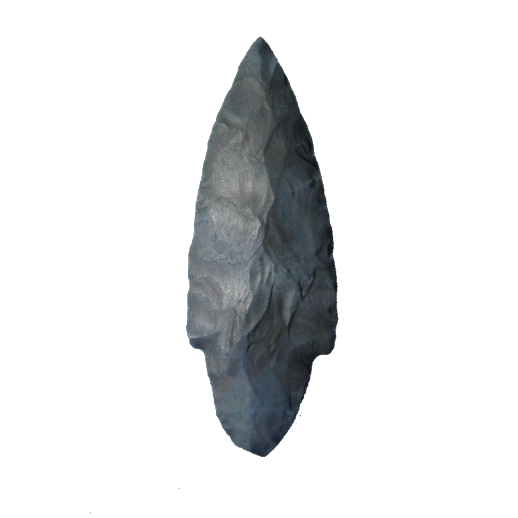 Adena StemmedEarly Woodland to Middle Woodland2,750–1,750 B.P. (800 B.C.–A.D. 200; Maryland JPPM); Maryland and Delaware radiocarbon dates mostly 2,445–1,960 B.P.; Ohio and Kentucky Adena dates 800 B.C.–A.D. 800 (Cambron and Hulse 1975)
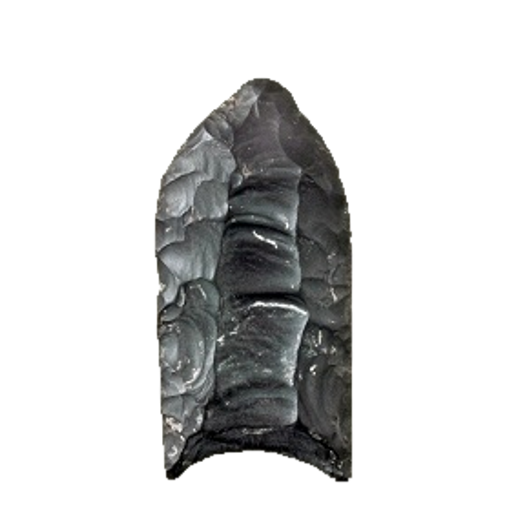 Clovis FlutedEarly Paleoindian13,050–12,750 cal B.P. (Waters et al. 2020)
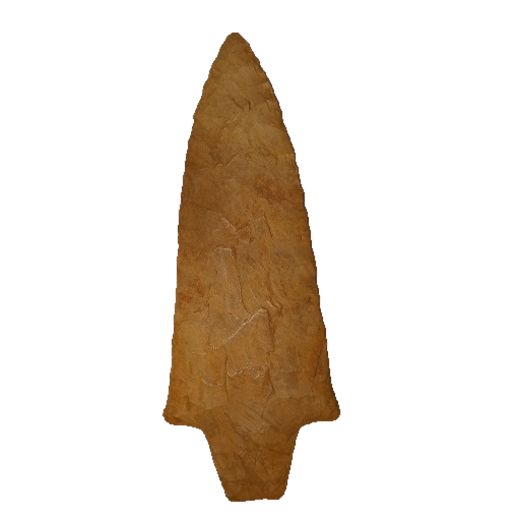 DicksonEarly Woodland to Middle Woodland2,500–1,800 B.P. (contracting-stemmed points, Upper Mississippi Valley; MVAC)
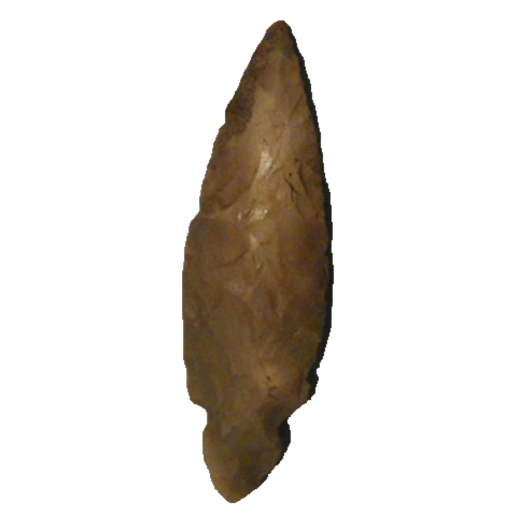 Fulton TurkeytailLate Archaic to Early Woodland3,450–2,450 B.P. (1,500–500 B.C.), most probably made about 2,950–2,750 B.P. (1,000–800 B.C.) (Perino 1971); 1,500–500 B.C. in Indiana (Jones and Johnson 2003)
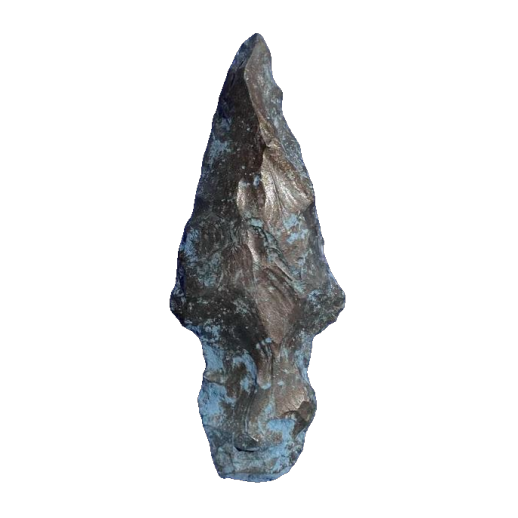 Harrison TurkeytailLate Archaic to Early Woodland3,500 - 2,500 B.P. (about 1500 - 500 B.C.)
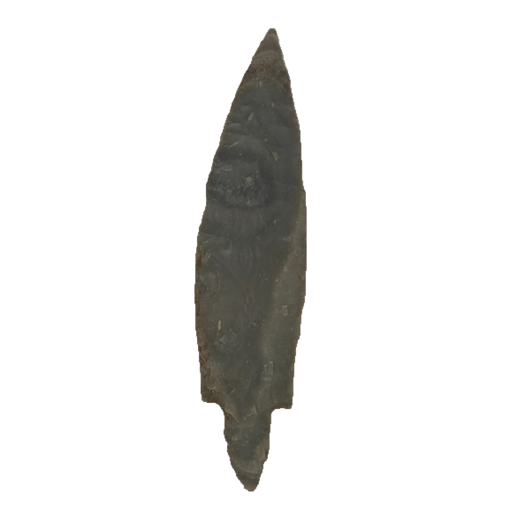 Hebron TurkeytailLate Archaic to Early Woodland3,500 - 2,500 B.P. (about 1500 - 500 B.C.)
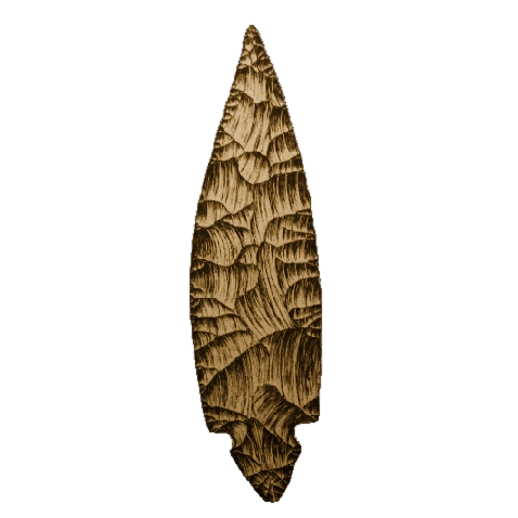 Turkeytail HarrisonTerminal Archaic to Early WoodlandAbout 3,450–2,450 B.P. (1500–500 B.C.; Jones and Johnson 2003); Scully (1951) suggested 2000–500 B.C.
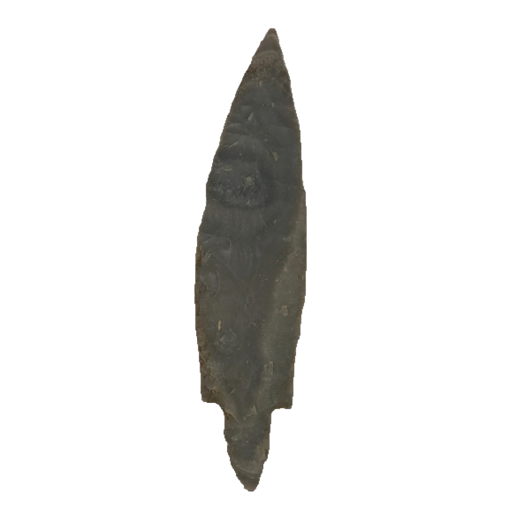 Turkeytail HebronLate Archaic to Early Woodland3,500–2,500 B.P. (about 1500–500 B.C.; Ohio History Connection); Cambron and Hulse cite 2000–500 B.C. for Turkey Tail (Scully 1951)