Named stone
Burro Mesa chert
Also called Big Bend silicified tuff, Burro Mesa quarry stone
A kind of chert (and flint)
Burro Mesa chertChert (and flint)Texas & SouthwestDescription
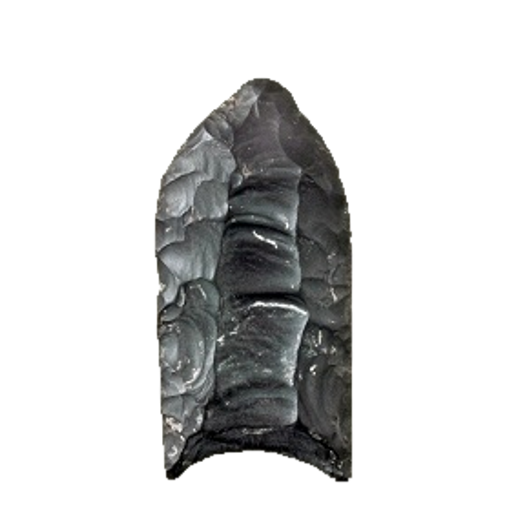
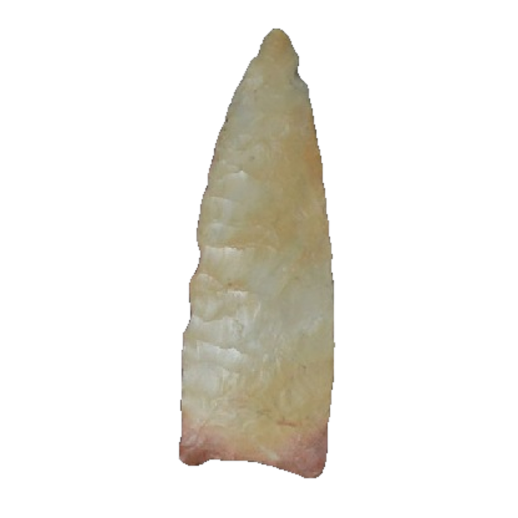
Burro Mesa chert is an excellent knapping stone from the foothills of the Chisos Mountains in Big Bend National Park, Texas. Technically it is a silicified volcanic tuff, and it comes in every colour of the spectrum as solid, mottled or banded pieces. The Burro Mesa quarry (41BS220) covers more than 40 acres and was mined, at times heavily, for about 13,000 years. It sits in the Burro Mesa Archeological District, listed on the National Register. People pried out good stone, apparently using fire to break it, then roughed out preforms and blanks and carried them away, leaving a carpet of debris. Artifacts reach at least 50 miles away. A Clovis point and a Plainview point of this chert show use from the early Paleoindian period.
How to identify it
- Colour
- Every shade of the spectrum, as solid colours or mottled or banded patterns.
- Texture
- Excellent quality; varies tremendously in texture.
Geology
A silicified tuff (hardened volcanic ash). Chert deposits are underlain by tuff beds that contain veins of soft white kaolinite, which people made into beads and pendants. The quarry lies in the foothills of the Chisos Mountains.
Where it comes from
Texas & Southwest
States
Quarries and outcrops
- Burro Mesa quarry (41BS220), Big Bend National Park, Brewster County
- Apache Canyon area below the quarry (kaolinite in the dry streambed)
Used by
- Early Paleoindian (about 12,000 to 13,000 years ago): a Clovis point and a Plainview point
- Used intermittently ever since through the early historic period
Look-alikes
Stones that are easy to confuse with Burro Mesa chert.
- Other Big Bend cherts and silicified tuffs (not compared in the opened source)
Sources
- Texas Beyond History (University of Texas at Austin, Texas Archeological Research Laboratory). Burro Mesa Chert. Trans-Pecos section.texasbeyondhistory.net (opens in a new tab)