
Named stone
Galena, Oneota and Shakopee cherts
Also called Prairie du Chien chert, Prairie du Chien Group chert, Galena Group chert, Oneota chert, Shakopee chert
A kind of chert (and flint)
Galena, Oneota and Shakopee chertsChert (and flint)Midwest/Ohio ValleyDescription
The Ordovician cherts of the upper Mississippi Valley are widely available and widely used, mostly because they were handy. Prairie du Chien chert comes from the Shakopee and Oneota formations; archaeologists often split it into Shakopee chert and Oneota chert, but the two cannot be told apart by eye. Its quality varies, it is easiest to spot when oolitic, and it is commonly heat-treated. Galena chert comes from the Galena Group and is more distinctive: opaque, chalky, pale brown to pale gray, with small white flecks of crushed fossils and flat vugs, turning pink-orange when heated. Both occur through southeastern Minnesota, Wisconsin and Iowa, and are common in small amounts at sites far from the source.
How to identify it
- Colour
- Prairie du Chien: variable, with a natural reddish tint in some pieces. Galena: normally pale brown, less often pale gray; olive gray and mottled in southwestern Wisconsin; reddish or pinkish orange after heating.
- Texture
- Prairie du Chien: one form grainy, another sandy. Galena: normally chalky, coarse to medium silt texture with a gritty feel; vitreous only in some natural pieces or after heating (Wendt and Trow; Bakken).
- Inclusions
- Prairie du Chien: oolites in the easiest-to-identify form. Galena: scattered small white flecks (probably crushed fossils) and small flattened vugs.
- Heat treatment
- Prairie du Chien chert was commonly heat treated, though a natural reddish tint complicates telling. Galena chert is most often used after heat treatment, which gives a pinkish-orange or reddish colour (Wendt and Trow; Bakken).
Geology
Prairie du Chien chert comes from the Shakopee and Oneota formations of the Ordovician Prairie du Chien Group, which are not always distinguishable in Minnesota; redeposited in glacial drift, the cherts cannot be separated, so Bakken uses one inclusive name. Galena chert is from the Galena Group (Ordovician) of southeastern Minnesota, northeastern Iowa, southwestern Wisconsin and far-northern Illinois. Prairie du Chien chert's distribution covers large parts of south-central and southeastern Minnesota and extends into Wisconsin and Iowa.
Where it comes from
Midwest/Ohio Valley
Quarries and outcrops
- St. Croix River Access site (21WA49), Washington County, Minnesota (gathering from outcrops or gravels)
- LeSueur site, LeSueur, Minnesota (nearby outcrops quarried and heat-treated)
- Galena Mineral District, southwestern Wisconsin (finer, olive-gray stone)
- Several Galena chert procurement sites in southeastern Minnesota
Used by
- Prairie du Chien chert: one of the most widely used stones in south-central and southeastern Minnesota (Bakken)
- Galena chert: moderate- to good-quality stone circulated in small amounts to sites some distance from the source (Bakken)
Look-alikes
Stones that are easy to confuse with Galena, Oneota and Shakopee cherts.
- Swan River, Red River and Burlington chert (Prairie du Chien can overlap in appearance)
- Grand Meadow chert (Galena chert is unlikely to be confused with it; key marks are coarser texture, more opacity and white fossil flecks)
- Maquoketa chert
Sources
- Bakken, Kent E. (written about 1995; PDF issued later). Chipped Stone Raw Materials. Chapter 6 in Stone Tools of Minnesota. Minnesota Office of the State Archaeologist, St. Paul.mn.gov (opens in a new tab)
- Wendt, Dan, and Tom Trow. 2020. Grand Meadow Chert: A Distinctive and High-Quality Chert in Southeastern Minnesota. The Minnesota Archaeologist 77.mowercountyhistory.org (opens in a new tab)
Points made from this stone
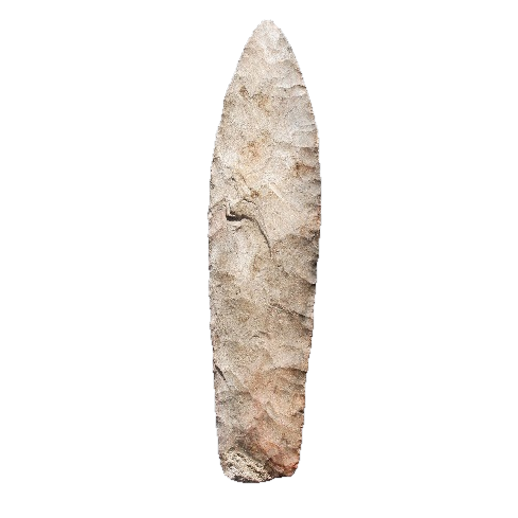 Agate BasinLate Paleoindian10,500–10,000 B.P.; charcoal from the Agate Basin level at Area II of the type site dated 10,430 ± 570 B.P. (MVAC)
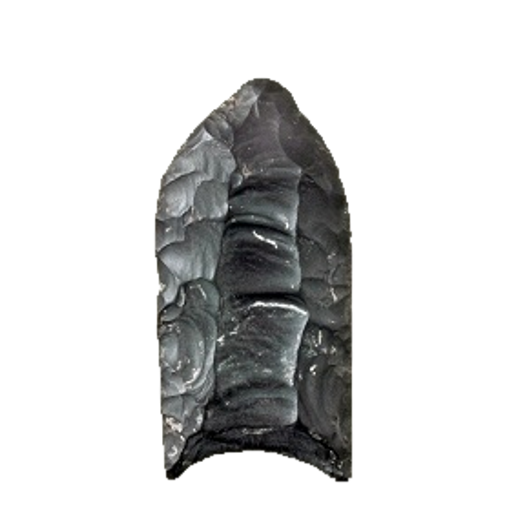 Clovis FlutedEarly Paleoindian13,050–12,750 cal B.P. (Waters et al. 2020)
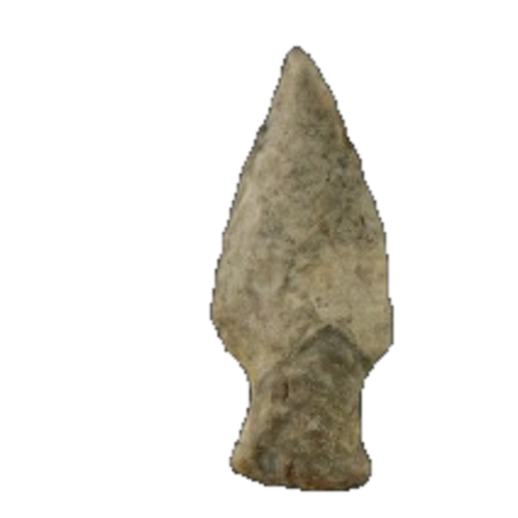 DurstLate Archaic3,500 - 2,500 B.P., centred on about 3,000 B.P.
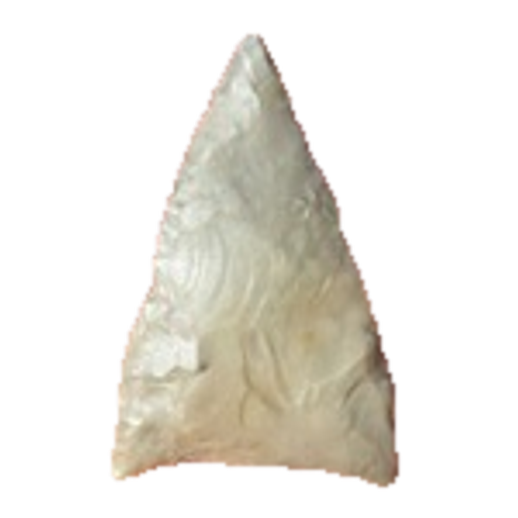 MadisonLate Woodland to Mississippian1,100–300 B.P. in the Upper Mississippi Valley (MVAC); about A.D. 1250–1600 in Maryland (Maryland JPPM); A.D. 1300–1800 for similar Late Mississippi triangles in Tennessee (Kneberg 1956, via Cambron and Hulse 1975)
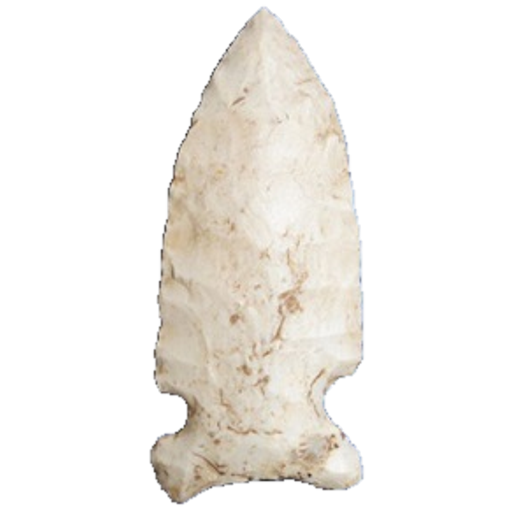 OsceolaMiddle to Late Archaic5,000 - 3,500 B.P.
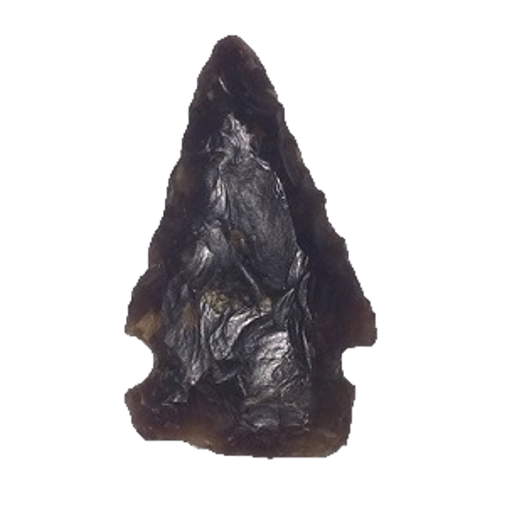 RaddatzMiddle Archaic to Late ArchaicAbout 6,450–3,750 B.P. (4500–1800 B.C., estimated by depth; a pit in the sequence dated 5,200 ± 400 B.P.; Wittry 1959); 5,000–3,500 B.P. (Mississippi Valley Archaeology Center)