
Named stone
Burlington chert
Also called Crescent chert (the best-known source variety, Crescent Quarry area, Missouri), Burlington Limestone chert
A kind of chert (and flint)
Burlington chertChert (and flint)Midwest/Ohio ValleyDescription
Burlington chert is the pale, fine-grained chert of the Mississippian-age Burlington Limestone, which crops out from southeastern Iowa and western Illinois into eastern Missouri. In places the chert forms beds and nodules that make up as much as half of the rock. Mississippian people quarried it intensively, especially around the Crescent Quarry area south of St. Louis, and used it widely in the American Bottom near Cahokia. It also travelled a long way: a 2017 geochemical study of chert from the Carson site in Mississippi found that it came from several outcrop areas, not only Crescent. A whitish, translucent stone is the usual first clue, but nearby Mississippian cherts overlap, so colour alone does not prove the source.
How to identify it
- Colour
- Whitish to light gray. The Illinois Geological Survey describes light gray or white chert; Mehta and others (2017) call it whitish and translucent.
- Heat treatment
- Table Rock points of Burlington chert were heat-treated more often than Table Rock points of other cherts, per a small Sac River (Missouri) sample in Jack Ray's note for the Missouri Archaeological Society. The note does not describe what the heating changed.
Geology
Burlington Limestone, Mississippian (Valmeyeran Series), mostly light gray, coarsely crystalline limestone. Chert beds and nodular masses of light gray or white chert are common, especially in the middle and upper part; the chert is very lenticular and in places forms up to about half of the formation. In Illinois the best outcrops are in the Mississippi River bluffs from Quincy (Adams County) to near Alton (Madison County). The type section is at Burlington, Iowa.
Where it comes from
Midwest/Ohio Valley
Quarries and outcrops
- Crescent Quarry area, eastern Missouri (Burlington escarpment near where the Big River meets the Meramec)
- Mississippi River bluffs, Quincy to Alton, Illinois (outcrop belt)
- Burlington, Iowa (type section of the limestone)
Used by
- Late Archaic: Wadlow (about 4,200-3,900 B.P., St. Louis area) and Table Rock (about 4,000-3,000 B.P., Missouri Ozarks) points, per the Library texts
- Mississippian (Cahokia and the American Bottom): intensive quarrying and wide use
Look-alikes
Stones that are easy to confuse with Burlington chert.
- Keokuk chert (a closely related chert from the next limestone up; the Illinois Geological Survey also describes light gray or white chert there)
- Other pale Mississippian cherts of the Ozarks and Illinois
Sources
- Illinois State Geological Survey. Burlington Limestone. Online Handbook of Illinois Stratigraphy (ILSTRAT).ilstratwiki.web.illinois.edu (opens in a new tab)
- Koldehoff, Brad, and Gregory D. Wilson. 2010. Mississippian Celt Production and Resource Extraction in the Upper Big River Valley of St. Francois County, Missouri. The Missouri Archaeologist 71:217-248.wilson.anth.ucsb.edu (opens in a new tab)
- Mehta, Jayur M., Grant McCall, Theodore Marks, and James Enloe. 2017. Geochemical source evaluation of archaeological chert from the Carson mounds site in northwestern Mississippi using portable X-ray fluorescence (pXRF). Journal of Archaeological Science: Reports 11:381-389.doi.org (opens in a new tab)
- Ray, Jack H. n.d. To the Point: Table Rock. Missouri Archaeological Society.missouriarchaeologicalsociety.org (opens in a new tab)
Points made from this stone
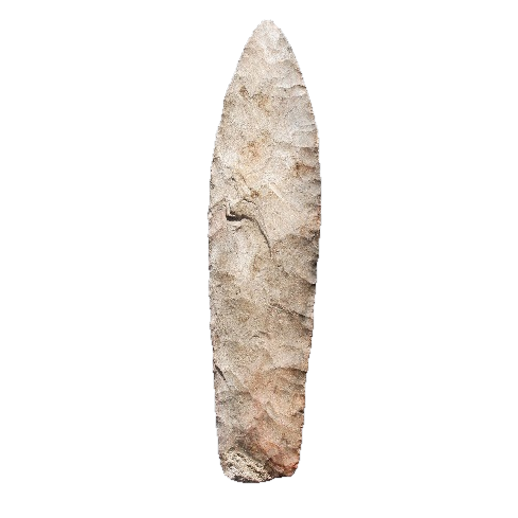 Agate BasinLate Paleoindian10,500–10,000 B.P.; charcoal from the Agate Basin level at Area II of the type site dated 10,430 ± 570 B.P. (MVAC)
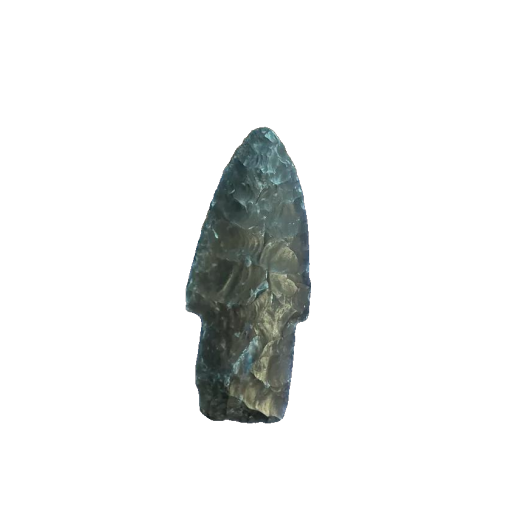 AlbertaTransitional Paleo9,250 - 8,850 B.P.
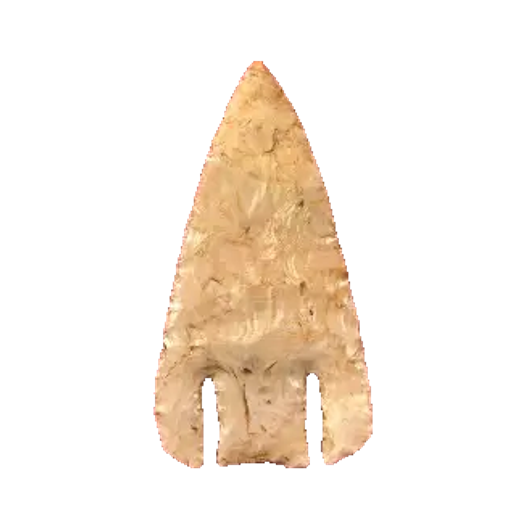 Calf CreekMiddle Archaic5,400–4,600 B.P.
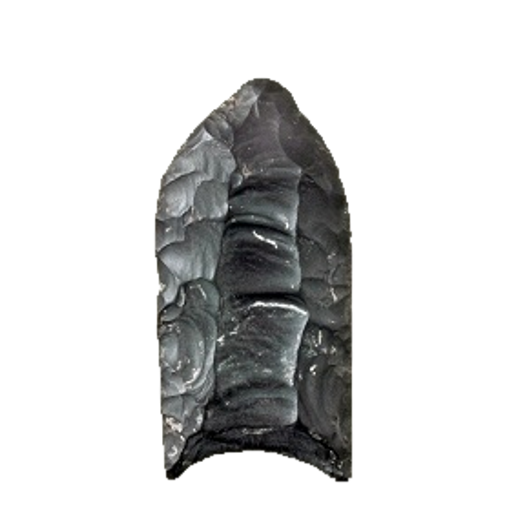 Clovis FlutedEarly Paleoindian13,050–12,750 cal B.P. (Waters et al. 2020)
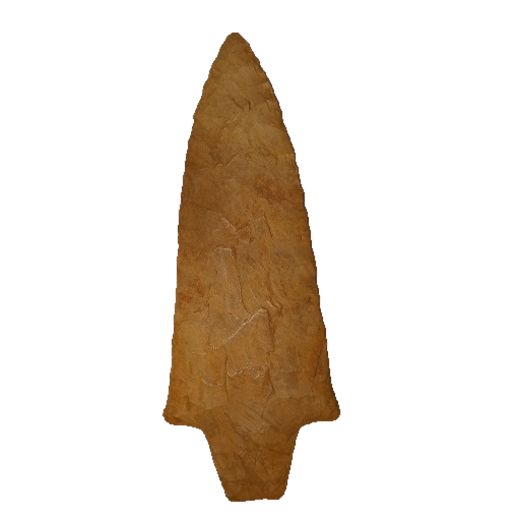 DicksonEarly Woodland to Middle Woodland2,500–1,800 B.P. (contracting-stemmed points, Upper Mississippi Valley; MVAC)
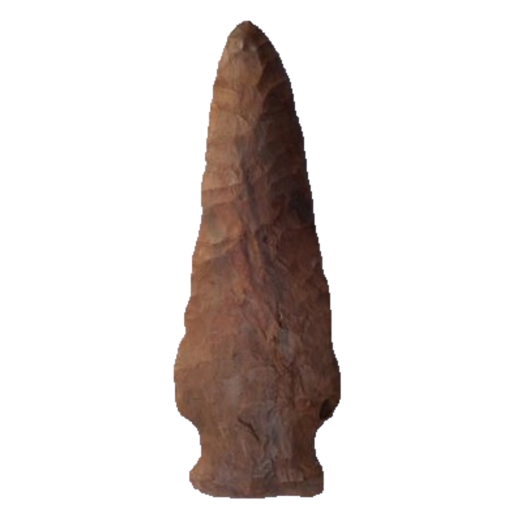 EppsLate ArchaicAbout 3,450–2,650 B.P. (1500–700 B.C.), the main span of Poverty Point culture (Gibson 1983)
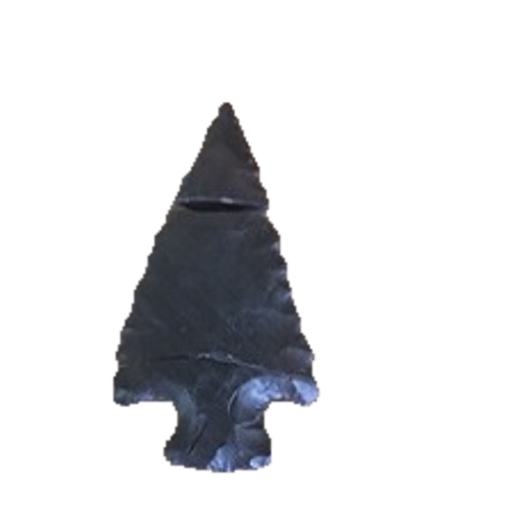 ScallornLate Prehistoric (Texas); Late Woodland to early Mississippian (Missouri)1,250–650 B.P. (Austin phase, A.D. 700–1300; Prewitt 1981; Ricklis 1996); Suhm and Krieger (1954) estimated A.D. 700–1500; southwest Missouri radiocarbon dates about A.D. 750–770 (Fuller)
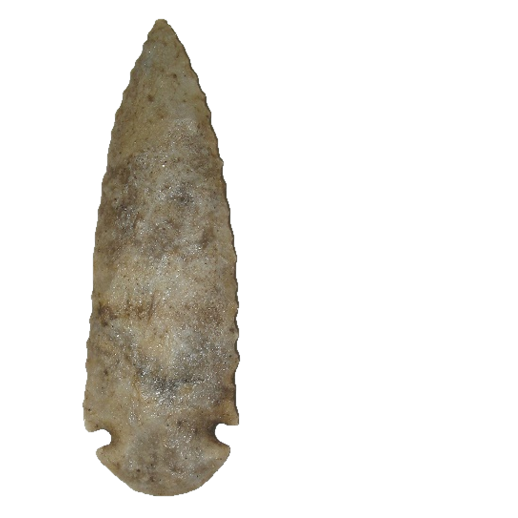 St CharlesEarly ArchaicEarly Archaic; about 9,400–9,100 B.P. at the Twin Ditch site, Illinois (Morrow 1996, cited by Lopinot)
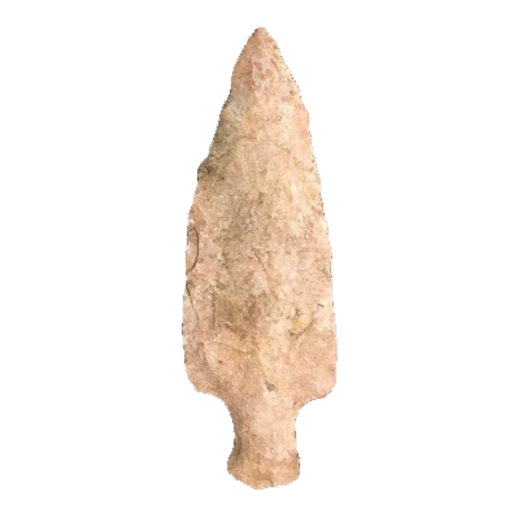 Table RockLate Archaic4,000–3,000 B.P. (O'Brien and Wood 1998); 5,000–3,000 B.P. (Chapman 1975); about 3,500 B.P. at Pohly Rockshelter and 3,400–3,000 B.P. at the Lawrence site, Oklahoma (Ray n.d.)
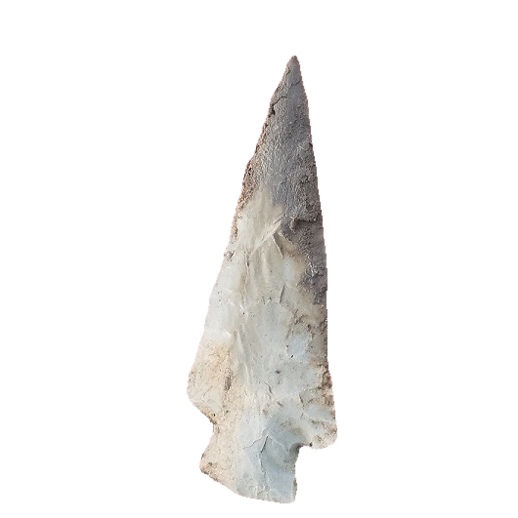 WilliamsLate Archaic4,200–3,500 B.P. in Missouri (Ray); 3,100–2,150 B.P. in central Texas (Lohse et al. 2013)