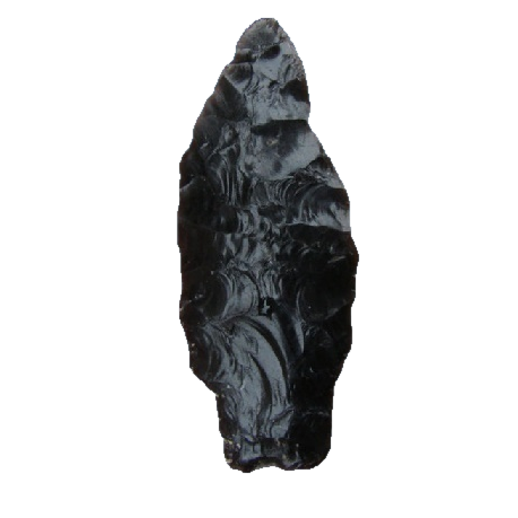
Named stone
Plateau cryptocrystalline silicates
Also called Plateau CCS, Columbia Hills chalcedony, Columbia Plateau chert, Yakima Folds CCS
A kind of chert (and flint)
Plateau cryptocrystalline silicatesChert (and flint)West Coast & PlateauDescription
On the Columbia Plateau, cryptocrystalline silicate material (CCS, usually just called chert) is by far the most abundant toolstone in archaeological assemblages. Large outcrops are scattered across the region and are tied to the Miocene Columbia River Basalt flows. Silica leached from the basalt filled cooling joints and formed cherts and opals, and silica also replaced organic matter and sediment trapped between flows, making fossiliferous chert such as petrified wood. In the Columbia Hills of Klickitat County, Washington, the best stone is a caramel-brown, translucent chalcedony that is very hard and durable with clean, smooth fractures. Poorer white chert often forms a crust around it, and opal crumbles as it dries. The Columbia Hills area has about 8,000 years of continuous human occupation, and the Dalles-area trade center grew nearby.
How to identify it
- Colour
- Caramel-brown translucent chalcedony in the best Columbia Hills material (Adams); the family also includes jasper, opal and petrified wood.
- Texture
- Best material very hard and durable with clean, smooth fracture surfaces; poorer white chert crusts; opal has high water content and crumbles on drying.
- Inclusions
- Fossiliferous chert such as petrified wood occurs.
- Cortex
- Poorer white chert often forms a crust around the best CCS.
Geology
Chert and opal formed from silica leached from Miocene Columbia River Basalt Group flows, which precipitated in cooling joints and between columns, and from basalt flows trapping sediment and organic matter between them, which silica later replaced. The flows were folded by compression into the Columbia Hills and other east-west ridges.
Where it comes from
West Coast & Plateau
States
Quarries and outcrops
- Columbia Hills, Klickitat County, Washington (quarries and lithic scatters)
- Columbia Plateau outcrops tied to Miocene basalt flows
Used by
- About 8,000 years of continuous use of the Columbia Hills area; a regional trade center by the Late Archaic period (2000 B.P. to A.D. 1720), including The Dalles
Look-alikes
Stones that are easy to confuse with Plateau cryptocrystalline silicates.
- Plateau fine-grained volcanic rock (the other main Plateau toolstone class)
- Obsidian
Sources
- Ozbun, Terry L., and Ron L. Adams, eds. 2015. Toolstone Geography of the Pacific Northwest. Archaeology Press, Simon Fraser University. Chapter 8: Adams, Ron L. Columbia Hills Toolstone Geography.archpress.lib.sfu.ca (opens in a new tab)
- Ozbun, Terry L., and Ron L. Adams, eds. 2015. Toolstone Geography of the Pacific Northwest. Archaeology Press, Simon Fraser University. Chapter 1: Ozbun, Terry L. Toolstone Geography and the Larger Lithic Landscape.archpress.lib.sfu.ca (opens in a new tab)