

Rock type
Quartzite
Also called Metaquartzite, Orthoquartzite, Silicified sandstone
Quartzitequartzite (silica-cemented or metamorphosed sandstone)All regions2 photos
Description
Quartzite is sandstone that has been welded by silica so that it breaks through the grains instead of around them. Orthoquartzite is cemented in place as sediment; metaquartzite was changed by metamorphism. Quality ranges from sugary to glassy, and highly metamorphosed quartzite can flake like chert. Colours are usually gray, white, red or brown, sometimes with dark lignite flecks. Named stones include Erwin (Antietam) and Ridgely quartzite in the Mid-Atlantic, Tallahatta quartzite in Mississippi, and Hixton silicified sandstone in Wisconsin. Quartzite cobbles also make hammerstones, and some Minnesota quartzites are very brittle and nearly useless for flaking.
How to identify it
- Colour
- Gray, white, red and brown; white to golden yellow or dull red to purple in Minnesota drift.
- Texture
- Sugary to smooth and glassy.
- Luster
- Medium to high on a fresh break in some quartzites (Barry).
- Inclusions
- Small dark lignite particles can occur (Maryland guide); fossil burrows (Scolithus) occur in Erwin quartzite.
- Heat treatment
- Hixton silicified sandstone responds poorly to heat and is commonly ruined by it (Bakken); heat effects on other quartzites are not described in the opened sources.
Geology
Quartzite forms by tight cementation and compaction of sandstone (orthoquartzite), or by metamorphism that distorts the sandstone (metaquartzite). Mississippi's survey also describes ferruginous orthoquartzite (iron-cemented sandstone) and opal-cemented quartzites such as Tallahatta and Hattiesburg. Maryland's guide places massive quartzite beds on the western slopes of the Blue Ridge, with smaller outcrops west of the Chesapeake. Cobble quartzite is common in streams.
Where it comes from
All regions
Quarries and outcrops
- Western Blue Ridge, Maryland and Virginia (Erwin/Antietam quartzite)
- Washington, D.C. (Piney Branch quarries)
- Tallahatta Formation, Mississippi
- Silver Mound, Jackson County, Wisconsin (Hixton orthoquartzite)
- Glacial drift, Minnesota (Sioux Quartzite and others)
Used by
- Archaic Piney Branch and Blue Ridge quartzite points; Middle Archaic Tallahatta quarrying; Paleoindian to Late Prehistoric Hixton quarrying (see the named pages)
Look-alikes
Stones that are easy to confuse with Quartzite.
- Quartz and vein quartz (single crystals, flat fracture planes)
- Chert (finer, conchoidal)
Sources
- Maryland Archaeological Conservation Laboratory. Quartzite. Diagnostic Artifacts in Maryland: Common Stone Types (Jefferson Patterson Park and Museum).apps.jefpat.maryland.gov (opens in a new tab)
- Delaware Department of Transportation. Archaeology glossary.deldot.gov (opens in a new tab)
- Moldenhauer, Nash and Tolley (1999), updated by Egloff (2008). Erwin (Antietam) Quartzite. Virginia Department of Historic Resources.dhr.virginia.gov (opens in a new tab)
- Mississippi Department of Environmental Quality, Office of Geology. Lithic Materials (web page; updated December 2023).mdeq.ms.gov (opens in a new tab)
- Bakken, Kent E. (written about 1995; PDF issued later). Chipped Stone Raw Materials. Chapter 6 in Stone Tools of Minnesota. Minnesota Office of the State Archaeologist, St. Paul.mn.gov (opens in a new tab)
Named stones of this kind
- Bijou Hills quartzitesilicified sediment (quartzite)South Dakota
- Cheshire quartzitequartzite (vitreous, Cambrian)Vermont
- Dakota / Burro Canyon quartzitesilicified sandstone (orthoquartzite)Colorado
- Hixton silicified sandstoneorthoquartzite (silica-cemented sandstone)Wisconsin
- Kosciusko quartzitesedimentary orthoquartzite (quartz-cemented sandstone)Mississippi
- Ogallala quartziteopal-cemented sandstone and conglomerateKansas, Nebraska, South Dakota and more
- Oriskany stones: Ridgeley quartzite and Shriver chertorthoquartzite (Ridgeley) and bedded chert (Shriver) from one formationMaryland, West Virginia, Pennsylvania and more
- Potomac-region quartzitesquartzite (metamorphosed silica-cemented sandstone; cobble quartzite)Maryland, Virginia
- Potter chertsilica-cemented siltstone / fine-grained quartzite (gravel cobbles)Texas
 Sioux quartziteorthoquartzite (Proterozoic)Minnesota, South Dakota, Iowa
- Tallahatta quartziteorthoquartzite (silica-cemented sandstone)Mississippi, Alabama
Points made from this stone
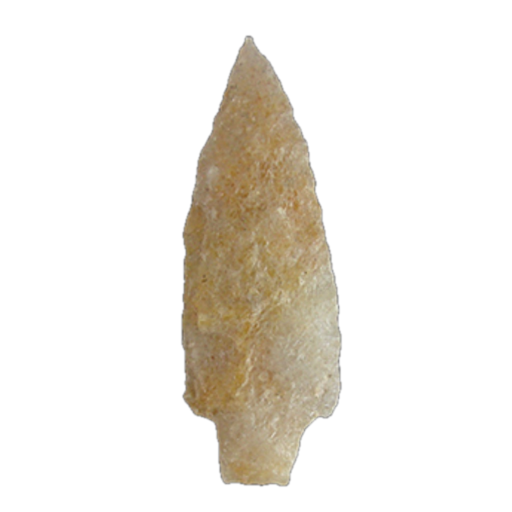 Bare IslandLate Archaic4,500–3,600 B.P.
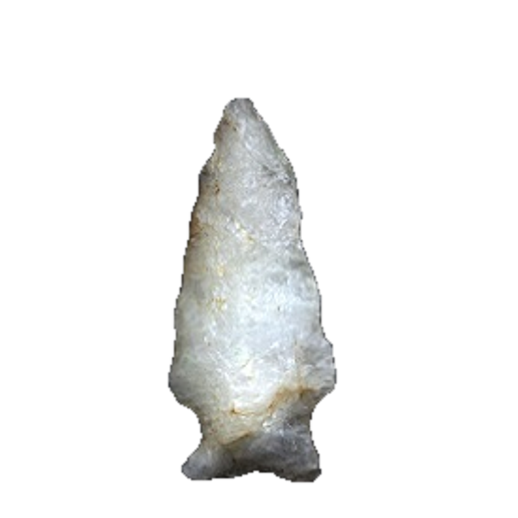 ClagettPrehistoric to Historic4,500 - 3,500 B.P.
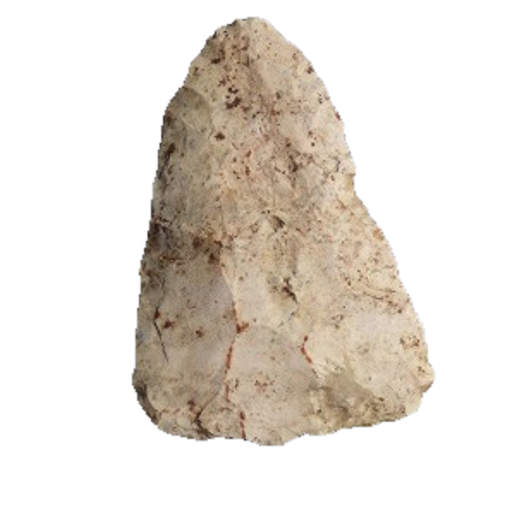 DecaturEarly Archaic9,500 - 8,000 B.P.
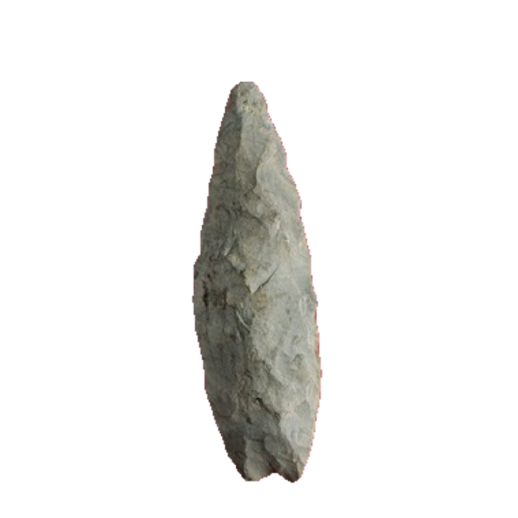 Guilford Concave BaseMiddle Archaic6,200 - 5,500 B.P. (Coe estimated 5000-4000 B.C.)
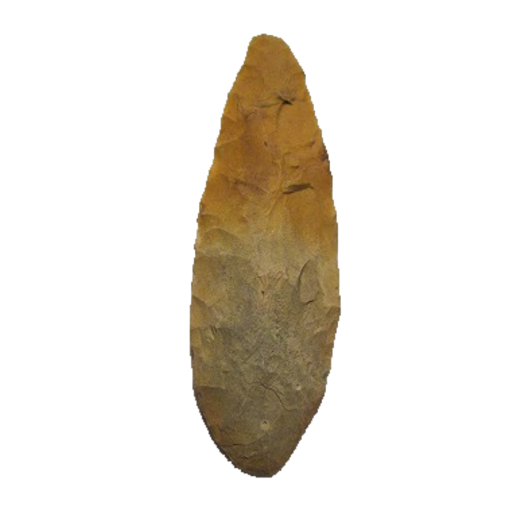 Guilford Round BaseMiddle ArchaicAbout 6,000 B.P. in the Carolina Piedmont (Coe 1959, via Cambron and Hulse 1975); 6,200–5,500 B.P. for Guilford in Maryland (Maryland Archaeological Conservation Laboratory)
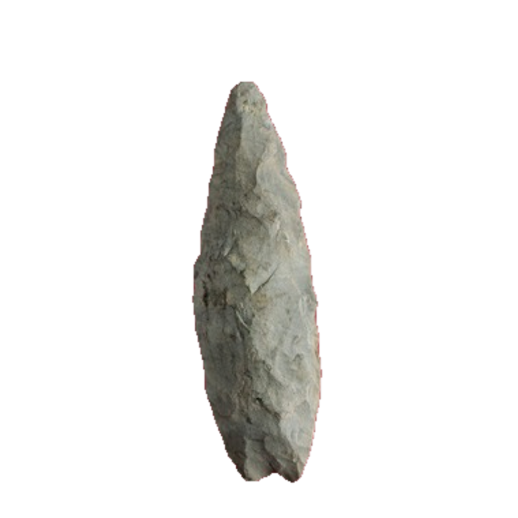 Guilford Straight BaseMiddle Archaic6,200 - 5,500 B.P. (Coe estimated 5000-4000 B.C.)
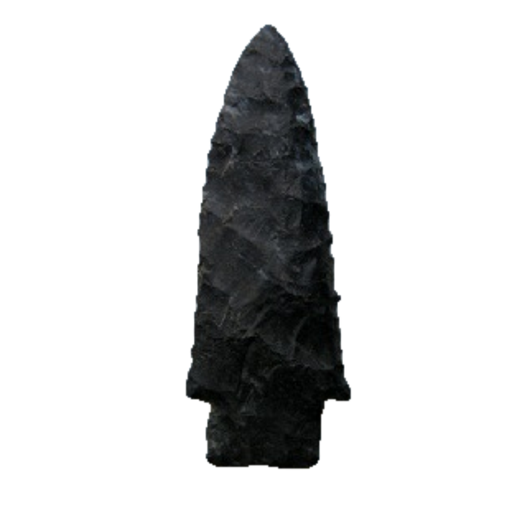 Kirk SerratedEarly Archaic8,900–8,000 B.P. (St. Albans, West Virginia; Maryland JPPM); about 8,150–7,650 cal B.P. (6200–5700 B.C.; Virginia DHR); 7,950–6,950 B.P. (6000–5000 B.C.; Coe, cited by Cambron and Hulse 1975)
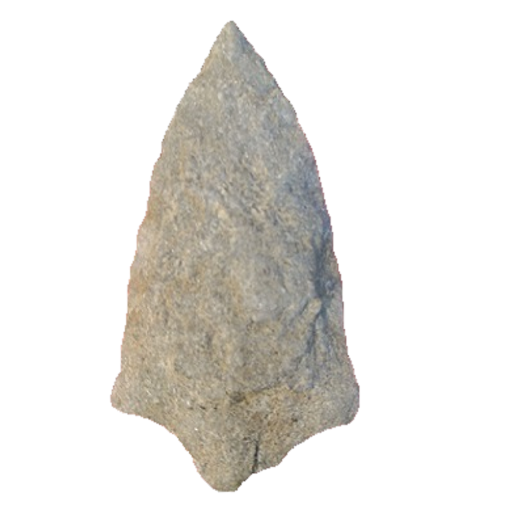 Koens Crispin BroadspearLate Archaic3,900 - 3,600 B.P. (published estimates run from about 4,450 to 3,600 B.P.)
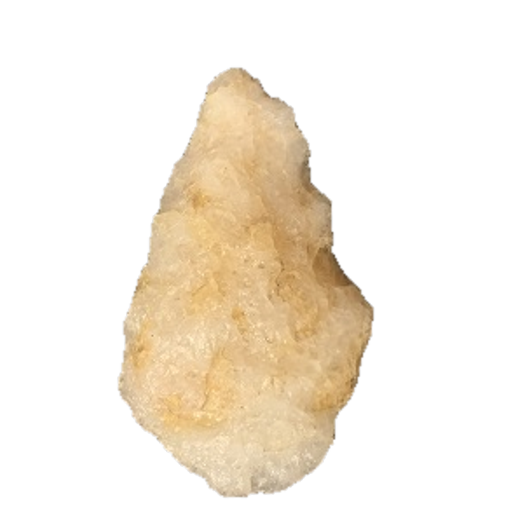 Morrow MountainMiddle Archaic7,100–6,200 B.P. (Maryland JPPM); on the Nottoway River, Virginia, about 7,100–6,700 B.P. for type I and 6,800–6,200 B.P. for type II; 5500–5000 B.C. at Doerschuk and in southeast Tennessee (UNC RLA)
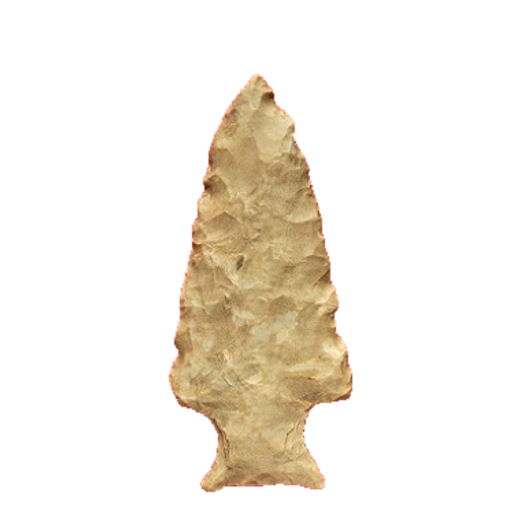 NormanskillMiddle Archaic to Late Archaic4,300 - 3,300 B.P.
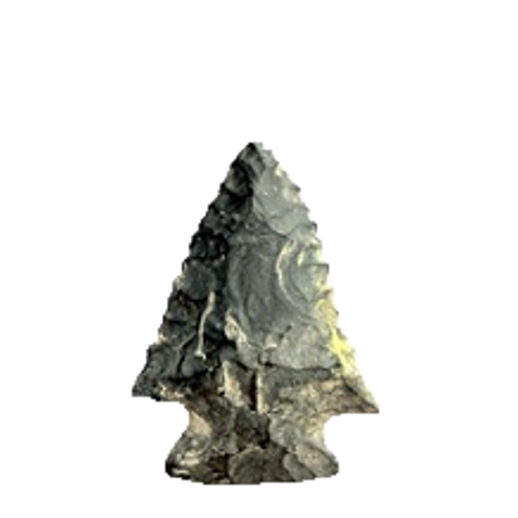 PalmerEarly Archaic10,000–9,000 B.P. (Maryland JPPM); 10,000–9,300 B.P. (Gardner 1989); 9,600–9,200 B.P. on the Nottoway River, Virginia (Egloff and McAvoy 1990)
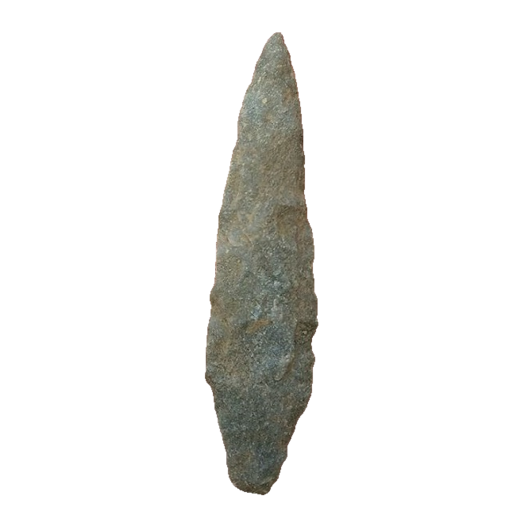 Poplar IslandLate Archaic to Early WoodlandAbout 5,300–4,000 B.P. in southeastern Pennsylvania; 3,920 B.P. in the Upper Delaware Valley; long examples most common about 4,500–2,000 B.P. in Delaware, with small ones later (Maryland JPPM)
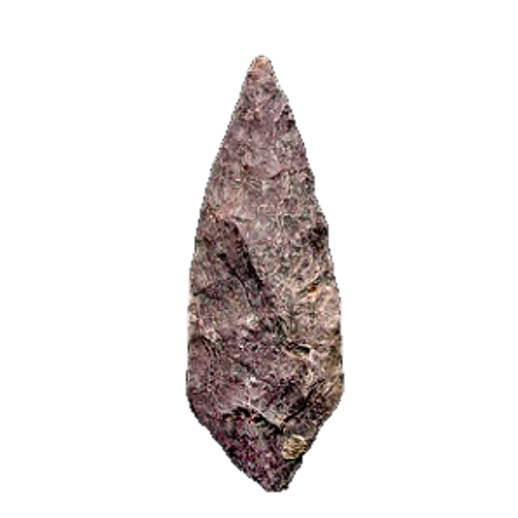 RossvilleEarly to Middle WoodlandAbout 2,800 - 1,050 B.P. (825 B.C. - A.D. 900) on radiocarbon evidence, though the range is debated and may begin in the Terminal Archaic or run into the Late Woodland
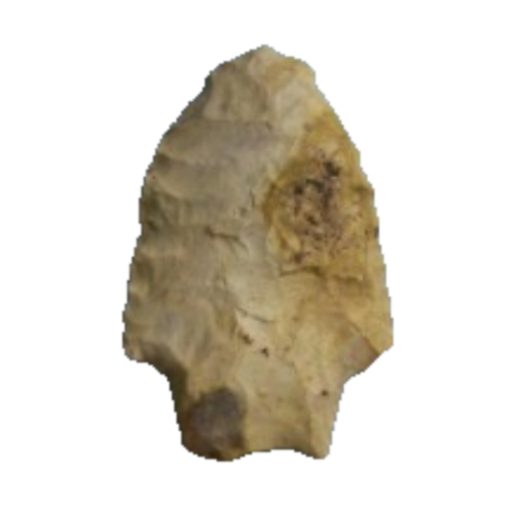 Savannah RiverLate Archaic to Early WoodlandAbout 4,865–3,260 B.P. (Warren Wilson site, North Carolina, to Pony Pasture site, Virginia), many dates 3,900–3,700 B.P. (Maryland JPPM); 3000–1800 B.C. at the Bacon Bend site, Tennessee (UNC RLA)
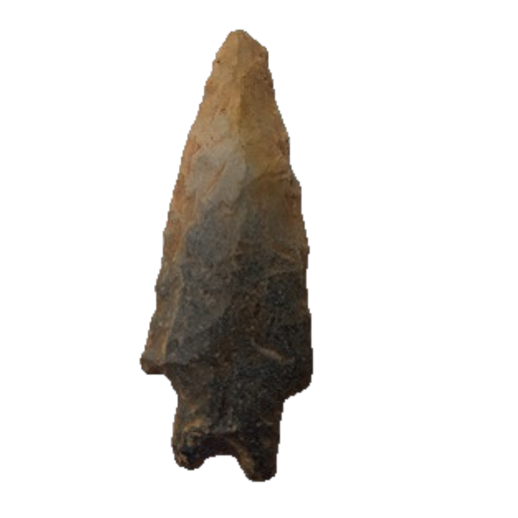 StanlyMiddle Archaic8,150–6,950 B.P. (6200–5000 B.C., Virginia DHR); 7,950–7,450 B.P. (6000–5500 B.C., Daniel and Davis 1996)