
Named stone
Tallahatta quartzite
Also called Tallahatta orthoquartzite, Tallahatta 'sugar quartz', Tallahatta Formation quartzite
A kind of quartzite
Tallahatta quartziteQuartziteSoutheastDescription
Tallahatta quartzite is a silica-cemented sandstone from the Eocene Tallahatta Formation of east-central Mississippi and west-central Alabama. It is nearly pure quartz sand bound by opal and chalcedony, often translucent, and white, green, yellow, reddish-brown or black, with flecks of glauconite and mica. Weathering can turn it into crumbly sugar-quartz, but some pieces stay glassy. Only a few ledges flake well, so knappers sought out the best outcrops and stream bars, and Middle Archaic quarrying was intense along the Chunky River and Tallahatta Creek. People used it from the Paleoindian period onward, and its tools travelled as far as Louisiana.
How to identify it
- Colour
- White, green, yellow to reddish-brown and black; fresh outcrops are light.
- Texture
- Hard, dense quartz sand with silica cement; some pieces weather to friable sandstone.
- Luster
- Vitreous in stable pieces; often translucent.
- Inclusions
- Glauconite and mica; invertebrate burrows; glauconite weathering out gives snowflake patterns (MDEQ).
Geology
Tallahatta Formation (Eocene), a silicic claystone, sand and sedimentary quartzite unit of marine origin. The quartzite contains quartz sand and some glauconite cemented by silica, mostly opal-CT with chalcedony and quartz, so it breaks through the grains. It is concentrated in the Basic City Member along the outcrop belt from Neshoba County, Mississippi, to the Alabama line, and forms a cuesta of ridges. Ledges a foot or less thick are common, and only a few are good enough to knap. Tallahatta agate, an opal-rich chalcedony, fills joints and burrows beside the quartzite.
Where it comes from
Southeast
States
Quarries and outcrops
- Tallahatta Creek and Chunky River sites, Lauderdale and Newton counties, Mississippi (quarry concentrations)
- Chickasawhay River, Lauderdale and Clarke counties, Mississippi
- Tallahatta Creek site 22-LD-645, Lauderdale County, Mississippi (worked 9,000 to 3,000 years ago)
- Tallahatta Hills, Alabama (type locality of the formation)
Used by
- Paleoindian (very rare) and Early Archaic: tools exist but the stone was little used at first
- Middle Archaic: mining and caching, with large tools cached together with blue-gray Fort Payne chert tools
- Late Archaic: Pickwick, Flint Creek, Shumla and Gary points at site 22-LD-645
- Trade faded after the Late Archaic (about 5,000 to 2,500 years ago)
Look-alikes
Stones that are easy to confuse with Tallahatta quartzite.
- Brown, tan or yellow stained quartzite from the gravels, which is not Tallahatta (McGahey)
- Hattiesburg and Kosciusko orthoquartzites of Mississippi (also silica-cemented)
Sources
- Mississippi Department of Environmental Quality, Office of Geology. Lithic Materials (web page; updated December 2023).mdeq.ms.gov (opens in a new tab)
- McGahey, Samuel, David T. Dockery III, and Stephen L. Ingram. 1992. Indian Artifacts of Tallahatta Quartzite from Tallahatta Creek Site 22-LD-645, East-Central Mississippi. Mississippi Geology 13(3).geology.deq.ms.gov (opens in a new tab)
Points made from this stone
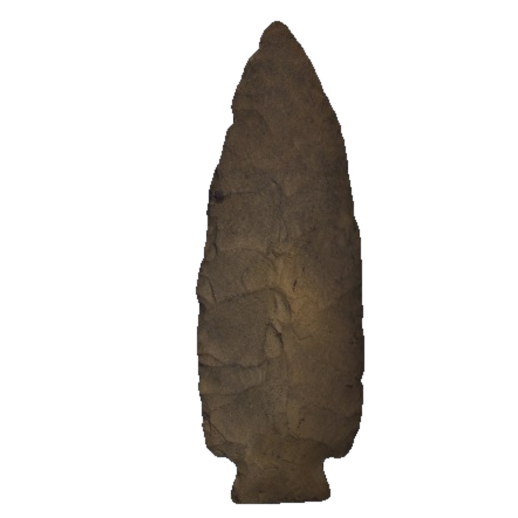 Benton StemmedMiddle Archaic6,000 - 4,000 B.P.
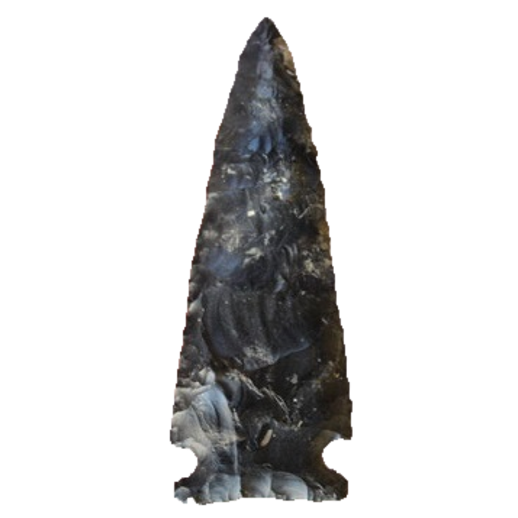 BolenEarly Archaic (called Late Paleoindian or Early Dalton by Bullen)11,400 - 10,500 cal. B.P. (about 10,000 radiocarbon years B.P. at its earliest sites)
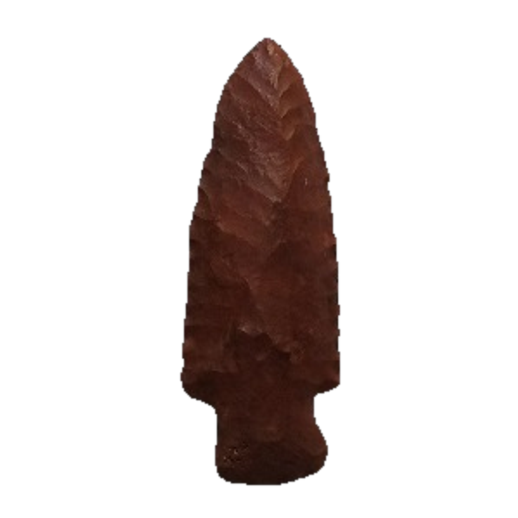 Flint CreekLate Archaic to Early Woodland3,000 - 2,100 B.P. (Late Archaic to Early Woodland; the handbook gives no calendar dates, so these figures are carried over from the earlier record)
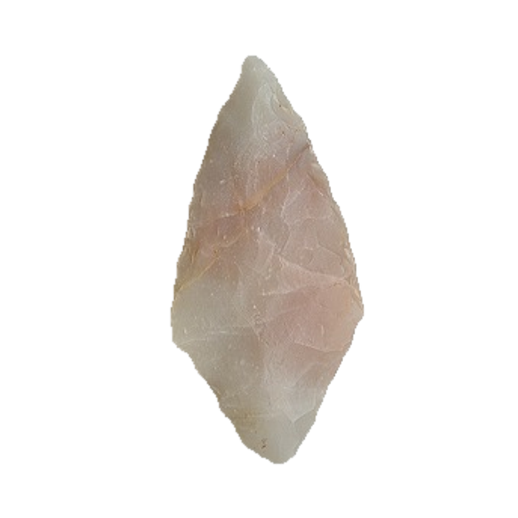 GaryLate Archaic to WoodlandAbout 3,950–950 B.P. (2000 B.C.–A.D. 1000) in Texas, possibly later in parts of the Caddo area (Suhm and Krieger 1954); about 2,600–1,050 B.P. (650 B.C.–A.D. 900) on Woodland Fourche Maline sites in Arkansas (Arkansas Archeological Survey)
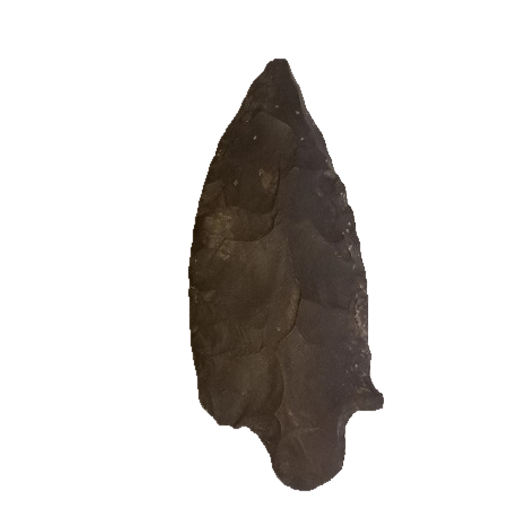 LedbetterLate Archaic to Early WoodlandAbout 5,000 - 2,000 B.P.
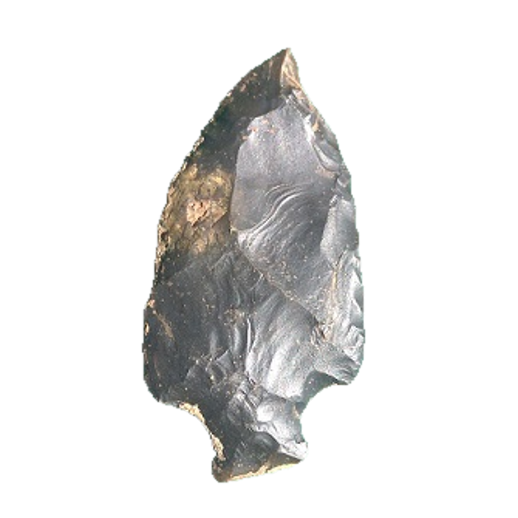 McIntireMiddle Archaic to Late ArchaicNot radiocarbon dated; placed in the Middle to Late Archaic from surface associations (Cambron and Hulse 1975).
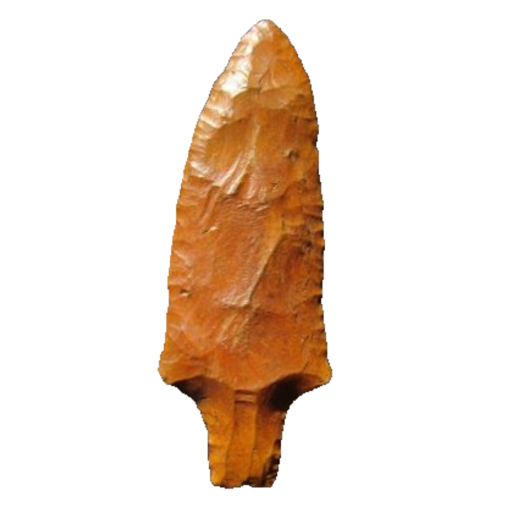 PickwickMiddle Archaic to Late Archaic6,000 - 3,500 B.P.
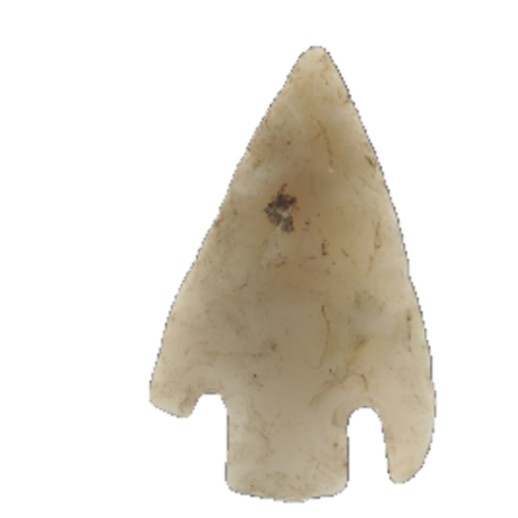 ShumlaLate Archaic3,150–2,300 B.P. (Cibola subperiod) and about 2,300 B.P. (Flanders subperiod) in the Lower Pecos (Texas Beyond History); 2,400–1,750 years ago in Bement's Flanders period (Hester et al. 1989)
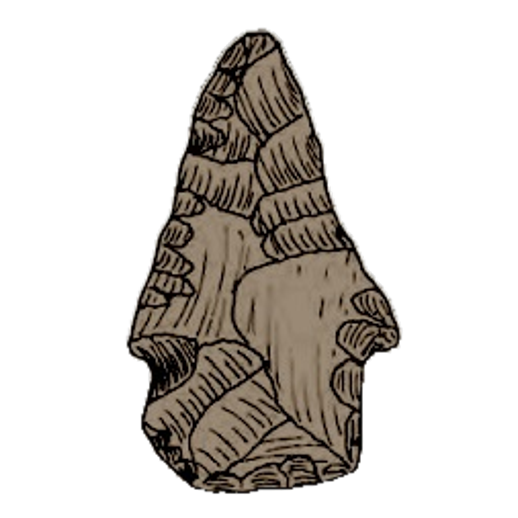 VaughnMiddle Archaic7,000 - 6,500 B.P.