Named stone
Ogallala quartzite
Also called Ogallala orthoquartzite, silicified Ogallala, Ogallala silicified sandstone
A kind of quartzite
Ogallala quartziteQuartzitePlainsDescription
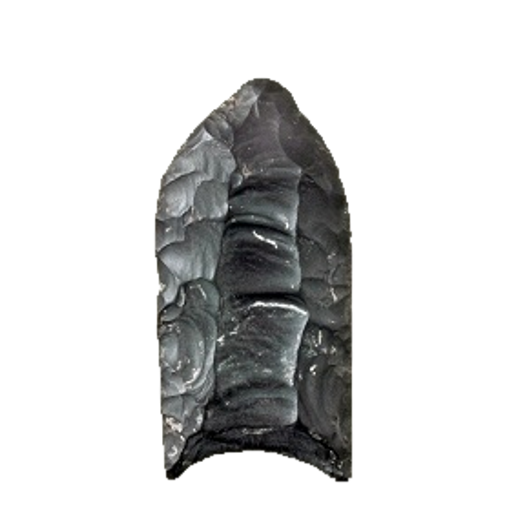
Ogallala quartzite is not a true metamorphic quartzite. It is sand and gravel of the Ogallala Formation that groundwater cemented with opal and a little chalcedony. Kansas Geological Survey work found it in lenses from a few feet to over half a mile long. North of Texas the colour runs from greenish gray to greenish brown to bright green, weathering to light gray, white or reddish brown. In west Texas it is pink to gray-pink. Texture runs from fine sand to coarse conglomerate. Well-cemented pieces are dense and tough, break through the grains rather than around them, and can show a subconchoidal fracture. Pieces with many pores are weaker. The Survey calls the name quartzite a convenience, used by local people and builders.
How to identify it
- Colour
- Greenish gray, greenish brown to bright green (Kansas, Nebraska, South Dakota); weathered light gray, white and reddish brown; pink to gray-pink in west Texas (Kansas Geological Survey).
- Texture
- Fine-grained sand to poorly sorted conglomerate; cementation ranges from nearly complete to partial, leaving a minutely cavernous look.
- Inclusions
- Feldspar grains (white feldspar is abundant in some Rawlins County, Kansas, rock); Cretaceous chalk and shale pebbles and fossil fragments at the base of the formation.
Geology
Silicified sand and gravel in the Ogallala Formation. Silica, mostly opal with a little chalcedony, cements the grains. Lenses sit within loose sand and gravel and often rest directly on silicified Niobrara chalk. The formation was sampled at 27 localities in Kansas plus sites in Texas, Colorado, South Dakota and Nebraska.
Where it comes from
Plains, Texas & Southwest
Quarries and outcrops
- Ogallala outcrops across Kansas (for example Rawlins, Norton, Graham, Phillips and Ness counties)
- Gregory County, South Dakota and Holt County, Nebraska (green quartzite samples)
- Midland, Canyon and Lamesa, Texas (pink quartzite samples)
Look-alikes
Stones that are easy to confuse with Ogallala quartzite.
- Smoky Hill silicified chalk (also silicified and often found beneath Ogallala outcrops)
- Ogallala 'chert' (spotty silicification of caliche, brittle, white to light gray)
Sources
- Frye, John C., and Ada Swineford. 1946. The Ogallala Formation of Kansas: Petrography of the silicified rocks. Kansas Geological Survey Bulletin 64, part 2.kgs.ku.edu (opens in a new tab)