
Named stone
Hixton silicified sandstone
Also called Hixton orthoquartzite, Hixton sugar quartz, Silver Mound orthoquartzite, HSS
A kind of quartzite
Hixton silicified sandstoneQuartziteMidwest/Ohio ValleyDescription
Hixton silicified sandstone is a Cambrian sandstone so tightly cemented with silica that it chips like a high-quality stone. It comes from Silver Mound in Jackson County, Wisconsin, where a layer cemented with chalcedony and opal lies about 30 meters below the crest. The stone looks sugary and is commonly white or tan, though red, orange, yellow and lavender occur, and it flakes well despite the texture. It does not take heat well and is often ruined by it. Silver Mound was quarried for at least 12,000 years, is a National Historic Landmark, and its stone reached sites as far as Kentucky. Because lesser look-alike orthoquartzites exist, attributing an artifact to Hixton needs care.
How to identify it
- Colour
- Commonly white or tan; also red, orange, yellow, lavender and darker brown (Bakken).
- Texture
- Sugary appearance; good to excellent flaking quality despite it.
- Heat treatment
- Does not respond well to heat treatment and is commonly ruined by heating (Jeske and others 2010, cited by Bakken).
Geology
A layer of Cambrian sandstone cemented with chalcedony and opal, found about 30 meters below the crest of Silver Mound, an L-shaped hill about half a mile long that stands about 65 meters above the surrounding terrain near the headwaters of the Trempealeau River. The cemented layer resists weathering, leaving the hill standing. Other orthoquartzite sources exist in west-central Wisconsin, but they are typically duller, coarser textured and lower in quality.
Where it comes from
Midwest/Ohio Valley
States
Quarries and outcrops
- Silver Mound (site 47JA21), Jackson County, Wisconsin (Silver Mound Archaeological District, about 20 square kilometers)
Used by
- Paleoindian (about 12,000 to 9,500 years ago) onward: quarrying through the Late Prehistoric/Early Historic period (UW-La Crosse; Ohio History Connection)
- Hixton silicified sandstone points found as far away as Mammoth Cave, Kentucky, some about 12,000 years old (UW-La Crosse)
Look-alikes
Stones that are easy to confuse with Hixton silicified sandstone.
- Other orthoquartzites of west-central Wisconsin: duller, coarser, lower quality (Bakken)
- Other sugar-quartz orthoquartzites of the eastern United States (Pickard)
- Possible Hixton orthoquartzite in the Ohio Valley, such as a fluted point in the Ohio History Connection collections, which Pickard says is only possible
Sources
- Pickard, Bill. 2011 (22 February). Of Cheese Heads and Clovis Points: A Possible Occurrence of Hixton Silicified Sandstone in the Ohio Valley. Archaeology Blog, Ohio History Connection.ohiohistory.org (opens in a new tab)
- University of Wisconsin-La Crosse, Mississippi Valley Archaeology Center. Silver Mound.uwlax.edu (opens in a new tab)
- Bakken, Kent E. (written about 1995; PDF issued later). Chipped Stone Raw Materials. Chapter 6 in Stone Tools of Minnesota. Minnesota Office of the State Archaeologist, St. Paul.mn.gov (opens in a new tab)
Points made from this stone
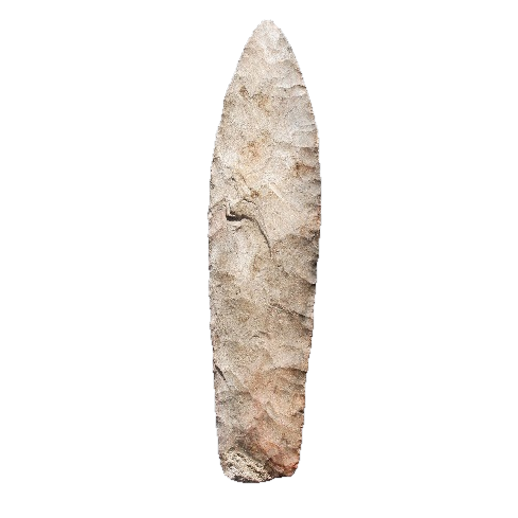 Agate BasinLate Paleoindian10,500–10,000 B.P.; charcoal from the Agate Basin level at Area II of the type site dated 10,430 ± 570 B.P. (MVAC)
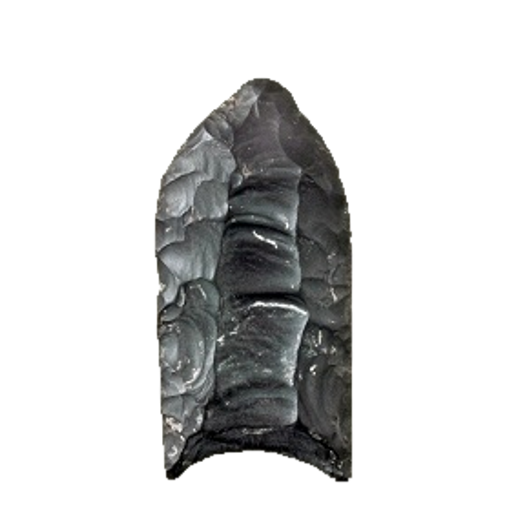 Clovis FlutedEarly Paleoindian13,050–12,750 cal B.P. (Waters et al. 2020)
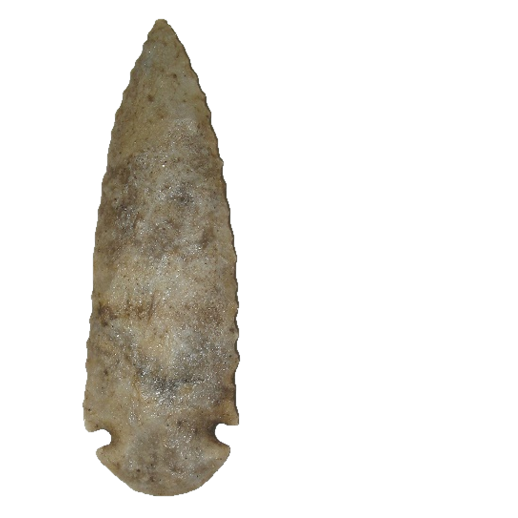 St CharlesEarly ArchaicEarly Archaic; about 9,400–9,100 B.P. at the Twin Ditch site, Illinois (Morrow 1996, cited by Lopinot)