

Rock type
Rhyolite, felsite and metavolcanic rock
Also called Rhyolite, Felsite, Metarhyolite, Porphyry, Dacite, Rhyodacite
Rhyolite, felsite and metavolcanic rockfelsic volcanic rock (rhyolite, felsite, dacite, tuff and their metamorphosed forms)All regions2 photos
Description
Rhyolite is a fine-grained, silica-rich volcanic rock, usually pale to gray and often banded or speckled with larger crystals (phenocrysts). In the eastern United States the stone called rhyolite is usually metarhyolite, slightly metamorphosed, and the group includes related felsic rocks such as dacite, rhyodacite and tuff. Examples are Catoctin metarhyolite in Maryland, Mount Rogers rhyolite in Virginia, the Uwharrie and Carolina Slate Belt stones of North Carolina, and Kineo rhyolite in Maine. Geologists note that many Slate Belt 'rhyolites' are really dacite. The stone is tough and harder to flake than chert, and quality varies sharply from outcrop to outcrop.
How to identify it
- Colour
- Dark blue-gray to black (Catoctin); gray to purple with white or pink crystals (Mount Rogers); dark gray with a gray-white patina (Morrow Mountain); greenish gray to brown-streaked in Minnesota; blue-gray in Maine.
- Texture
- Fine grained (aphanitic) to porphyritic, with visible crystals in a finer groundmass; flow banding and spherulites occur.
- Inclusions
- Phenocrysts of feldspar and quartz; spherulites; pyrite and chalcopyrite in some Slate Belt rocks.
- Cortex
- Weathering produces lighter hues or a chalky rind.
Geology
Rhyolite is an extrusive igneous rock rich in silica. In the East it is usually metarhyolite, a slightly metamorphosed form, outcropping in Maryland's Frederick and Washington counties, near Mount Rogers in Virginia, and in the Uwharrie Mountains of North Carolina. The Carolina Slate Belt is a late Proterozoic to Cambrian sequence of metavolcanic and metasedimentary rocks about 640 km long, and most of its felsic metavolcanic rocks are dacite or rhyodacite, because they have plagioclase phenocrysts. Maine's Kineo rhyolite is Devonian.
Where it comes from
All regions
Quarries and outcrops
- Catoctin and South Mountain, Maryland
- Mount Rogers, Grayson County, Virginia
- Uwharrie Mountains and Three Hat Mountain, North Carolina
- Moosehead Lake area, Maine (Kineo rhyolite)
Used by
- Middle Woodland preference for porphyritic metarhyolite in Maryland, especially for Fox Creek points (see the Catoctin page)
- Early Archaic through Late Woodland use of Morrow Mountain rhyolite (see the Uwharrie page)
Look-alikes
Stones that are easy to confuse with Rhyolite, felsite and metavolcanic rock.
- Siltstone: opaque, while rhyolite is moderately to strongly translucent (Bakken)
- Chert, which fine-grained metarhyolite can resemble
- Argillite and tuffs in the same Slate Belt quarries
Sources
- Maryland Archaeological Conservation Laboratory. Rhyolite. Diagnostic Artifacts in Maryland: Common Stone Types (Jefferson Patterson Park and Museum).apps.jefpat.maryland.gov (opens in a new tab)
- Delaware Department of Transportation. Archaeology glossary.deldot.gov (opens in a new tab)
- Abbott, Lawrence E., Jr. 2004. An Assessment of Lithic Extraction Technology at a Metavolcanic Quarry in the Slate Belt of North Carolina. Office of State Archaeology, North Carolina.archaeology.ncdcr.gov (opens in a new tab)
- Ebright, Carol. 1999 (updated 2023). Maryland Rhyolites. Virginia Department of Historic Resources.dhr.virginia.gov (opens in a new tab)
- Tolley (after Rankin 1994). 1999. Mount Rogers Rhyolite. Virginia Department of Historic Resources.dhr.virginia.gov (opens in a new tab)
- Bakken, Kent E. (written about 1995; PDF issued later). Chipped Stone Raw Materials. Chapter 6 in Stone Tools of Minnesota. Minnesota Office of the State Archaeologist, St. Paul.mn.gov (opens in a new tab)
Named stones of this kind
 Catoctin and South Mountain metarhyolitemetarhyolite (slightly metamorphosed volcanic rock)Maryland, Pennsylvania
- Maine and New Hampshire rhyolitesrhyolite and felsite (volcanic rock)Maine, New Hampshire
- Mount Rogers rhyolitemetarhyolite (metamorphosed rhyolite lava and welded tuff)Virginia
- Uwharrie and Carolina Slate Belt metavolcanicsfelsic metavolcanic rock (rhyolite, dacite, rhyodacite and tuff)North Carolina, South Carolina
Points made from this stone
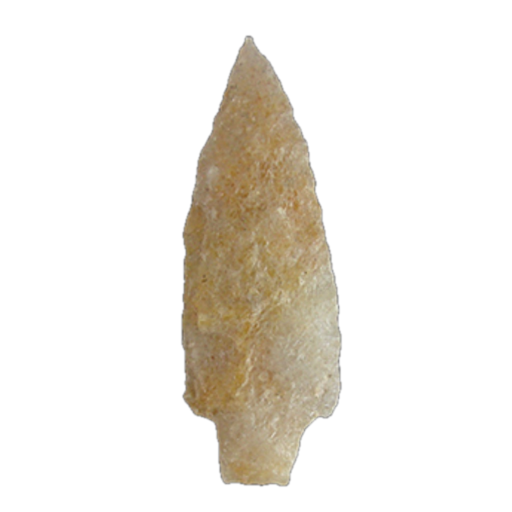 Bare IslandLate Archaic4,500–3,600 B.P.
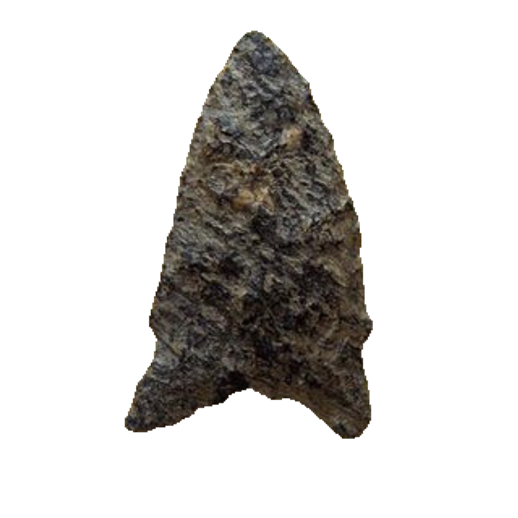 Brewerton EaredLate Middle Archaic to Late ArchaicAbout 5,000 - 3,700 B.P.
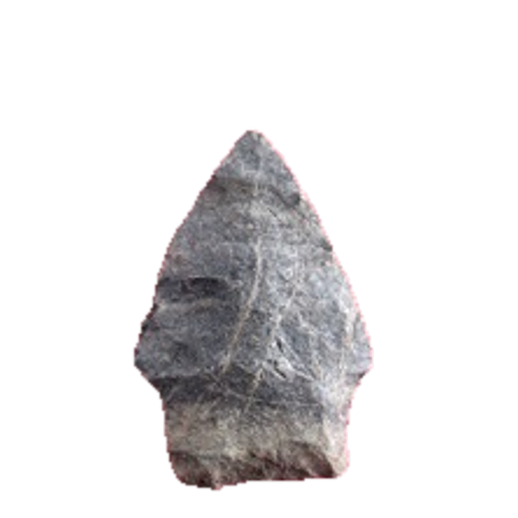 CalvertEarly Woodland3,100 - 2,500 B.P.
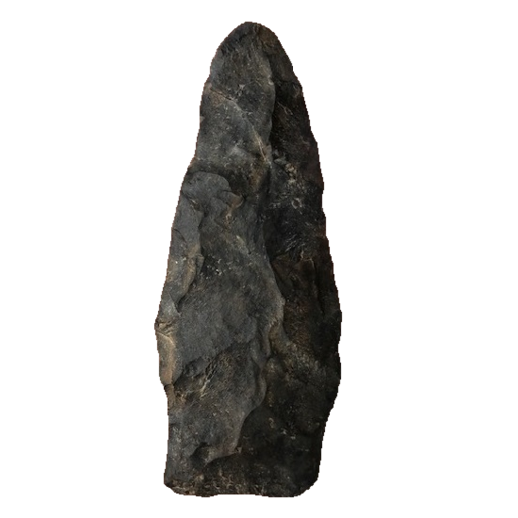 Fox CreekMiddle WoodlandAbout 1,590–1,500 B.P.: A.D. 360 ± 100 at the Fredenburg site and A.D. 410 ± 80 and 450 ± 80 at the Westheimer site, New York (Funk 1968)
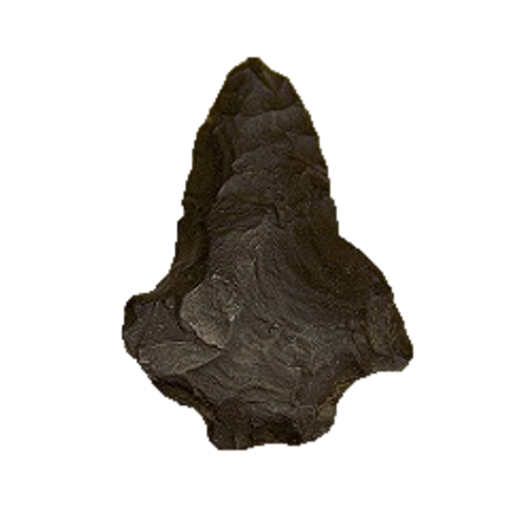 KanawhaEarly Archaic8,050 - 7,750 B.P. (6100-5800 B.C. radiocarbon, St. Albans)
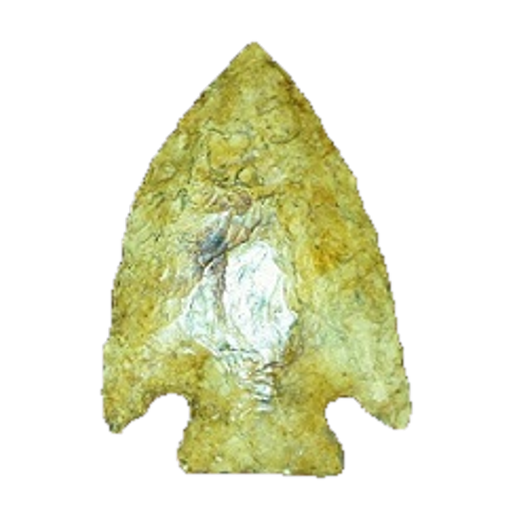 Kirk Corner NotchEarly Archaic9,500–8,900 B.P. (Justice 1987); 9,400–8,500 B.P. (Virginia DHR); 9,200–8,900 B.P. (Steponaitis 1980); three dates of 7,530–7,290 B.P. at Pig Point, Maryland, suggest it lasted later in the north (Maryland JPPM)
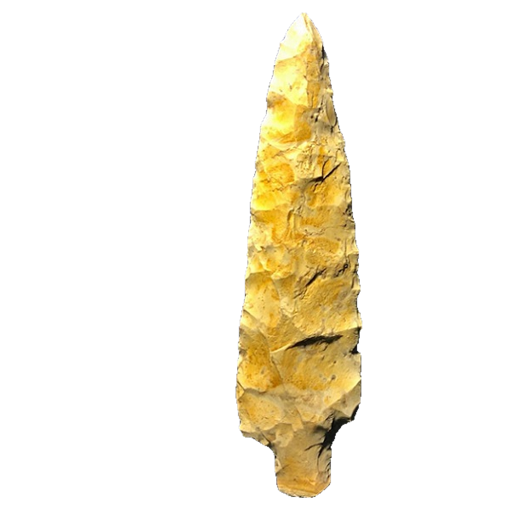 Kirk StemmedEarly Archaic8,900–8,000 B.P. (Justice 1987); 8,800–8,100 B.P. in Virginia (DHR); 8,200–8,000 B.P. in Delaware (Custer 1996), as summarized by the Maryland Archaeological Conservation Laboratory
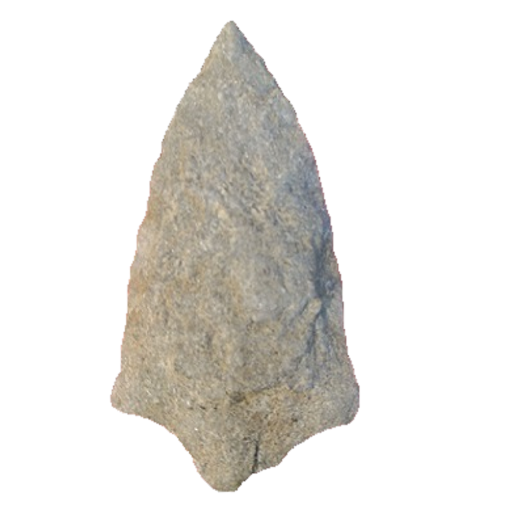 Koens Crispin BroadspearLate Archaic3,900 - 3,600 B.P. (published estimates run from about 4,450 to 3,600 B.P.)
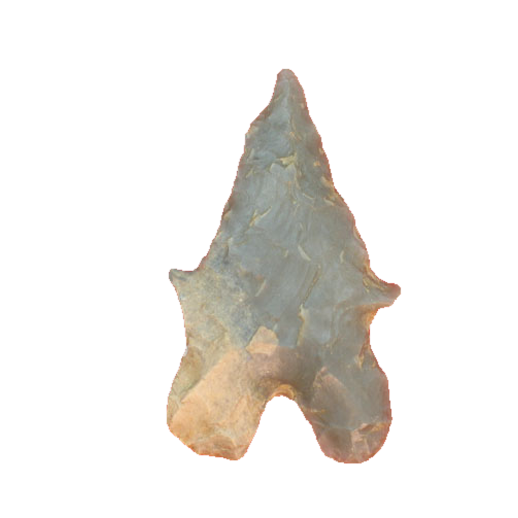 LeCroyEarly Archaic (latest Early Archaic; some place it in the early Middle Archaic)8,500–7,800 B.P. (Justice 1987); 8,600–8,300 B.P. (Steponaitis 1980), as summarized by the Maryland Archaeological Conservation Laboratory; 8,250 ± 100 B.P. at St. Albans, West Virginia (Broyles 1971)
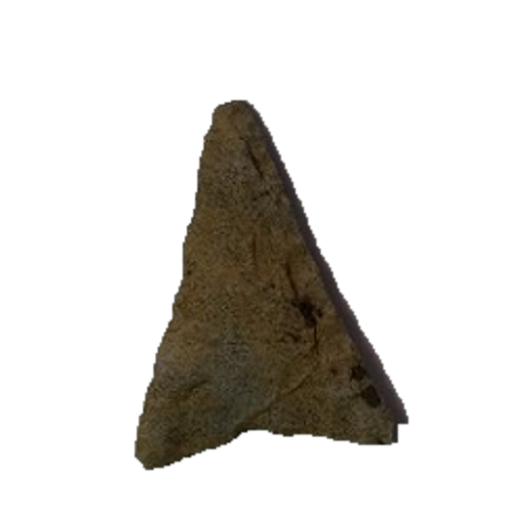 LevannaLate Woodland1,350 - 600 B.P. (A.D. 600-1350; authors differ on the exact span)
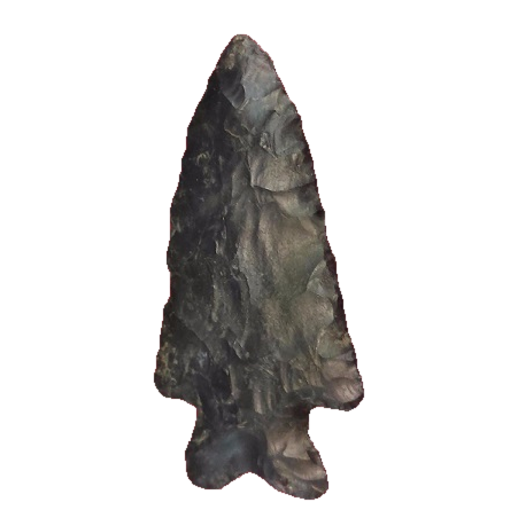 MacCorkleEarly Archaic8,850–8,750 B.P. at St. Albans (Broyles 1971); 9,000–8,500 B.P. (Justice 1987); dates of 9,420–9,300 B.P. (Bergman et al. 1998) (all as summarized by Maryland JPPM); 7000–6500 B.C. in Indiana (Indiana DNR)
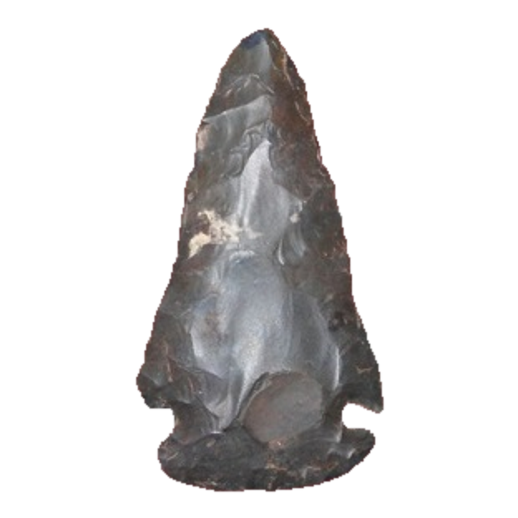 MeadowoodEarly WoodlandAbout 3,000–2,500 B.P. (Chartier 2011); radiocarbon dates from about 998 B.C. in New York to 520 B.C. at the Bruce Boyd site, Ontario (OAS London Chapter)
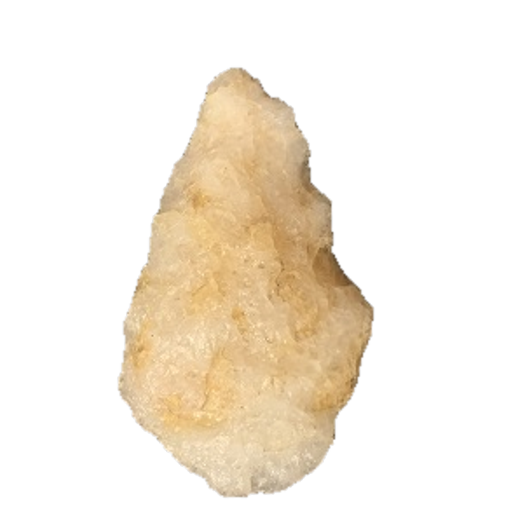 Morrow MountainMiddle Archaic7,100–6,200 B.P. (Maryland JPPM); on the Nottoway River, Virginia, about 7,100–6,700 B.P. for type I and 6,800–6,200 B.P. for type II; 5500–5000 B.C. at Doerschuk and in southeast Tennessee (UNC RLA)
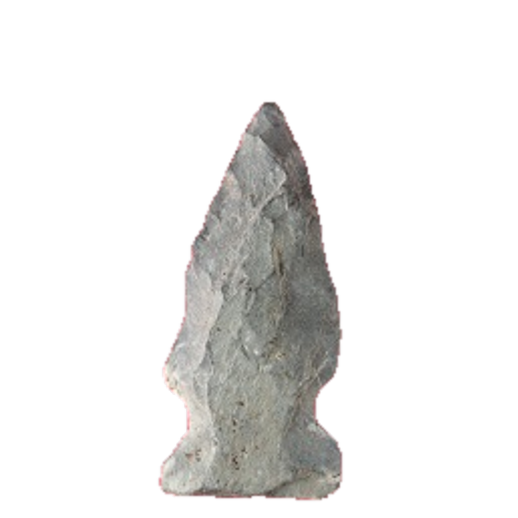 Otter CreekMiddle Archaic to Late Archaic6,000–5,000 B.P. core period (Maryland JPPM, after Funk 1993 and Dent 1995); 5,070 ± 210 B.P. at Otter Creek No. 2, Vermont (Ritchie 1979)
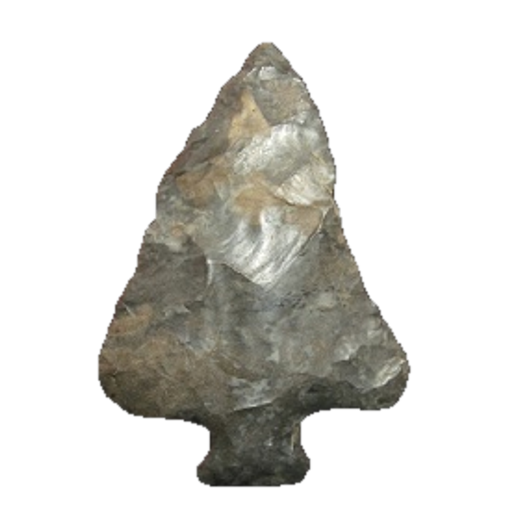 PerkiomenTerminal ArchaicAbout 3,670–3,450 B.P. (1720–1500 B.C., radiocarbon, upper Delaware Valley; Maryland JPPM); 3,450–3,150 B.P. (1500–1200 B.C.; Virginia DHR)
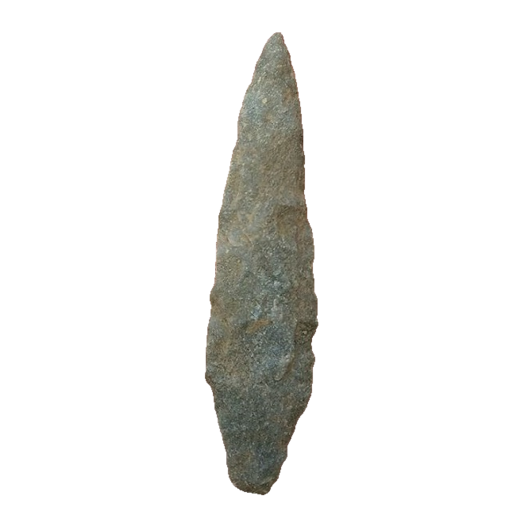 Poplar IslandLate Archaic to Early WoodlandAbout 5,300–4,000 B.P. in southeastern Pennsylvania; 3,920 B.P. in the Upper Delaware Valley; long examples most common about 4,500–2,000 B.P. in Delaware, with small ones later (Maryland JPPM)
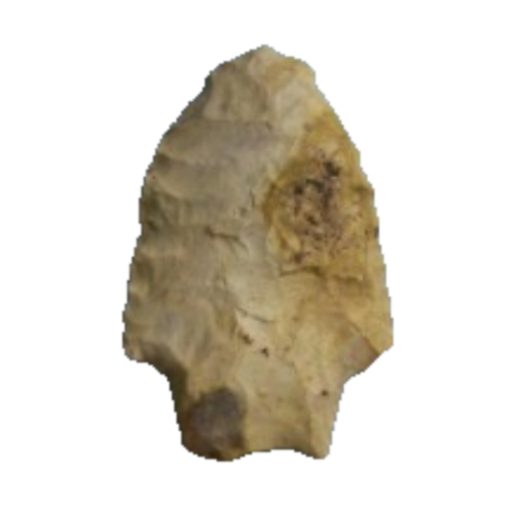 Savannah RiverLate Archaic to Early WoodlandAbout 4,865–3,260 B.P. (Warren Wilson site, North Carolina, to Pony Pasture site, Virginia), many dates 3,900–3,700 B.P. (Maryland JPPM); 3000–1800 B.C. at the Bacon Bend site, Tennessee (UNC RLA)
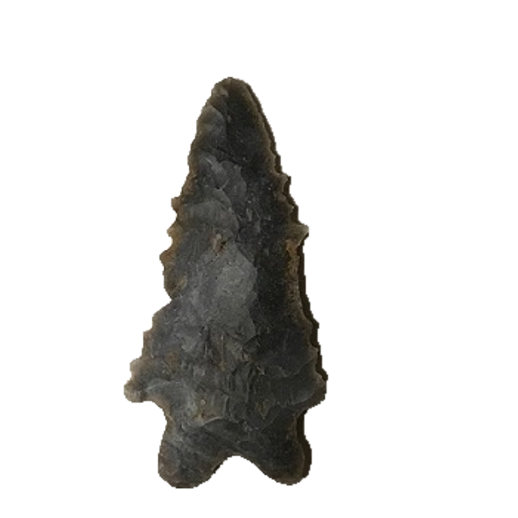 St AlbansEarly Archaic8,900–8,500 B.P. (Justice 1987); 9,000–8,750 B.P. on the Nottoway River, Virginia (McAvoy and McAvoy 1997); both as summarized by Maryland JPPM.
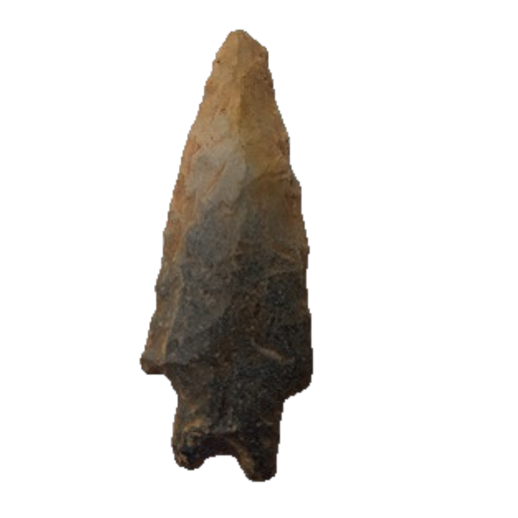 StanlyMiddle Archaic8,150–6,950 B.P. (6200–5000 B.C., Virginia DHR); 7,950–7,450 B.P. (6000–5500 B.C., Daniel and Davis 1996)
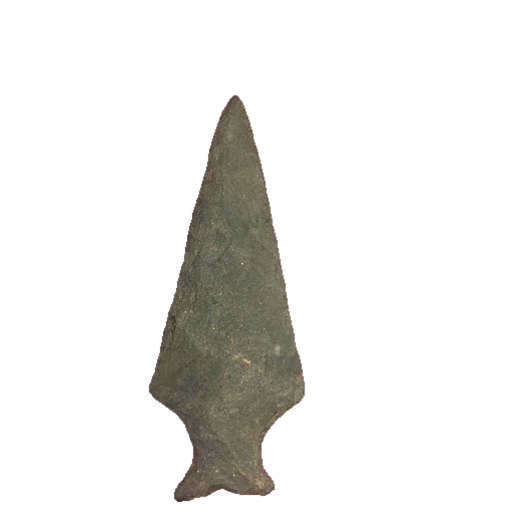 Susquehanna BroadTerminal Archaic to Early Woodland3,700–3,200 B.P. (Corral site, Virginia; Zimmerman site, Pennsylvania; New England cremation cemeteries; O'Neil site, New York); later end dates near 2,650 B.P. are poorly supported (Maryland JPPM)