
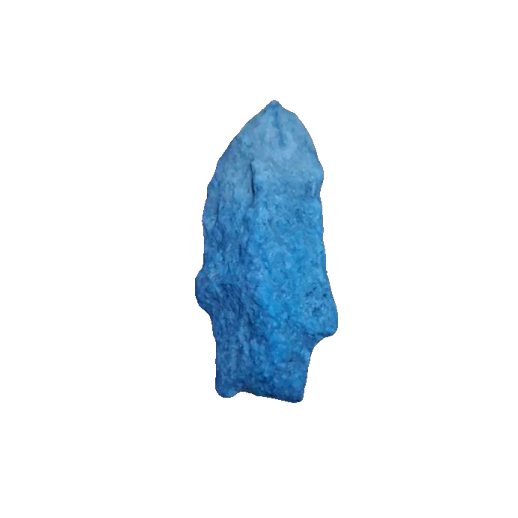
Arrowhead type
Appalachian Point
AppalachianSavannah River Cluster4,500 - 3,500 B.P.Late Archaic15 reference photos
Key facts
- Age
- 4,500 - 3,500 B.P.
- Cultural period
- Late Archaic
- Size
- Medium to Large
- Shape
- Expanding Stem to Contracting Stem to Straight Stem
- Material
- Quartz
- Glacial period
- Neoglacial
More from the Archaic period
Description
This triangular stemmed point measures between 2.4 and 4.8 inches in length, exhibiting an elliptical profile. Its blade features a pronounced excurvate curvature. The shoulders typically rise at an upward angle, although they can also be oriented horizontally. The stem is generally straight, with some specimens displaying a subtle expansion or contraction along its length. The base of the point can be either straight or concave. Notably, the manufacture of this point is often characterized by coarse workmanship, with a random, unpatterned flaking arrangement.
Size
The arrowhead's dimensions are as follows: it measures between 60 and 120 mm in length. The stem, which averages 16 mm in length, is complemented by a blade that typically spans 38 mm in width. Conversely, the stem itself is generally 16 mm in width. In terms of thickness, the arrowhead ranges from 10 to 18 mm.
Distribution
This type is mainly located in western Tennessee and Kentucky, extending into Virginia, North Carolina, South Carolina, Georgia, and reaching Alabama. Its main cluster is in the southern Appalachian region.
Also found, less often, in
Additional information
More information needed.
Identified by
- Year
- 1956
- Type site
- The Camp Creek Site, Tennessee
Similar types
Types that are easy to confuse with the Appalachian point.
Other types in the Savannah River Cluster
- Holms
- Savannah River
- Savannah River Small