
Named stone
Coso Volcanic Field obsidian
Also called Coso obsidian, Sugarloaf Mountain obsidian, West Sugarloaf Mountain obsidian, Joshua Ridge obsidian, Cactus Peak obsidian
A kind of obsidian
Coso Volcanic Field obsidianObsidianWest Coast & PlateauDescription
The Coso Volcanic Field in Inyo County, in southern eastern California, supplied the main obsidian of the southern Sierra Nevada and the southern San Joaquin Valley. Moore's source guide lists it as the Coso Hot Springs, Joshua and West Sugarloaf Mountain area and notes that quarry and workshop sites there have been studied. Archaeological studies show Coso glass dominating obsidian assemblages in the Kern River drainage and on the western slope of the southern Sierra from Porterville south. In the southern valley sites that Sutton and Des Lauriers tabulated, small debitage makes up most of the Coso material, and finished artifacts are usually projectile points. The opened sources do not describe the glass itself.
Geology
Obsidian nodules in the Coso Volcanic Field, Inyo County, California. The opened sources give only the source names and location; the USGS geology page returned an error and was not retried.
Where it comes from
West Coast & Plateau
States
Quarries and outcrops
- Coso Volcanic Field (Coso Hot Springs, Joshua Ridge, West Sugarloaf Mountain and West Cactus Peak areas), Inyo County
Used by
- Dominates southern San Joaquin Valley (Kern River drainage) and western southern Sierra assemblages; Cottonwood points appear among the finished artifacts in the paper's tables (Sutton and Des Lauriers)
Look-alikes
Stones that are easy to confuse with Coso Volcanic Field obsidian.
- Casa Diablo obsidian (dominates the central San Joaquin Valley instead)
Sources
- Moore, Joe. 2009. Great Basin Tool-Stone Sources: The NDOT Obsidian and Tool-Stone Sourcing Project, 2002 Progress Report. Nevada Department of Transportation, Cultural Resource Section.deschutesmeridian.com (opens in a new tab)
- Sutton, Mark Q., and Matthew R. Des Lauriers. 2002. Emerging Patterns in Obsidian Usage in the Southern San Joaquin Valley, California. Pacific Coast Archaeological Society Quarterly 38(2-3).pcas.org (opens in a new tab)
Points made from this stone
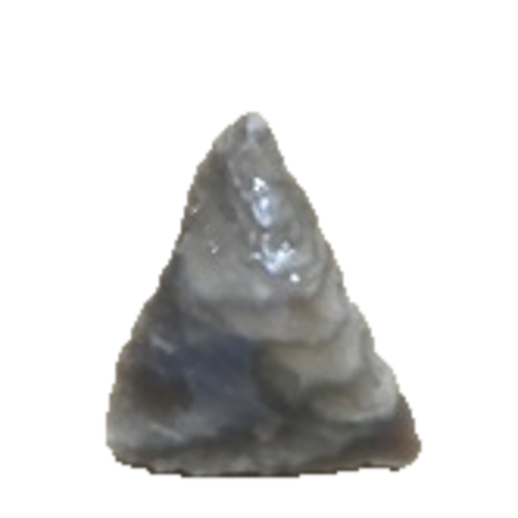 Cottonwood TriangularLate Prehistoric to Historic900 - 200 B.P.
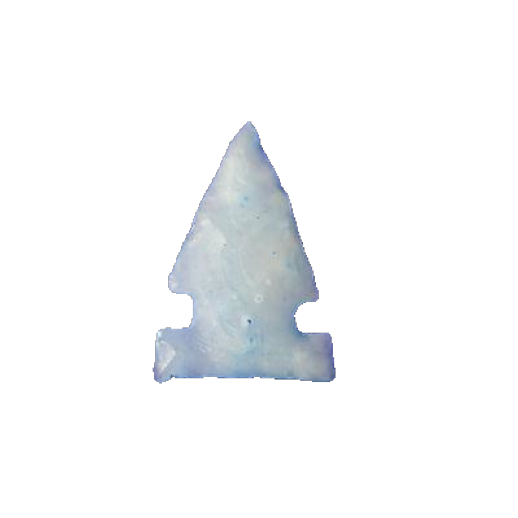 Desert Side NotchLate Prehistoric to HistoricAbout 800–50 B.P. (after A.D. 1150 in the eastern Great Basin, from A.D. 1300 in Monitor Valley, to about A.D. 1900; Thomas 1981; American Southwest Virtual Museum)
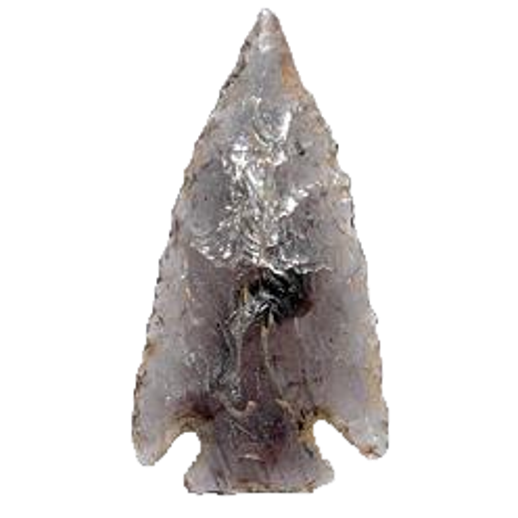 Elko Corner NotchMiddle to Late Archaic (Great Basin)Monitor Valley, Nevada: about 3,250 - 1,250 B.P. (1300 B.C. - A.D. 700). Elko points appear much earlier in the eastern Great Basin, by about 7,500 B.P. (5500 B.C.) at Cowboy Cave and Sudden Shelter, Utah.
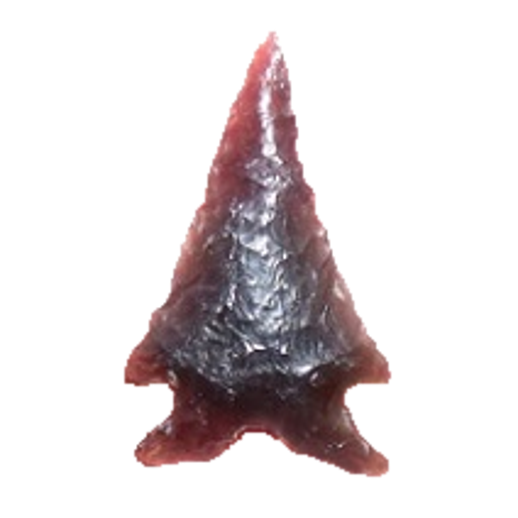 Elko EaredLate Middle ArchaicAbout 4,100 - 3,150 B.P. at first appearance (Late Middle Archaic; varies by subregion)
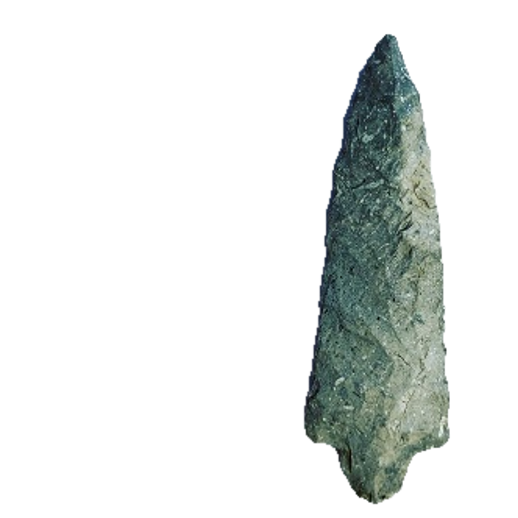 GypsumMiddle Archaic4,050–2,950 years ago at O'Malley Shelter, where Gypsum is the dominant point (Hockett and Spidell 2022); 4,950–3,250 B.P. in Monitor Valley, where Thomas (1981) called the same form Gatecliff Contracting Stem
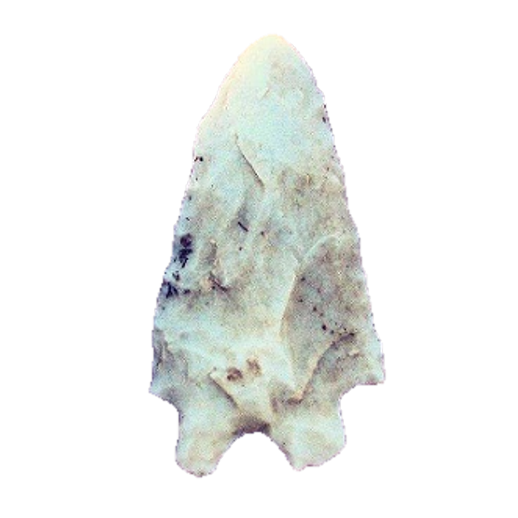 PintoEarly Archaic to Middle ArchaicBy about 8,300 cal B.P. in the eastern Great Basin, possibly from 9,500 cal B.P. in western Utah, lasting into the Middle Archaic; sinew-dated examples at Danger Cave are 8,065 and 6,080 cal B.P. (Hockett and Spidell 2022); 8,000–4,000 years ago at Pinto Basin (NPS)
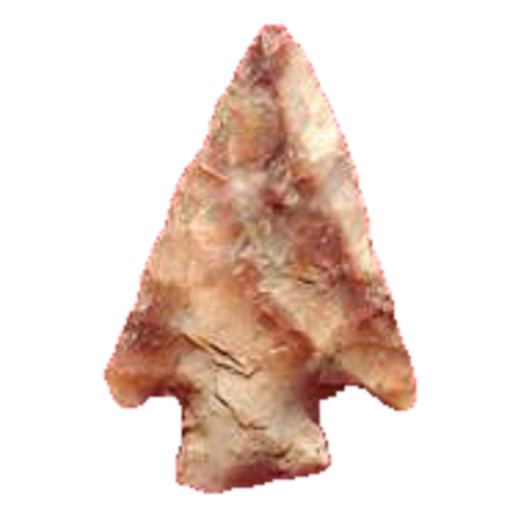 Rose Spring CornerLate Prehistoric1,250 - 650 B.P. (A.D. 700-1300 in uncorrected radiocarbon years; a few authors place the first appearance earlier)