

Rock type
Argillite, hornfels, slate and siltstone
Also called Argillite, Hornfels, Slate, Siltstone, Lockatong argillite, Culpeper Basin hornfels, Knife Lake siltstone
Argillite, hornfels, slate and siltstonefine-grained mudrocks (baked, metamorphosed or unaltered)All regions2 photos
Description
These are fine-grained mud and silt rocks, often of marginal quality for chipping. Argillite is mildly metamorphosed clay- or silt-sized rock, harder than claystone and softer than shale, and it weathers easily, leaving a clay-like rind. Siltstone is silt-sized sedimentary rock, and archaeologists often use argillite and siltstone as synonyms. Slate splits into thin sheets. Hornfels formed when magma baked shale and sandstone in Virginia's Culpeper Basin; it is brittle with sharp, jagged edges and can develop a buff patina that makes it look like another stone. Heating changes siltstone little.
How to identify it
- Colour
- Hornfels can keep its original colour or develop a buff patina; siltstone is opaque and often shows a slightly porous or chalky patina.
- Texture
- Fine, hard and brittle; siltstone is silt-sized sedimentary rock.
- Inclusions
- Hornfels can look pitted from weathered inclusions.
- Cortex
- Argillite weathers to a softened clay-like rind; siltstone develops a porous or chalky patina.
- Heat treatment
- Siltstone shows no noticeable change when heated (Bakken).
Geology
Hornfels of the Culpeper Basin in Virginia's Interior Piedmont formed by contact metamorphism, when magma intruded shale and sandstone and baked them; occurrences cluster there but extend west into the Shenandoah Valley and east toward the Coastal Plain, from Madison and Culpeper counties in Virginia to Montgomery County, Maryland. Argillite is found in great quantity in the Delaware Valley north of Trenton, New Jersey. Slate is low-grade metamorphosed shale or mudstone that cleaves into sheets. Siltstone is abundant in northeastern Minnesota, and the Carolina Slate Belt's sedimentary rocks include shale, mudstone, argillite and siltstone.
Where it comes from
All regions
Quarries and outcrops
- Culpeper Basin, Virginia (hornfels)
- Thunderbird site, Virginia (Paleoindian hornfels artifacts)
- Delaware Valley north of Trenton, New Jersey (argillite)
- Knife Lake, Minnesota and Ontario (siltstone quarries)
- Bradbury Brook site, Mille Lacs area, Minnesota (siltstone procurement, about 9,200 years ago)
Used by
- Paleoindian: hornfels at the Thunderbird site, Virginia (DHR)
- Later periods: Savannah River variants such as Bare Island and Holmes, plus bifurcated, notched and triangular points of hornfels (DHR)
- Late Paleoindian: Minnesota siltstone used for stemmed points, bifaces, scrapers and adzes (Bakken)
Look-alikes
Stones that are easy to confuse with Argillite, hornfels, slate and siltstone.
- Rhyolite (translucent where siltstone is opaque, per Bakken)
- Other stones: weathered hornfels can resemble entirely different materials (Johnson 2000)
- Tuff in the Slate Belt
Sources
- Delaware Department of Transportation. Archaeology glossary.deldot.gov (opens in a new tab)
- Johnson, Michael F. 2000. Hornfels. Virginia Department of Historic Resources, Lithics (Projectile Points and Lithics guide).dhr.virginia.gov (opens in a new tab)
- Bakken, Kent E. (written about 1995; PDF issued later). Chipped Stone Raw Materials. Chapter 6 in Stone Tools of Minnesota. Minnesota Office of the State Archaeologist, St. Paul.mn.gov (opens in a new tab)
- Abbott, Lawrence E., Jr. 2004. An Assessment of Lithic Extraction Technology at a Metavolcanic Quarry in the Slate Belt of North Carolina. Office of State Archaeology, North Carolina.archaeology.ncdcr.gov (opens in a new tab)
- Ozbun, Terry L. 2015. Toolstone Geography and the Larger Lithic Landscape. Chapter 1 in Toolstone Geography of the Pacific Northwest. Archaeology Press, Simon Fraser University.archpress.lib.sfu.ca (opens in a new tab)
Named stones of this kind
- Banded slate (glacial)slate / banded argillite (Precambrian, carried south as glacial erratics)Ohio, Michigan, Indiana and more
 Catlinite (Minnesota pipestone)argillite (claystone)Minnesota, South Dakota
- Lockatong and Brunswick argilliteargillite (Triassic mudstone and siltstone, in places baked to hornfels)New Jersey, Pennsylvania
Points made from this stone
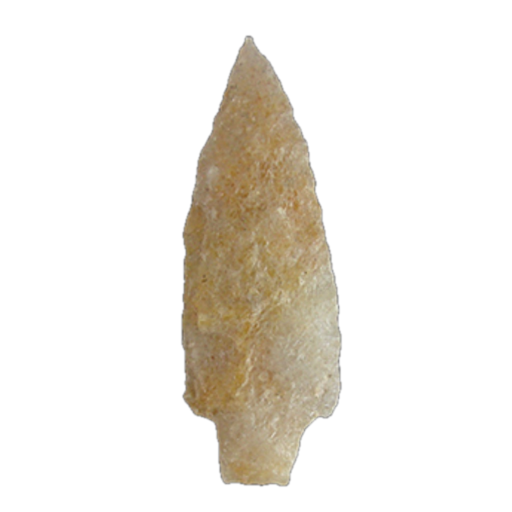 Bare IslandLate Archaic4,500–3,600 B.P.
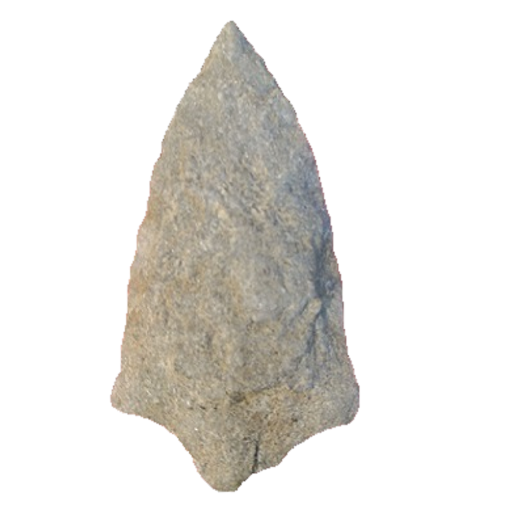 Koens Crispin BroadspearLate Archaic3,900 - 3,600 B.P. (published estimates run from about 4,450 to 3,600 B.P.)
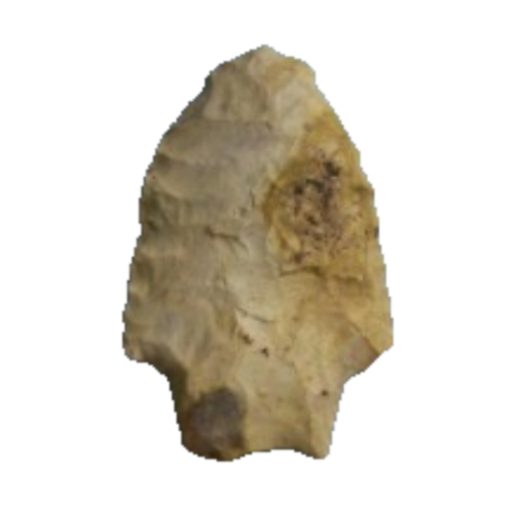 Savannah RiverLate Archaic to Early WoodlandAbout 4,865–3,260 B.P. (Warren Wilson site, North Carolina, to Pony Pasture site, Virginia), many dates 3,900–3,700 B.P. (Maryland JPPM); 3000–1800 B.C. at the Bacon Bend site, Tennessee (UNC RLA)