
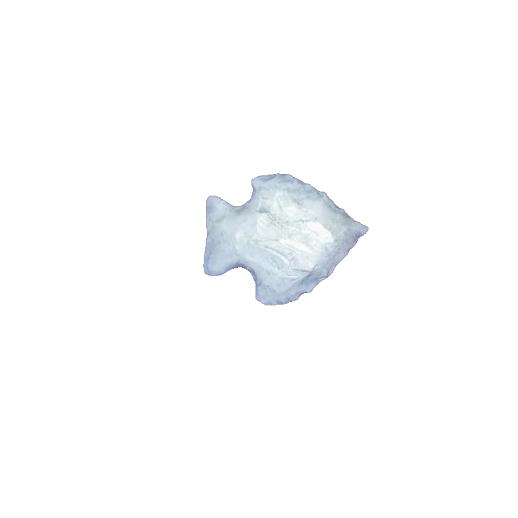
Arrowhead type
Bandy Point
Bandy8,900 - 6,000 B.P.Middle Archaic to Late Archaic4 reference photos
Key facts
- Age
- 8,900 - 6,000 B.P.
- Cultural period
- Middle Archaic to Late Archaic
- Size
- Small to Medium
- Shape
- Basal Notch to Corner Notch to Bifurcated
- Glacial period
- Middle Holocene
More from the Archaic period
Description
This basal notch point exhibits a compact, elliptical profile. The blade's curvature can range from straight to gently outward, displaying a subtle excurvate shape. The shoulders typically feature barbed extensions, although re-sharpening can result in a more horizontal orientation. Notably, the barbed shoulders often extend to the base of the point, while re-sharpened specimens may exhibit shorter barbs. The stem expands outward, forming a distinctive shape. Characteristically, the base of the point curves upward from the ears, converging at the center to create a V-shaped or "fishtail" silhouette. The flaking pattern on this point appears random, lacking a discernible, organized arrangement.
Size
The dimensions of the arrowheads are as follows: they range in overall length from 35 to 55 mm, with stem lengths varying between 5 and 10 mm. The width of the blade spans 30 to 40 mm, while the neck width measures between 13 and 17 mm. Additionally, the basal width of the arrowheads falls within the range of 15 to 25 mm.
Distribution
This type is mainly discovered in the southern Pecos area of Texas and Coahuila.
Additional information
In the realm of Native American archaeology, a distinct type of arrowhead has been identified, bearing a strong resemblance to the Martindale points commonly found in central Texas and Oklahoma. Notably, these points are characterized by their smaller size, which may indicate a regional variation of the Martindale type. As suggested by Turner and Hester in their 1985 study, this southern variant likely shares a common ancestry with the Martindale point, but its smaller dimensions set it apart. Furthermore, the chronological relationship between these points and the Martindale point is of interest, with some evidence suggesting that they may predate the Martindale point, providing valuable insights into the evolution of arrowhead technology in this region.
The similarity in design and craftsmanship between these points and the Martindale points underscores the cultural exchange and technological diffusion that occurred among Native American groups in the southern Plains. The fact that these points are smaller in size may reflect adaptations to local environments, hunting practices, or raw material availability, highlighting the resourcefulness and ingenuity of Native American artisans. By examining the morphological characteristics and distribution of these points, researchers can gain a deeper understanding of the complex social and technological dynamics at play in this region during the period in question.
The potential antiquity of these points, possibly predating the Martindale point, raises important questions about the development and dissemination of arrowhead technologies in the region. Further research and dating are necessary to confirm the chronological relationship between these points and the Martindale point, but the available evidence suggests that they may represent an earlier stage in the evolution of arrowhead design. As such, these points offer a unique window into the lives and traditions of Native American communities in central Texas and Oklahoma, providing a fascinating glimpse into the cultural and technological heritage of the region.
Identified by
- Named by
- James A Word and Charles C. Douglas
- Year
- 1970
- Type site
- Baker Cave, Val Verde County, Texas
Similar types
Types that are easy to confuse with the Bandy point.