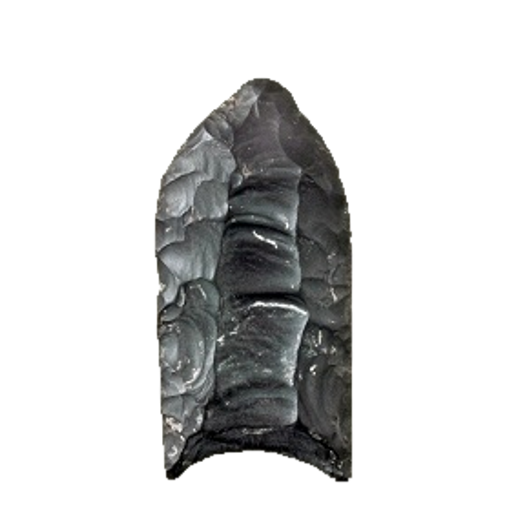
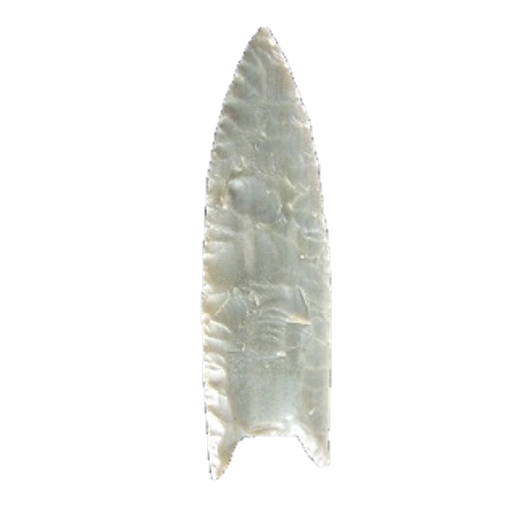
Named stone
Smoky Hill silicified chalk
Also called Smoky Hill jasper, Niobrarite, Niobrara jasper, Kansas jasper
A kind of silicified wood and other silicified sediments
Smoky Hill silicified chalkSilicified wood and other silicified sedimentsPlainsDescription
Smoky Hill silicified chalk, long called Smoky Hill jasper or Niobrarite, is the other great knappable stone of western Kansas besides the Flint Hills cherts. It is a chalk or chalky marl that has been silicified, found from Gove and Trego counties in Kansas north into Nebraska. The colour range is wide, with black, red, white, green and brown varieties, and brown was the one most used by prehistoric people. A few quarries are known, but most people simply picked pieces up from eroding ground. The Kansas Historical Society's overview says the stone, like the Permian cherts, was used in all known cultural periods, so a Smoky Hill piece does not by itself point to one culture or time.
How to identify it
- Colour
- Black, red, white, green and brown varieties; brown was the most widely used (Kansas Historical Society).
- Heat treatment
- The same Kansas overview says heat treatment of the tough, modest-quality Kansas cherts began in Paleoindian times; it does not say this applies to Smoky Hill stone specifically.
Geology
A silicified chalk or chalky marl reported from Gove and Trego counties in northwestern Kansas and northward into Nebraska. The Kansas Geological Survey paper on the Ogallala describes partly silicified Niobrara chalk beneath Ogallala rock, but no opened source names the exact member for Smoky Hill stone.
Where it comes from
Plains
Quarries and outcrops
- Gove and Trego counties, Kansas, northward into Nebraska (outcrop and eroded-surface collecting)
Used by
- All known cultural periods (Kansas Historical Society overview)
Look-alikes
Stones that are easy to confuse with Smoky Hill silicified chalk.
- Flint Hills (Permian) cherts such as Florence, Threemile and Schroyer (the overview treats them as the other major Kansas toolstones)
Sources
- Reynolds, John D., and William B. Lees. 2004. The Archeological Heritage of Kansas. Kansas Historical Society.kansashistory.gov (opens in a new tab)