

Named stone
Fort Union porcellanite
Also called porcellanite, clinker, scoria (North Dakota local term), baked shale
A kind of silicified wood and other silicified sediments
Fort Union porcellaniteSilicified wood and other silicified sedimentsPlains2 photos
Description
Porcellanite is rock that was cooked by nature. When a lignite coal seam in the Fort Union country caught fire underground, the clay, shale and siltstone above it baked hard, and sometimes partly fused. In North Dakota the baked rock is called clinker or scoria. It is usually reddish, because of iron oxide, but black, gray, purple and yellow also occur. Because it resists erosion it caps buttes and ridges across the badlands of North Dakota, Montana and Wyoming. The State Historical Society calls Badlands porcellanite generally poor quality, yet people still made patterned tools from it, including stemmed and lanceolate points,.
How to identify it
- Colour
- Mostly reddish (from hematite); black, gray, purple, yellow and other shades also occur. Looks brighter red when wet (North Dakota Geological Survey).
- Texture
- Baked and hardened, partly fused. Clinker in general can be up to about 75 percent air space; tool-quality pieces are the denser ones (the Survey does not say which).
Geology
Baked and fused clay, shale and sandstone, formed where lignite seams burned underground by lightning, range fires or spontaneous combustion. Beds range from a few feet to about 50 feet thick in western North Dakota and are thicker in Wyoming and Montana. Being harder than unbaked rock, it forms red-topped knobs, ridges, buttes and mesas.
Where it comes from
Plains
Quarries and outcrops
- Little Missouri Badlands, western North Dakota
- Fort Union region (North Dakota, Montana, Wyoming)
Used by
- Middle Archaic: a porcellanite basal-stemmed point at site 32DU132 (Dunn County)
- Late Plains Archaic: a red porcellanite Samantha point at site 32BI503
- Pelican Lake assemblages in the Little Missouri country are described as mostly Knife River flint and porcellanite (nonlocal)
- Fort Union Trading Post: Plains Side Notch points (per the Library text)
Look-alikes
Stones that are easy to confuse with Fort Union porcellanite.
- Knife River flint (glassy and dark; porcellanite is dull and usually red)
Sources
- Bluemle, John P. North Dakota's Clinker (Scoria). North Dakota Notes 13. North Dakota Geological Survey.dmr.nd.gov (opens in a new tab)
- Gregg, Michael L., and Allen Bleier. 2021. The Little Missouri River Study Unit. In Historic Preservation in North Dakota (statewide plan). State Historical Society of North Dakota.history.nd.gov (opens in a new tab)
Points made from this stone
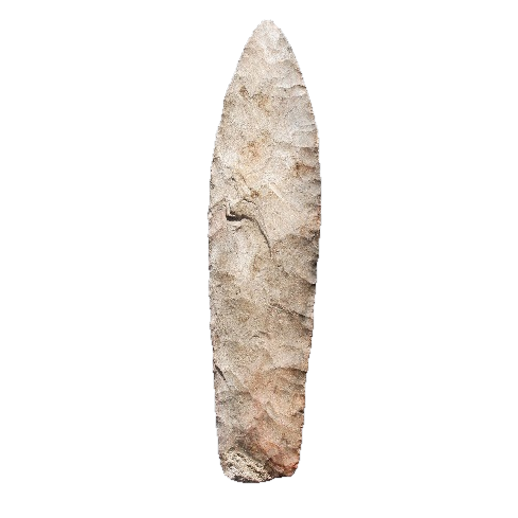 Agate BasinLate Paleoindian10,500–10,000 B.P.; charcoal from the Agate Basin level at Area II of the type site dated 10,430 ± 570 B.P. (MVAC)
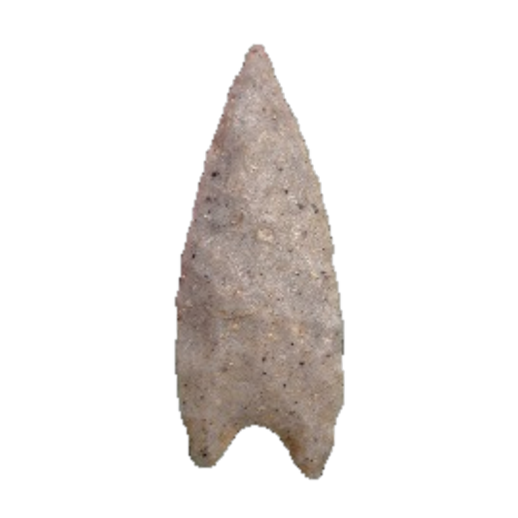 McKeanMiddle Archaic (Middle Plains Archaic)About 5,600 - 3,400 B.P. (calibrated) for the McKean complex as a whole; individual sites in northern Wyoming and southern Montana tend to be older than those further north and east.
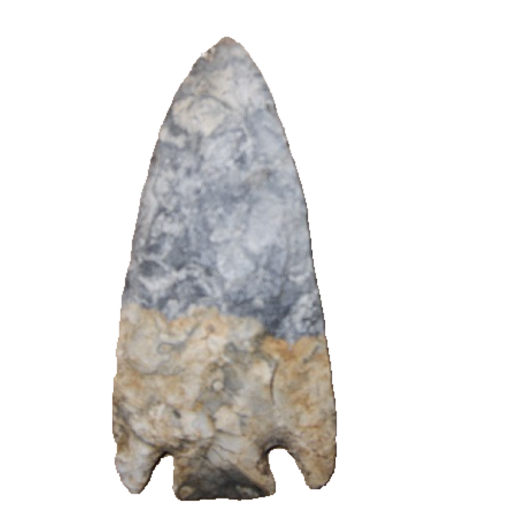 Pelican LakeLate Plains Archaic (Late Middle Prehistoric period)3,300–1,850 B.P. (Dyck; Saskatchewan Archaeological Society); classic barbed form about 3,600–2,800 B.P. (Peck 2011)
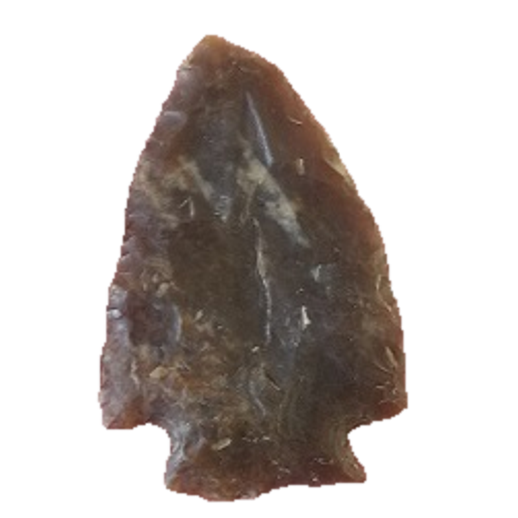 Samantha DartLate Middle Prehistoric (Besant phase)Late in the Besant phase, which Reeves dated to about 1,800–1,200 B.P. in the Saskatchewan River basin (Peck 2011); other authors give 2,100–1,200 B.P. for Besant.