
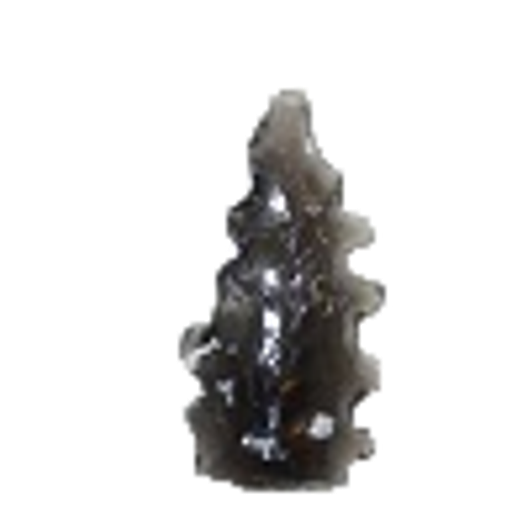
Arrowhead type
Snaketown Point
SnaketownLate Southern Triangle Cluster1,050 - 850 B.P.DevelopmentalKey facts
- Age
- 1,050 - 850 B.P.
- Cultural period
- Developmental
- Culture
- Hohokam Culture
- Size
- Small
- Shape
- Triangle to Straight Stem to Expanding Stem to Contracting Stem
- Glacial period
- Medieval Warm
More from the Developmental period
Description
This triangular point exhibits a slender profile, characterized by a cross-sectional shape that ranges from flattened to elliptical. The blade itself is predominantly straight, featuring subtle serrations that impart a gently toothed edge. In some instances, the blade may display a slightly outwardly curved, or excurvate, serrated profile. The serrations are typically symmetrical, with a notable deepening towards the base that gradually diminishes in depth as they approach the tip. However, asymmetrical serration patterns are also observed in certain examples. Notably, points with pronounced basal serrations can create the illusion of a side-notched configuration. The base of the point varies in shape, spanning a range from straight to concave, with deeply concave examples sometimes giving the appearance of basal protrusions, or "ears." The flaking pattern on this point is characterized by a non-directional, random arrangement of flake scars.
Size
Small
Distribution
This artifact is mainly discovered in the heart of Arizona and stretches into the southwestern corner of New Mexico within the Hohokam cultural sphere. Its range also reaches into Sonora and Chihuahua Mexico, although its complete spread in Mexico remains unclear
Mainly found in
Also found, less often, in
Additional information
In the realm of Native American arrowheads, a distinct categorization has emerged, comprising three primary forms: Triangular, Stemmed, and Side Notch. Notably, a specific variant has been identified along the Gila River, which has been termed the Snaketown Barbed, as referenced by Justice in 2002. This classification underscores the diversity and complexity of arrowhead designs, highlighting the resourcefulness and adaptability of Native American cultures in crafting these essential hunting tools.
The Snaketown Barbed variant, in particular, is a significant find, as it provides insight into the technological and stylistic developments of arrowhead manufacture in the region. The Gila River, as a geographic locus, has yielded a wealth of archaeological information, shedding light on the cultural and historical contexts in which these arrowheads were created and utilized. By examining the characteristics and distribution of these artifacts, researchers can reconstruct the lives and traditions of the indigenous peoples who fashioned and employed them.
The work of Justice (2002) serves as a foundational reference point for understanding the Snaketown Barbed variant, situating it within the broader context of Native American arrowhead typology. The Triangular, Stemmed, and Side Notch categories, along with the Gila River variant, collectively contribute to a nuanced understanding of the technological, social, and cultural dynamics that shaped the development of these ancient hunting tools. As such, continued research and analysis of these artifacts promise to yield further insights into the lives and traditions of Native American communities, underscoring the importance of preserving and studying these remarkable examples of cultural heritage.
Identified by
- Named by
- E. B. Sayles
- Year
- 1965
- Type site
- Snaketown Site, Arizona
Similar types
Types that are easy to confuse with the Snaketown point.
- Bull Creek
- Cottonwood
- Cohonina
- Sobaipuri
Other types in the Late Southern Triangle Cluster
- Gila River
- Snaketown Stemmed
- Snaketown Side Notch