
Pottery type
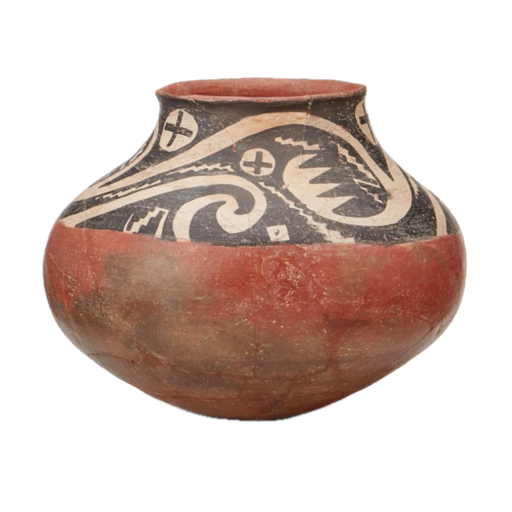
Tonto Polychrome Pottery
Tonto Polychrome1340 - 1450 A.D.Salado / Roosevelt Red Ware4 reference photos
Key facts
- Age
- 1340 - 1450 A.D.
- Cultural period
- Salado / Roosevelt Red Ware
- Material
- Brown to reddish-brown paste with sand temper. Surfaces carry combinations of red and white/cream slip. Black organic paint is used for designs, often in more restricted panels than Gila Polychrome.
Description
Later Salado polychrome type distinguished by narrower black-on-white design bands on jars and more panelized arrangements framed by red slip. Jars are especially common and often have vertical panels or relatively narrow decorative bands compared to Gila jars. Designs use similar motifs—scrolls, stepped forms, hatched triangles—but tend to be more segmented in layout.
Size
Jars and ollas frequently 24–40 cm tall with rim diameters of 14–26 cm. Bowls usually 18–30 cm in diameter. Bowl rims can be slightly recurved or flaring, depending on variant and time period.
Distribution
Common in the Roosevelt Basin and Tonto Basin, and more broadly across the same Salado distribution as Gila Polychrome, including central and southeastern Arizona and into parts of New Mexico and northern Mexico.
Mainly found in
Additional information
Tonto Polychrome appears somewhat later than Gila Polychrome and is strongly associated with Classic-period Salado communities in central and southeastern Arizona. It is especially frequent in jar forms, suggesting emphasis on storage and serving functions, including long-distance movement of food and water.