
Stone tool type
Shaft Straightener
Shaft Straightener1,700 - 300 B.P.Used by Late Archaic foragers, Ancestral Puebloans, Great Basin and Plains hunters, Mississippian archers, and many other groups after the spread of bow-and-arrow technology.7 reference photos
Key facts
- Age
- 1,700 - 300 B.P.
- Cultural period
- Used by Late Archaic foragers, Ancestral Puebloans, Great Basin and Plains hunters, Mississippian archers, and many other groups after the spread of bow-and-arrow technology.
- Size
- Small
- Shape
- Grooved stone shaft-shaping tool used for aligning and smoothing arrow or dart shafts.
- Glacial period
- Late Holocene
More from the Archaic, Mississippian periods
Description
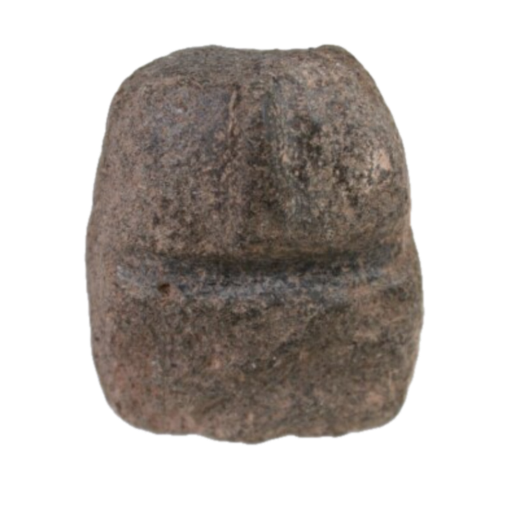
A shaft straightener is a stone tool with one or more grooves used to straighten wooden arrow or dart shafts. The groove was heated near a fire or used cold, then the shaft was drawn through the groove while pressure and heat corrected bends or irregularities. Some examples are small and handheld, while others are larger slabs with long, straight grooves. Materials include sandstone, limestone, schist, or other stones that can form a smooth but abrasive groove. Many straighteners were multifunctional, also used for light abrasion or smoothing.
Size
Shaft straighteners typically range from 6 to 15 cm (2.5 to 6 inches) in length. Width commonly ranges from 3 to 7 cm (1 to 3 inches). Thickness is usually 1 to 3 cm (0.4 to 1.25 inches). The defining feature is a long, narrow groove running across one surface. Groove depth ranges from shallow abrasions to deep, pronounced channels. Grooves may be straight, slightly curved, or V-shaped, depending on function and style. Surfaces around the groove often show smoothing or abrasion from repeated shaft drawing.
Distribution
Stone shaft straighteners occur widely across western and central North America, with strong concentrations in the Great Basin, Southwest, Plains, and Plateau regions. They also appear in the Great Lakes and Eastern Woodlands but less commonly. These tools are frequently found at hunting camps, lithic workshops, habitation sites, and areas associated with projectile-point manufacturing. Distribution correlates with cultures reliant on bow-and-arrow technology, especially after A.D. 300 when arrow shafts became widespread.
Additional information
Shaft straighteners were essential for producing accurate, long-range arrows and darts. Many examples show heat-alteration staining from being kept near a fire to warm shafts before straightening. Some stones contain multiple grooves of different widths for various shaft diameters. In the Southwest and Great Basin, shaft straighteners often appear alongside arrowshaft smoothers, polishing stones, and small lithic debitage from point-making. Their presence at a site often indicates hunting-related activities, craftsmen’s areas, or logistical camps where equipment maintenance occurred.