
Stone tool type
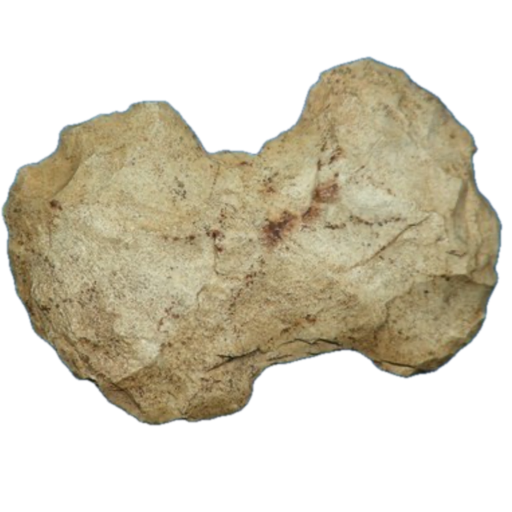
Guilford/Bowtie Axe
Guilford/Bowtie Axe4,500 - 1,500 B.P.Late Archaic and Woodland traditions in the Eastern Woodlands and Upper Midwest.4 reference photos
Key facts
- Age
- 4,500 - 1,500 B.P.
- Cultural period
- Late Archaic and Woodland traditions in the Eastern Woodlands and Upper Midwest.
- Size
- Small to Medium.
- Shape
- Ground-stone axe with bilateral concave hafting constrictions (bow tie or hourglass profile).
- Glacial period
- Late Holocene.
Description
A bow tie axe is a distinctive ground-stone axe with deep concave notches on both sides of the head, creating a narrow center section and flaring ends. When viewed from above, the outline resembles a bow tie or hourglass shape. The notches function as hafting points for a handle that wraps tightly around the narrowed midsection. The cutting bit is ground and sharpened, while the opposite end is typically rounded or squared. This shape provides excellent grip for binding and reduces slipping during heavy chopping.
Size
Typical lengths range from 10 to 20 cm (4 to 8 inches). Width across the flared ends generally ranges from 5 to 10 cm (2 to 4 inches). The center constriction is significantly narrower, often 2 to 4 cm (0.75 to 1.5 inches) wide. Thickness varies from 2.5 to 5 cm (1 to 2 inches). The deep concave sides form the “bow tie” shape, creating a built-in hafting seat without a circumferential groove. The bit is ground smooth, forming a beveled cutting edge. Some examples are highly symmetrical and finely polished, suggesting ceremonial or status use.
Distribution
Bow tie axes are found primarily in the Eastern Woodlands and Upper Midwest, with the strongest concentrations in Ohio, Indiana, Illinois, Kentucky, Tennessee, and Michigan. They also occur in smaller numbers throughout the Mississippi River drainage, the Carolinas, and parts of the Northeast. They are associated mostly with Woodland and Late Archaic peoples who practiced extensive woodworking. Their distribution suggests specialized regional manufacturing traditions tied to high-quality igneous and metamorphic stone sources.
Additional information
Bow tie axes are considered one of the more specialized and visually distinctive ground-stone axe types. The constricted center provides an extremely secure hafting point without weakening the top or requiring a full groove. Many specimens show heavy bit wear, indicating intensive woodworking use. Others are finely made and found in burials or ritual contexts, suggesting social-symbolic value. The style appears to be regionally preferred in the Ohio and Mississippi valleys, possibly linked to early horticultural settlements and woodworking associated with mound construction and timber architecture.