
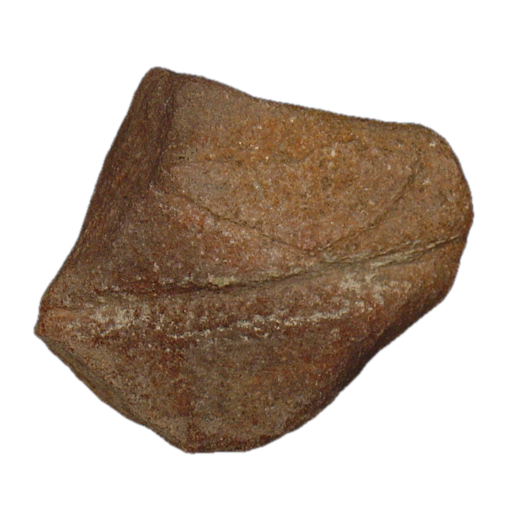
Stone tool type
Abrasive Stone
Abrasive Stone10,000 - 300 B.P.Used universally by Paleoindian through Late Prehistoric cultures, including Archaic foragers, Woodland societies, Mississippian farmers, Ancestral Puebloans, Plains hunters, and Great Basin groups.3 reference photos
Key facts
- Age
- 10,000 - 300 B.P.
- Cultural period
- Used universally by Paleoindian through Late Prehistoric cultures, including Archaic foragers, Woodland societies, Mississippian farmers, Ancestral Puebloans, Plains hunters, and Great Basin groups.
- Size
- Small to Medium
- Shape
- Handheld abrasive stone with worn, faceted, or grooved surfaces for smoothing or sharpening.
- Glacial period
- Late Holocene
More from the Paleo, Archaic, Woodland, Mississippian, Late Prehistoric periods
Description
A stone abrader is a hand-held abrasive stone used for grinding, smoothing, or sharpening other materials. Abraders can be naturally gritty stones used with minimal shaping or intentionally modified stones with worn, faceted surfaces. They often have striations, grooves, or flattened areas resulting from prolonged use. Abraders were used to shape bone tools, smooth arrow shafts, refine projectile-point edges, and polish stone tools. Materials include sandstone, siltstone, fine quartzite, and other stones with natural abrasive qualities.
Size
Shaft straighteners were essential for producing accurate, long-range arrows and darts. Many examples show heat-alteration staining from being kept near a fire to warm shafts before straightening. Some stones contain multiple grooves of different widths for various shaft diameters. In the Southwest and Great Basin, shaft straighteners often appear alongside arrowshaft smoothers, polishing stones, and small lithic debitage from point-making. Their presence at a site often indicates hunting-related activities, craftsmen’s areas, or logistical camps where equipment maintenance occurred.
Distribution
Stone abraders occur across all of North America. They are especially common in the Southwest, Great Basin, Plains, and Eastern Woodlands. Abraders appear at habitation sites, shell and bone-working areas, lithic workshops, quarries, and camps associated with tool or equipment preparation. Their widespread distribution reflects their use in smoothing, shaping, and sharpening a variety of materials such as bone, antler, wood, shell, and stone.
Additional information
Abraders were used for a wide variety of craft tasks including finishing projectile points, shaping bone needles or awls, smoothing arrow shafts, preparing shell beads, and refining stone tools. Some abraders show deep grooves specifically for sharpening antler or smoothing haft areas. Others were multi-purpose tools used until completely worn down. Their wear patterns allow archaeologists to infer the types of craft activities happening at a site. In many contexts, abraders appear alongside shaft straighteners, polishing stones, and lithic debris, reflecting a well-developed crafting toolkit.